Telehealth for Kids: What Maryland Parents Need to Know
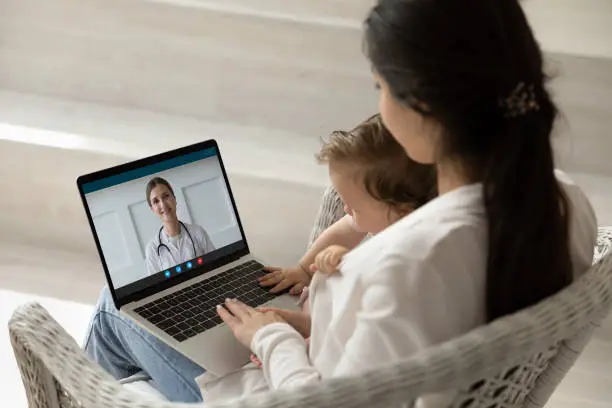
Can a video call really evaluate your child? When is telehealth the right choice? And what does a pediatric provider actually see — and miss — over screen?
 Paule Joseph
PhD, MBA, CRNP, FAAN
Founder, Anchor Health
The question most parents ask about pediatric telehealth isn’t whether it’s convenient. It’s: Can you actually take care of my kid over video?
It’s a fair skepticism. Kids need physical exams. They get ear infections. They turn red. They move quickly. How much can a provider really see through a screen?
The honest answer: a lot more than parents expect. But also not everything. The difference between knowing which problems fit telehealth and which ones don’t is what separates rushed, transactional care from the kind of primary care that actually works for families.
When Telehealth Works Well for Kids
Pediatric telehealth is surprisingly capable for the kinds of problems kids actually get.
Acute illness follow-ups — Your child had an ear infection. Antibiotic started three days ago. Today you need to know: is it getting better, or does something feel off? A provider who knows your child and can see them on video can answer that without a trip to the clinic.
Behavior and behavioral health concerns — Anxiety about school. Changes in mood or sleep. ADHD medication checks. Frustration that started two weeks ago and won’t stop. These are exactly the conversations that happen on video — often better on video, because your child is in a familiar environment rather than an exam room.
Medication management and refills — Allergy medication running out. Asthma controller check-in. Dose adjustment for a medication they’ve been on for months. No exam needed. Just a provider who has reviewed the history and makes the call.
Growth and development screening — Not the measurement (you can do that at home or a pharmacy scale), but the conversation. Is growth on a trajectory? Any concerns? What’s typical at this age versus what warrants attention?
Preventive care and vaccination review — School physicals, sports clearances, vaccine timing, immunization questions. These typically require a brief conversation, not a lengthy in-person exam.
Rashes and skin concerns — Many pediatric rashes can be evaluated on camera. Not all. But many. The key is having a provider who can tell the difference and send you for in-person evaluation when it matters.
What Telehealth Struggles to Handle
No responsible provider claims that telehealth replaces in-person pediatric care entirely. Some problems require hands-on evaluation.
When your child needs to be seen in person:
-
- Suspected ear infection — Otoscope exam is the standard. Some cases can be triaged on history alone, but most need direct visualization
- Persistent fever — While viral fever can be managed telehealth, children with high or prolonged fever often need physical assessment
- Abdominal pain — Palpation and examination are critical. Telehealth can screen severity, but most warrant in-person eval
- Serious respiratory symptoms — Work of breathing, retractions, stridor — these require direct observation and sometimes auscultation
- Suspected fractures or injuries — X-rays and physical exam both needed
- Acute rash with systemic symptoms — Some rashes (meningococcemia, toxic shock syndrome) need urgent in-person assessment
A good pediatric telehealth practice doesn’t pretend these limitations don’t exist. Instead, the provider knows the boundaries and directs families appropriately — to urgent care, the ED, or an in-person appointment with continuity of your child’s medical history rather than starting from scratch at a walk-in clinic.
The Bigger Picture: Why a Trusted Relationship Matters
The real power of telehealth pediatrics isn’t the technology. It’s the context.
Parents often describe the difference between a familiar provider and a stranger this way: «With our PCP, I know she’ll actually think about my kid. At urgent care, they just work through their flowchart.» They’re describing continuity.
When your child’s provider knows their history, their baseline, their typical behavior, and what’s changed, telehealth becomes much more capable. A provider who has seen your 6-year-old three times before can tell, in a video call, whether today’s ear complaint is the same pattern or something different. A stranger cannot.
That’s why at Anchored Care™, we build pediatric primary care around relationship first, modality second. Telehealth is the tool. The relationship is what makes the tool work.
What a Pediatric Telehealth Visit Actually Looks Like
Your child is sick, or you have a question. You schedule a visit. The provider has reviewed your child’s chart — growth history, immunizations, past concerns, current medications — before the call starts. You connect from home. Your child is in their normal environment, not stressed by a waiting room.
The conversation focuses on what’s changed. When did this start? What have you noticed? What are you worried about? For many acute problems, that conversation is diagnostic enough. If an exam is needed, the provider can direct you: «Bring her into our office Thursday morning,» or «Head to urgent care this afternoon.» The context travels with you, rather than you starting over with a provider who has never met your child.
For chronic issues — asthma, allergies, ADHD — telehealth becomes routine. Medication check-ins, symptom adjustment, school conversations. Most of pediatric primary care after the initial evaluation is management, not diagnosis. And management happens on video.
For Maryland Parents in Rockville, Bethesda, Silver Spring, Baltimore, Annapolis, and Frederick
Pediatric telehealth works best when it’s paired with a practice that knows your boundaries and trusts parents to recognize when something needs in-person attention. It’s not a replacement for primary care. It’s primary care done more accessibly — without geography and scheduling friction standing between your family and a provider who actually knows your kids.
If you’re looking for a pediatric primary care provider in Maryland — someone who can manage routine care over video, knows when in-person is necessary, and builds a relationship with your child rather than just processing visits — Anchor Health offers pediatric care for children ages 5 and up.
Schedule your child’s first visit at myanchorhealthpc.com or call 301-301-9748. A primary care provider who knows your child is usually the most important first call — not the last.

Related posts