How telehealth video visits work for Maryland patients
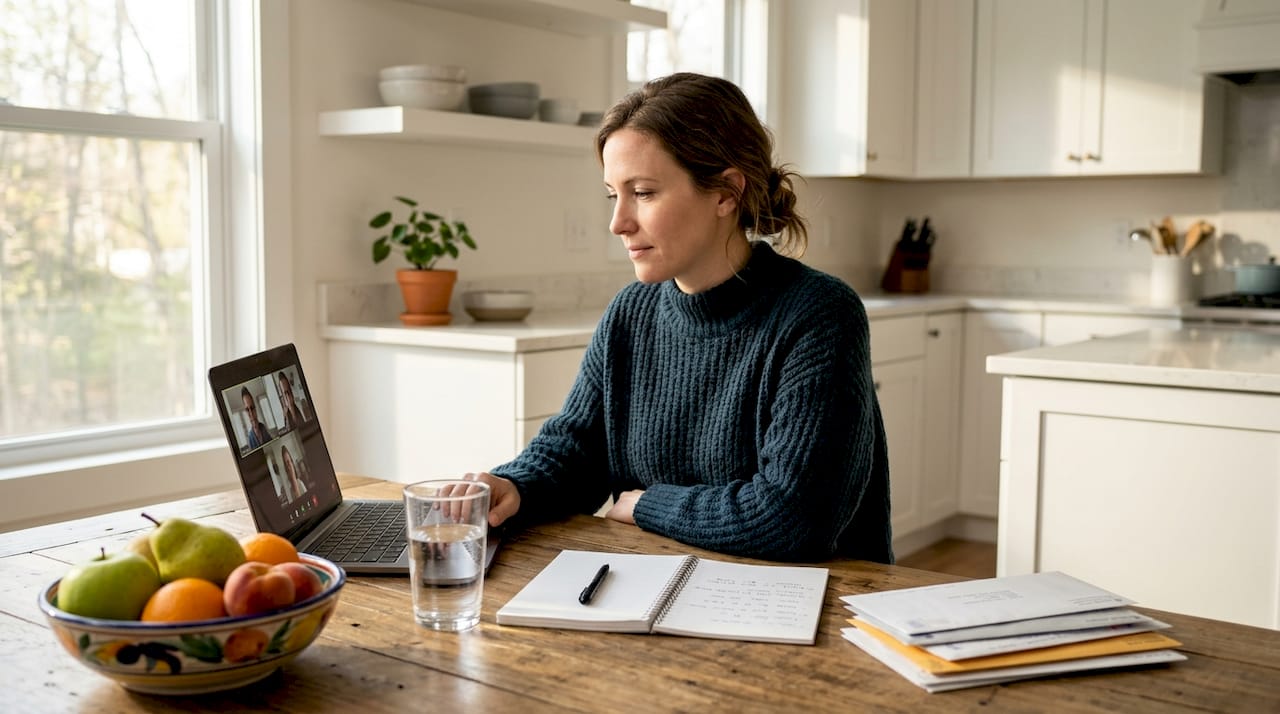
Most people assume that seeing a doctor on a screen is a second-rate substitute for a real appointment. The data says otherwise. Research published in 2025 found that 83% of primary care telehealth visits required no in-person follow-up within seven days, and patients managed through video visits faced no greater risk of emergency room use or hospitalization than those seen in person. For Maryland families managing ongoing health conditions, juggling work schedules, or simply trying to avoid a 45-minute waiting room, that is a meaningful shift in what quality care can look like.
Table of Contents
- The basics: What happens in a telehealth video visit?
- What telehealth can (and can’t) do
- Telehealth effectiveness for ongoing and chronic care
- Potential drawbacks and the hybrid care solution
- Our perspective: Getting the most out of telehealth in Maryland
- Connect with Maryland primary care you can trust, virtually or in person
- Frequently asked questions
Key Takeaways
| Point | Details |
|---|---|
| Telehealth is highly effective | Most concerns can be addressed in a video visit with no need for in-person follow-up for chronic care. |
| Certain care needs in-person | Physical exams, procedures, and emergencies still require office or hospital visits. |
| Be prepared for appointments | Test your device and internet, gather your questions and medication list beforehand. |
| Proactive use is best | Early intervention through telehealth can reduce complications and keep you healthier. |
The basics: What happens in a telehealth video visit?
Now that you know telehealth is effective, let’s break down exactly how a typical video visit unfolds. The process is simpler than most people expect, and knowing what to anticipate helps you feel prepared and confident before you even log on.
Step 1: Scheduling and receiving your appointment link. After booking your visit, you will receive a secure link by email or text. This link connects you to a HIPAA-compliant platform, meaning it meets federal privacy standards designed to protect your health information. You do not download special software in most cases. You simply click the link at your appointment time.
Step 2: Preparing your technology. Test your device, internet connection, camera, and microphone at least 15 minutes before your visit. A slow internet connection is the most common disruption, so connecting via Wi-Fi rather than cellular data is a reliable choice when possible. Make sure your device is charged and your camera gives a clear, well-lit image of your face.
Step 3: Entering the virtual waiting room. Once you click your link and join, you will be placed in a digital waiting room. Your provider sees that you have arrived and will connect with you when ready. This mirrors a standard waiting room experience, just from the comfort of your own home.
Step 4: The visit itself. Your provider sees and hears you in real time. They will review your symptoms, ask about your health history, discuss current medications, and conduct a visual assessment. While they cannot physically examine you, they can observe visible signs such as skin changes, facial expressions, posture, and how you are speaking. Many diagnostic conversations, medication reviews, and care plan discussions happen entirely through this channel.
Step 5: After the visit. Your provider sends prescriptions electronically, documents visit notes in your secure health record, and schedules follow-up care as needed. You receive a summary of the plan, often through a secure patient portal. Understanding how to set up online appointments in advance makes the whole process feel routine after just one or two visits.
Pro Tip: Write down your top three questions and have your current medication list ready before you log on. Providers can cover significantly more ground when patients arrive prepared, and you are less likely to forget something important once the visit ends.
What telehealth can (and can’t) do
Understanding the basics, you may wonder whether there are situations where telehealth is not the right fit. Let’s clarify what video visits do well and where in-person care remains essential.
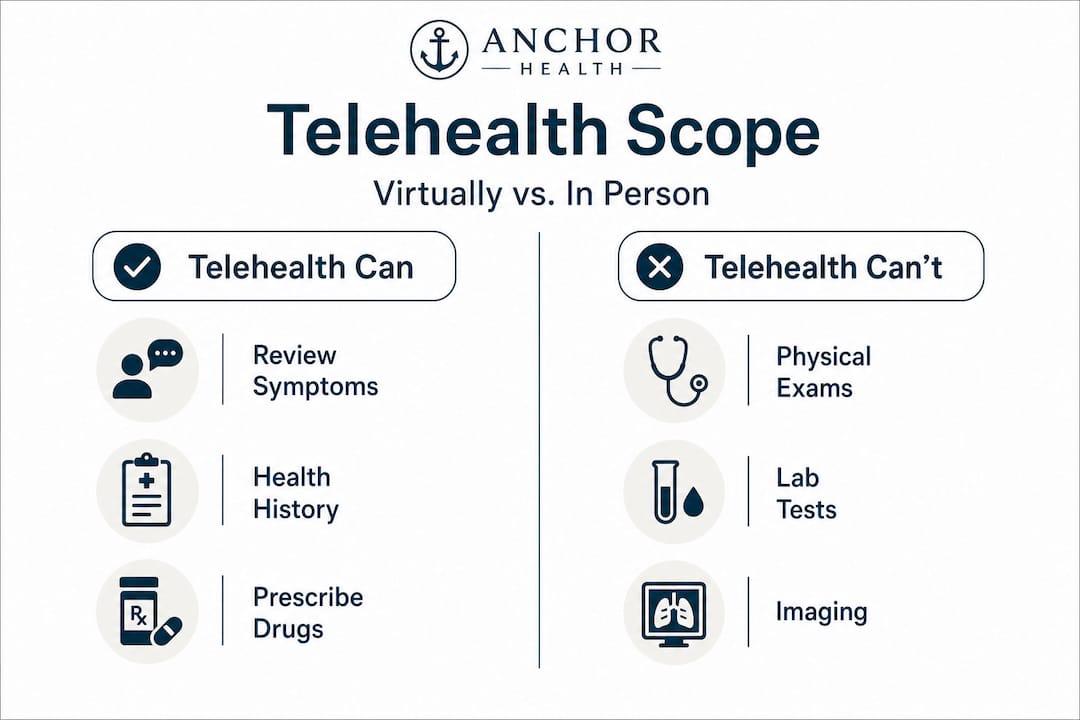
Telehealth is particularly well-suited for a broad range of primary care needs. Consider how many appointments are really just conversations: reviewing lab results, adjusting a medication dose, checking in on a managed condition, or getting guidance on a new symptom. All of these work very well through video. Mental health support, nutrition and lifestyle coaching, and women’s health discussions also translate naturally to a virtual setting.
Telehealth works best for:
- Chronic disease management, including diabetes, hypertension, and asthma check-ins
- Medication reviews and prescription renewals
- Mental and emotional health appointments
- Minor illness evaluation, such as cold symptoms, sinus issues, or skin rashes
- Weight and metabolic health consultations, including GLP-1 medication management
- Postpartum and prenatal guidance visits
- Pediatric and adolescent behavioral concerns
- Preventive care discussions and health screenings review
| What telehealth can do | What telehealth cannot do |
|---|---|
| Review symptoms and health history | Perform physical procedures |
| Manage and adjust medications | Conduct hands-on exams (listening to lungs, palpating abdomen) |
| Order and review lab or imaging tests | Confirm certain vital signs directly |
| Provide mental health and lifestyle support | Treat emergencies or rapidly worsening conditions |
| Coordinate specialist referrals | Diagnose conditions requiring imaging equipment on-site |
| Monitor chronic disease progress | Replace urgent care for injuries or acute emergencies |
Certain clinical situations genuinely require in-person evaluation. These include conditions needing auscultation (listening to heart or lung sounds with a stethoscope), palpation (physical pressing to assess pain or organ size), or direct diagnostic procedures. Emergencies always require 911 or your nearest emergency room, not a video call.
Telehealth’s greatest strength may actually be early intervention. When you notice a worrying symptom and book a same-week video visit rather than waiting for an in-person slot weeks away, you catch problems earlier. Earlier action often means simpler treatment. Building holistic care for chronic conditions into your routine is far easier when access is this immediate.
Pro Tip: Use telehealth proactively, not just when something is already wrong. Early check-ins for a new symptom, a medication concern, or a lifestyle question often prevent the kind of escalation that ends in an urgent care visit.
Telehealth effectiveness for ongoing and chronic care
With a clear sense of what telehealth handles best, let’s look at the results Maryland patients and families are actually seeing, especially for ongoing and complex health needs.
The evidence here is genuinely reassuring. In a large study evaluating primary care telehealth outcomes, 83% of telehealth visits required no additional in-person follow-up within seven days. That number matters because it tells us most health concerns raised over video are being resolved completely, not just deferred. The same research found no increase in emergency department visits or hospitalizations for patients whose primary care was delivered through telehealth compared to those seen in person.
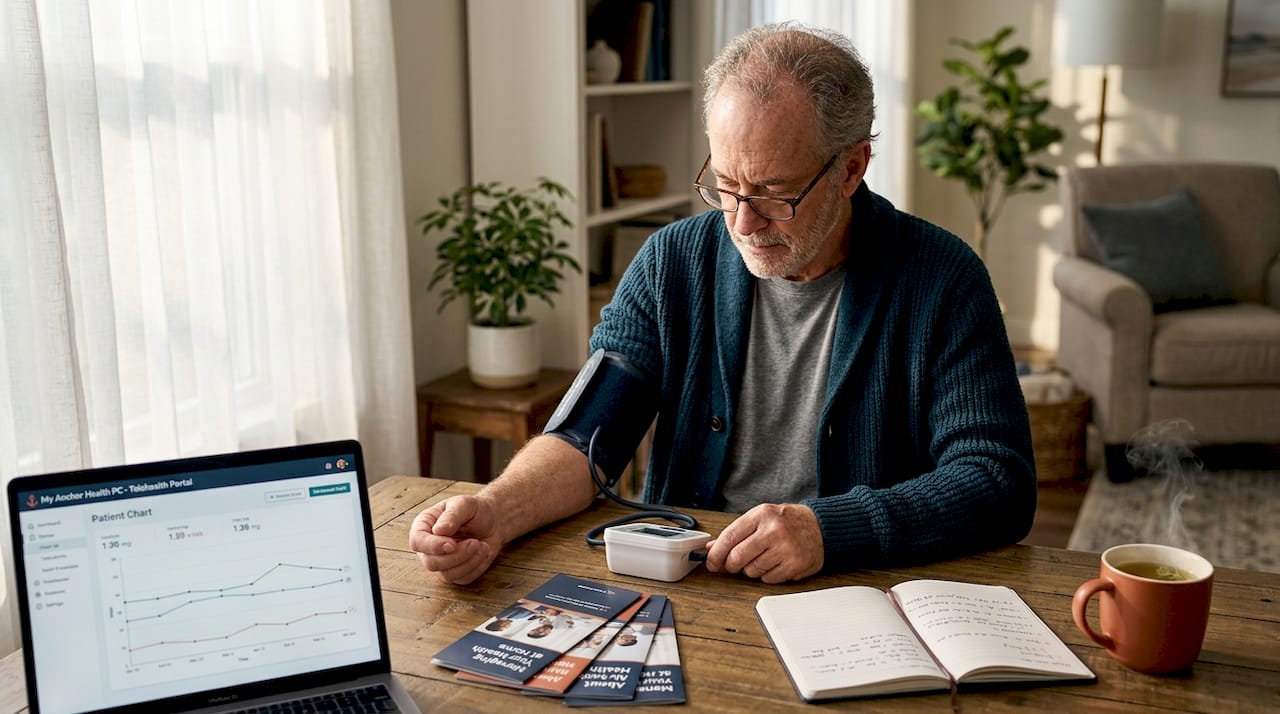
There is another finding worth noting. Providers who used telehealth at higher rates actually had lower emergency department and hospital utilization rates among their patients. This suggests that consistent virtual access encourages earlier contact, which in turn prevents health situations from escalating.
| Outcome measure | Telehealth primary care | In-person primary care |
|---|---|---|
| Visits needing in-person follow-up within 7 days | 17% | Comparable rate |
| Emergency department or hospital risk | No increased risk | Baseline |
| Provider high-telehealth-use, ED rate | Lower than average | Standard |
| Patient access to same-week care | Generally higher | Often limited |
| Chronic condition monitoring consistency | Improved continuity | Dependent on scheduling |
“Telehealth enables proactive monitoring and more consistent contact between patients and providers, which reduces the kind of care gaps that lead to preventable hospitalizations in chronic disease management.” This finding reflects what many Maryland patients are already experiencing: regular video check-ins replace the long gaps between annual appointments that once left chronic conditions unchecked.
For families managing conditions like high blood pressure, Type 2 diabetes, thyroid disorders, or anxiety, consistent contact with a trusted provider is more important than where that contact takes place. Integrative health strategies that combine medication management, lifestyle guidance, and regular monitoring are all feasible through video visits. The key is continuity, and telehealth makes continuity much easier to sustain.
Potential drawbacks and the hybrid care solution
Despite these advantages, some concerns linger. Here is a candid look at the drawbacks and why a blended approach often yields the best outcomes.
The most cited concern is that telehealth providers may miss physical or subtle diagnostic cues that would be apparent during an in-person examination. A provider cannot hear a subtle heart murmur over video. They cannot feel an enlarged lymph node or confirm a fracture. For complex or ambiguous presentations, this matters. Expert clinicians have noted that while telehealth is convenient and effective for many visits, it is not equivalent to in-person care in all clinical situations, and misdiagnosis risk increases when physical examination is truly necessary.
This is not a reason to avoid telehealth. It is a reason to be thoughtful about when to request an in-person visit.
“The best care model is not purely virtual or purely in-person. A hybrid approach, where telehealth handles routine care and monitoring while periodic in-person visits address physical examination needs, often delivers superior outcomes compared to either model alone.”
Signs that an in-person visit is necessary, even if telehealth is available:
- Chest pain, palpitations, or sudden shortness of breath
- Unexplained lumps, swelling, or physical changes you or your provider wants to examine directly
- Symptoms that are worsening rapidly despite treatment
- A new condition where physical examination is part of establishing a baseline
- Any situation where your provider recommends an in-person evaluation after a video visit
- Injuries, falls, or acute pain requiring hands-on assessment
Understanding the limitations of telehealth is not a critique of the model. It is part of using it well. A good telehealth provider will tell you honestly and directly when an in-person visit adds necessary value to your care. That transparency is actually a sign of a quality provider relationship.
The hybrid model works best when your primary care provider knows your history well. When they already understand your baseline health, they can make a more informed decision about whether a concern warrants a video visit or requires you to come in. That is exactly why relationship-based care, rather than episodic or fragmented visits, makes such a difference.
Our perspective: Getting the most out of telehealth in Maryland
Having considered both the strengths and the honest limitations, we want to share what we have seen actually make telehealth successful for Maryland patients and families.
The single biggest factor is active patient participation. Telehealth gives you more direct access to your provider, but that access only creates better outcomes when patients use it intentionally. Patients who come to video visits with written questions, an updated medication list, recent symptom notes, and a clear idea of what they want to address leave with better care plans than those who log on without preparation. This is not about burden; it is about partnership.
We have also seen that the Maryland context matters. Knowing which local labs, imaging centers, and specialists your telehealth provider can coordinate with makes the virtual model significantly more practical. A Maryland-based primary care provider understands local health networks, insurance landscapes, and community resources in ways that a generic national telehealth platform often does not. That local knowledge shapes referrals, follow-up plans, and the overall quality of coordination.
Evidence consistently supports that telehealth is sustainable for chronic disease management without worsening outcomes, and that proactive monitoring through virtual visits can reduce costs and hospitalizations over time. We believe this works best not as a shortcut, but as a framework for genuinely continuous care.
Pro Tip: If you are ever unsure whether your concern fits a video visit or needs an in-person exam, tell your provider directly. Co-creating your care plan, including the format of each visit, is a normal and healthy part of a strong patient-provider relationship.
One thing we feel strongly about: telehealth should never feel like a lesser option. When it is used thoughtfully, with a consistent provider who knows your history and takes the time to listen, it is simply a different and often better-suited delivery method for a large proportion of primary care needs.
Connect with Maryland primary care you can trust, virtually or in person
Modern telehealth means you can access high-quality, Maryland-based primary care on your own terms, without sacrificing the depth and continuity that good healthcare requires. Whether you are managing a chronic condition, navigating a health transition, or simply looking for a trusted provider who will actually take the time to know you, a thoughtful approach to virtual care can meet those needs.
At Anchor Health, we built our practice around exactly this model. Our Anchored Care℠ framework is designed for long-term, relationship-based care delivered through secure video visits across Maryland. We cover general primary care for all ages, women’s health, mental and emotional health, weight and metabolic health including GLP-1 medications, and pediatric and adolescent health. We accept insurance and offer membership options for patients who want enhanced access and continuity. Scheduling your first visit is straightforward, and we are here to make the experience feel steady, personal, and genuinely useful from day one.
Frequently asked questions
What do I need to join a telehealth video visit?
You need a smartphone, tablet, or computer with a working camera, microphone, and reliable internet connection. Test all three at least 15 minutes before your appointment to avoid technical disruptions.
Can telehealth handle emergencies or serious symptoms?
No. Serious symptoms such as chest pain, severe shortness of breath, or rapidly deteriorating conditions always require in-person or emergency care, not a video visit.
Is my health information safe during a video visit?
Yes. Reputable providers use encrypted, HIPAA-compliant platforms with end-to-end security to protect all health data shared during your visit.
How do video visits compare with in-person care for chronic disease?
Research shows that most chronic care needs are managed through telehealth as safely as in-person visits, with no increased risk of hospitalizations and often better access to consistent care.
Can I switch between telehealth and in-person visits?
Yes. Many providers recommend a hybrid approach that combines video visits for routine care with in-person exams when physical evaluation is genuinely needed.
Blog & Information Disclaimer
Last Updated: May 23, 2026
The information provided on the Anchor Health website (https://myanchorhealthpc.com/), including but not limited to blog posts, articles, newsletters, graphics, and other materials (collectively, the "Content"), is for general informational and educational purposes only.
By accessing and using this website, you acknowledge and agree to the following terms and conditions:
The Content on this website is not intended to be a substitute for professional medical advice, diagnosis, or treatment. Always seek the advice of your physician, nurse practitioner, or other qualified health provider with any questions you may have regarding a medical condition. Never disregard professional medical advice or delay in seeking it because of something you have read on this website.
Reading, interacting with, or sharing the Content on this website does not establish a patient-provider relationship between you and Anchor Health or any of its clinicians, including Paule Valery Joseph, PhD, MBA, CRNP, FAAN. A formal patient-provider relationship is only established after you have completed the formal intake process, signed our clinical consent forms, and participated in a secure clinical consultation.
If you are experiencing a medical emergency, call 911 or seek emergency medical services immediately.
Anchor Health is a primary care practice and does not provide emergency or crisis intervention services through its website or blog.
While Anchor Health strives to provide thoughtful, evidence-based information grounded in our Anchored Care℠ model, healthcare is a rapidly evolving field. We make no representations or warranties, express or implied, about the completeness, accuracy, reliability, or suitability of the information contained in the Content. Any reliance you place on such information is strictly at your own risk.
Anchor Health is a telehealth practice providing services to patients physically located within the state of Maryland. The information provided on this blog is intended for residents of Maryland and is governed by the laws and regulations of that state. Accessing this information from outside of Maryland does not imply that our clinicians are licensed to practice medicine or provide consultations in your jurisdiction.
Content related to Weight & Metabolic Health, including discussions of GLP-1 medications or other medical therapies, is provided for educational context regarding our clinical approach. Prescriptions and specific medical recommendations are only made following a comprehensive clinical evaluation, diagnostic testing, and shared decision-making within a formal patient-provider relationship.
This website may contain links to external websites that are not provided or maintained by or in any way affiliated with Anchor Health. Please note that Anchor Health does not guarantee the accuracy, relevance, timeliness, or completeness of any information on these external websites.
To the fullest extent permitted by law, Anchor Health, its owners, and its employees shall not be liable for any direct, indirect, incidental, consequential, or punitive damag
Related posts