What Is a Patient-Centered Medical Home?
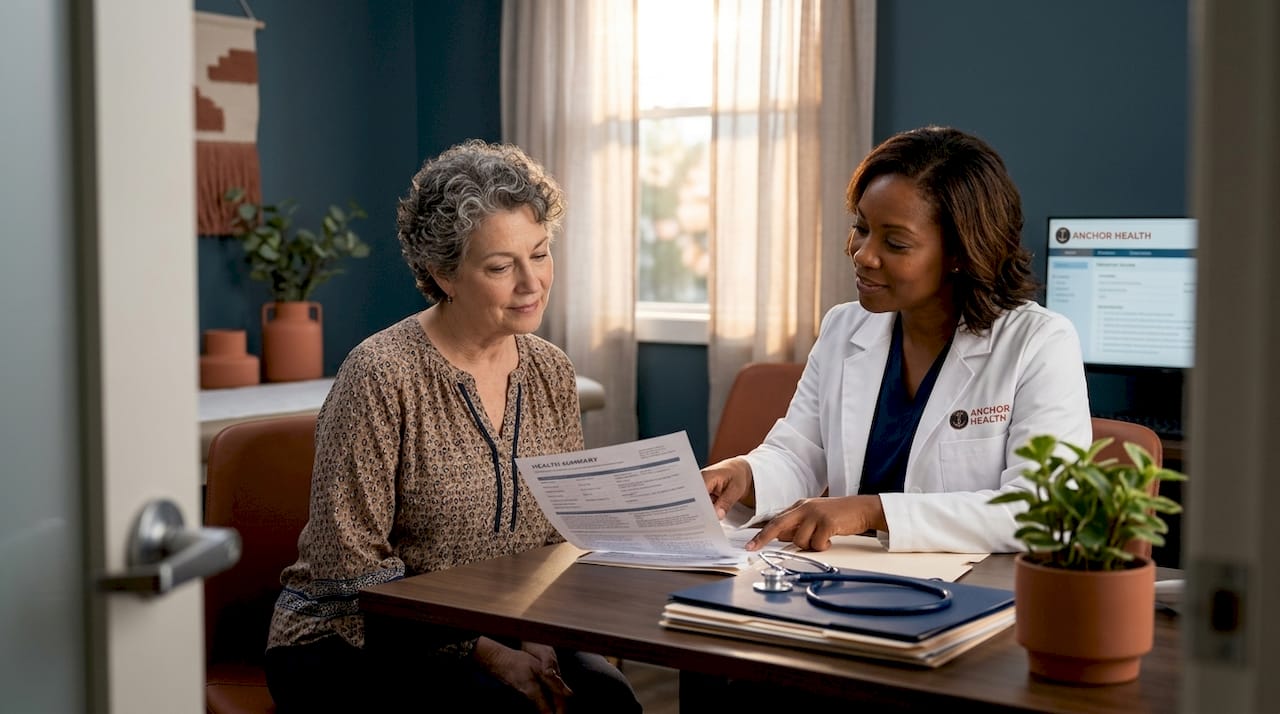
If you have ever left a doctor’s appointment feeling rushed, unheard, or unsure what happens next with your care, you are not alone. The traditional healthcare system often treats each visit as a standalone event rather than part of a continuous relationship. A patient-centered medical home, or PCMH, is a care model designed to change that. It organizes your entire primary care experience around you, not around appointment slots. This article explains what a patient-centered medical home is, how it works in practice, and why it may be one of the most meaningful shifts in how Americans receive everyday healthcare.
Table of Contents
- Key takeaways
- What is a patient-centered medical home?
- Benefits of a patient-centered medical home
- How a patient-centered medical home works in practice
- How PCMH differs from traditional care models
- My take on what PCMH actually delivers
- How Myanchorhealthpc brings this model to life
- FAQ
Key takeaways
| Point | Details |
|---|---|
| PCMH is team-based care | A coordinated team manages your health continuously, not just during isolated visits. |
| Cost savings are real | PCMH models can reduce costs by up to $1,100 per patient through proactive management. |
| Whole-person focus matters | PCMH addresses social factors like housing and food access alongside medical needs. |
| Access goes beyond office hours | Patients benefit from extended hours, electronic communication, and after-hours support. |
| Outcomes improve measurably | Over 90% of patients in team-based programs maintain independent living with chronic conditions. |
What is a patient-centered medical home?
The definition of patient-centered medical home starts with a simple premise: your primary care practice should know you, not just your chart. A PCMH is a care delivery model where a team of healthcare professionals works together to provide coordinated, continuous, and comprehensive care centered on your individual needs and preferences.
The model was formally endorsed by major medical associations, including the American Academy of Family Physicians and the American Academy of Pediatrics, through what are known as the Joint Principles of PCMH. These principles establish that care should be personal, team-based, whole-person focused, coordinated, accessible, and committed to quality and safety.
NCQA standards define PCMH as requiring five core components:
- Team-based care: A physician leads a team that may include nurses, care coordinators, behavioral health specialists, and pharmacists.
- Comprehensive care: The practice addresses the full range of your physical, mental, and preventive health needs.
- Patient-centered access: Extended hours, same-day appointments, and electronic communication are built into the model.
- Care management: Patients with chronic or complex conditions receive proactive follow-up and personalized care plans.
- Quality and safety focus: The practice tracks outcomes, uses evidence-based guidelines, and continuously improves.
“The shift to PCMH responds to administrative burden in traditional fee-for-service care, restores joy in practice, and provides patients with a dedicated care team.” — Primary Care Collaborative
That last point matters more than it might seem. When your provider is less burdened by paperwork and fragmented workflows, they have more time and attention for you.
Benefits of a patient-centered medical home
The benefits of a patient-centered medical home reach well beyond convenience. Research and real-world data show measurable improvements across cost, access, outcomes, and the overall care experience.
-
Reduced costs and fewer emergency visits. Proactive management and care coordination mean fewer crises. Studies show PCMH reduces costs by up to $1,100 per patient by decreasing unnecessary ER visits and hospital readmissions.
-
Better chronic disease management. For patients managing diabetes, hypertension, asthma, or heart disease, continuous team-based oversight makes a significant difference. Data from Medicare-supported programs shows that over 90% of participants in integrated care models maintain independent living.
-
Whole-person care. A PCMH does not stop at your blood pressure reading. The model is designed to address social determinants of health like housing instability and food insecurity alongside your medical needs. That kind of holistic attention can catch problems that a standard 15-minute visit would never surface.
-
Improved access. Same-day or next-day appointments, patient portals, and after-hours phone or telehealth support mean you are not waiting days to get an answer about a medication side effect or a child’s fever.
-
Shared decision-making. In a PCMH, you are an active participant in your care. Your provider explains options, respects your values, and involves you in setting health goals. Research on patient experience improvements confirms that PCMH patients report better engagement, cultural competence, and care coordination compared to traditional models.
-
Behavioral health integration. Mental and emotional health are treated as part of your overall health, not as a separate referral you may or may not follow through on.
Pro Tip: When evaluating a primary care practice, ask whether they have a care coordinator on staff. That single role is often the clearest signal that a practice is operating as a true PCMH rather than just claiming the label.
How a patient-centered medical home works in practice
Understanding the patient-centered care model is easier when you picture a typical patient experience. Say you are managing Type 2 diabetes and have a new concern about your blood pressure. In a traditional practice, you might wait two weeks for an appointment, see a provider who pulls up your chart cold, and leave with a prescription but no follow-up plan.
In a PCMH, the experience looks different at every step.
Your care team already knows your history. Your primary care provider is supported by a nurse, a care coordinator, and possibly a behavioral health specialist. When you call or send a message through the patient portal, someone responds the same day. If your concern is urgent, a same-day visit or telehealth call is available.

After your visit, your care coordinator follows up. They check whether you filled your prescription, whether your readings are improving, and whether you need a referral to a cardiologist. That referral comes with a warm handoff: your PCMH sends your records and context to the specialist, and the specialist’s notes come back to your primary team. Nothing falls through the cracks.
Here is how a PCMH compares to traditional care in key operational areas:
| Feature | Traditional primary care | Patient-centered medical home |
|---|---|---|
| Care continuity | Episodic, visit-by-visit | Continuous, team-managed |
| After-hours access | Limited or unavailable | Phone, portal, or telehealth available |
| Behavioral health | Separate referral | Integrated into primary care |
| Chronic care management | Reactive | Proactive with care plans |
| Patient engagement | Passive | Shared decision-making |
| Quality tracking | Inconsistent | Standardized, ongoing |
Investment in advanced primary care teams, including behavioral health integration and care management, correlates with reduced costs and better outcomes at the system level. That is not a coincidence. It reflects what happens when providers have the structure and support to actually focus on patients.
How PCMH differs from traditional care models
The difference between PCMH and traditional care is not just about services offered. It is about the underlying philosophy of how care is organized and delivered.
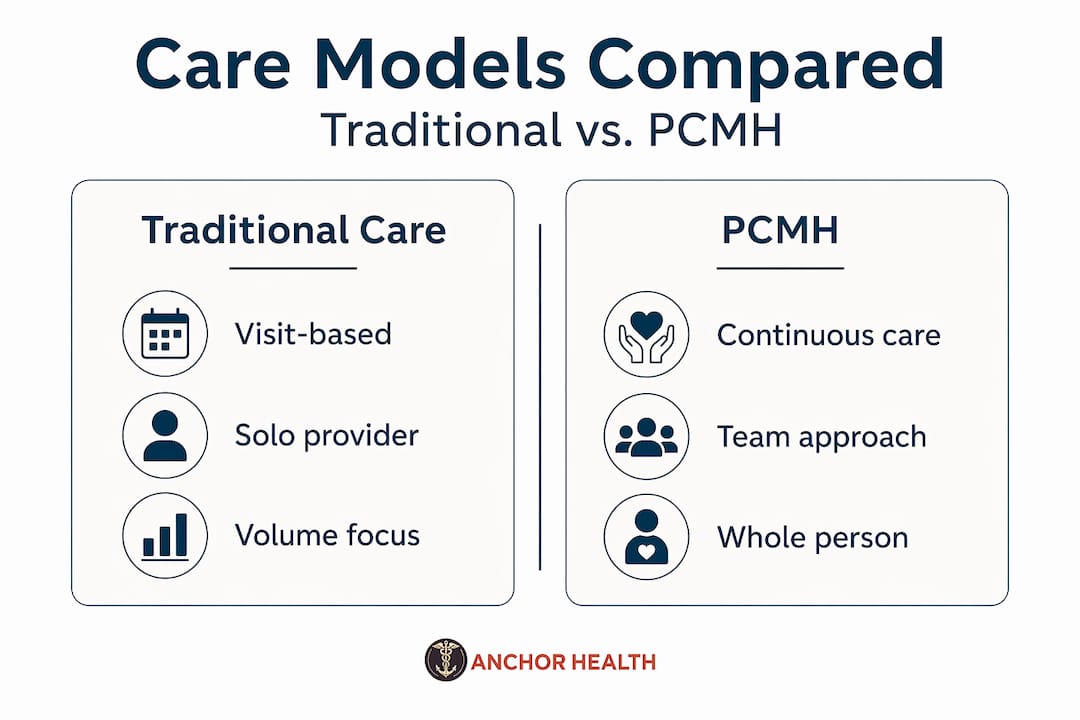
Traditional primary care, particularly under a fee-for-service payment structure, rewards volume. Providers see more patients, bill for more visits, and move quickly. That system creates real pressure to keep appointments short and avoid the time-intensive work of care coordination. Patients with complex needs often fall through the gaps.
A PCMH operates under a different framework. Many PCMH practices receive per-member payments or shared savings arrangements that reward keeping patients healthy, not just treating them when they are sick. PCMH accreditation programs from organizations like the National Committee for Quality Assurance (NCQA) provide financial and technical support to practices, particularly in rural and underserved areas, encouraging implementation and reducing care disparities.
Pro Tip: If you or a family member has a chronic condition, ask your current provider whether their practice holds NCQA PCMH recognition. Recognized practices have met verified standards for care coordination, access, and quality improvement.
PCMH is sometimes compared to Accountable Care Organizations (ACOs). Both models emphasize coordinated care and value over volume. The key difference is scope. An ACO operates at a network or system level, coordinating care across multiple providers and facilities. A PCMH is centered at the primary care practice level, focused on your relationship with your personal care team. The two models can and often do work together.
PCMH is especially well suited for patients managing chronic illness, families with children who have complex health needs, older adults navigating multiple specialists, and anyone who has felt lost or overlooked in a fragmented care system.
My take on what PCMH actually delivers
I have spent years watching patients navigate healthcare systems that were not designed with them in mind. What I have come to believe is that the PCMH model’s most underrated benefit is not the cost savings or the quality metrics. It is the simple experience of being known.
Most patients I have spoken with do not fully realize how much energy they spend compensating for a fragmented system. They repeat their medical history at every visit. They manage their own referrals. They follow up on test results no one called about. A functioning PCMH removes that burden from the patient and places it where it belongs: with a coordinated care team.
What I have also learned is that PCMH is not a magic label. A practice can hold NCQA recognition and still feel impersonal if the culture does not support genuine relationship-building. The model provides the structure, but the people inside it determine the quality of care. When you are evaluating a practice, pay attention to whether your provider remembers your context between visits, not just whether they have a portal.
The shift toward restoring joy in practice matters for patients too. Providers who are less burned out are more present. That presence translates directly into the quality of attention you receive during a visit.
If you are looking for a new primary care home, I would encourage you to ask hard questions about care coordination, team composition, and how the practice handles complex or chronic conditions. The answers will tell you more than any certification.
— Paule
How Myanchorhealthpc brings this model to life
At Myanchorhealthpc, the principles of a patient-centered medical home are built into every interaction. The Anchored Care℠ model prioritizes continuity, relationship, and whole-person attention delivered through secure telehealth visits across Maryland. Whether you are managing a chronic condition, navigating a health transition, or simply looking for a provider who takes the time to know you, Myanchorhealthpc offers primary care that does not feel rushed or fragmented.
Supporting your health at home matters too. Myanchorhealthpc carries tools that complement your ongoing care, including digital thermometers for monitoring at home and support sticks for mobility and recovery. Good care extends beyond the visit, and having the right tools at home helps you stay on top of your health between appointments. Visit Myanchorhealthpc to learn more about membership options, services, and how to get started.
FAQ
What is a PCMH in healthcare?
A PCMH, or patient-centered medical home, is a primary care model where a coordinated team provides continuous, whole-person care centered on the patient’s individual needs, preferences, and values rather than episodic treatment.
How does a patient-centered medical home work?
A PCMH works by organizing a team of providers, including physicians, nurses, care coordinators, and behavioral health specialists, to manage a patient’s care proactively, with extended access hours, follow-up systems, and integrated specialty coordination.
What are the main benefits of a patient-centered medical home?
The main benefits include reduced healthcare costs, better chronic disease management, improved access to care, behavioral health integration, and shared decision-making. Studies show PCMH models reduce costs by up to $1,100 per patient.
Who benefits most from a patient-centered medical home?
Patients with chronic conditions, complex health needs, or those who have experienced fragmented care benefit most. Families, older adults, and individuals managing multiple health concerns are particularly well served by this model.
Is telehealth compatible with the PCMH model?
Yes. Telehealth aligns well with PCMH principles by expanding access, enabling after-hours communication, and supporting continuity of care. Practices like Myanchorhealthpc deliver PCMH-aligned care entirely through secure video visits.
Recommended
- Bandage Archives – My Anchor Health PC – Maryland
- Support Stick Archives – My Anchor Health PC – Maryland
Blog & Information Disclaimer
Last Updated: May 23, 2026
The information provided on the Anchor Health website (https://myanchorhealthpc.com/), including but not limited to blog posts, articles, newsletters, graphics, and other materials (collectively, the "Content"), is for general informational and educational purposes only.
By accessing and using this website, you acknowledge and agree to the following terms and conditions:
The Content on this website is not intended to be a substitute for professional medical advice, diagnosis, or treatment. Always seek the advice of your physician, nurse practitioner, or other qualified health provider with any questions you may have regarding a medical condition. Never disregard professional medical advice or delay in seeking it because of something you have read on this website.
Reading, interacting with, or sharing the Content on this website does not establish a patient-provider relationship between you and Anchor Health or any of its clinicians, including Paule Valery Joseph, PhD, MBA, CRNP, FAAN. A formal patient-provider relationship is only established after you have completed the formal intake process, signed our clinical consent forms, and participated in a secure clinical consultation.
If you are experiencing a medical emergency, call 911 or seek emergency medical services immediately.
Anchor Health is a primary care practice and does not provide emergency or crisis intervention services through its website or blog.
While Anchor Health strives to provide thoughtful, evidence-based information grounded in our Anchored Care℠ model, healthcare is a rapidly evolving field. We make no representations or warranties, express or implied, about the completeness, accuracy, reliability, or suitability of the information contained in the Content. Any reliance you place on such information is strictly at your own risk.
Anchor Health is a telehealth practice providing services to patients physically located within the state of Maryland. The information provided on this blog is intended for residents of Maryland and is governed by the laws and regulations of that state. Accessing this information from outside of Maryland does not imply that our clinicians are licensed to practice medicine or provide consultations in your jurisdiction.
Content related to Weight & Metabolic Health, including discussions of GLP-1 medications or other medical therapies, is provided for educational context regarding our clinical approach. Prescriptions and specific medical recommendations are only made following a comprehensive clinical evaluation, diagnostic testing, and shared decision-making within a formal patient-provider relationship.
This website may contain links to external websites that are not provided or maintained by or in any way affiliated with Anchor Health. Please note that Anchor Health does not guarantee the accuracy, relevance, timeliness, or completeness of any information on these external websites.
To the fullest extent permitted by law, Anchor Health, its owners, and its employees shall not be liable for any direct, indirect, incidental, consequential, or punitive damag
Related posts