Family Primary Care Best Practices for Every Age

Managing health across a household is genuinely complex. You are coordinating wellness needs for children, adults, and possibly aging parents, all with different risks, schedules, and conditions. Family primary care best practices give you a framework that makes this manageable rather than reactive. When your family has a consistent, relationship-based care structure in place, you catch problems earlier, manage chronic conditions more effectively, and spend less time in crisis mode. This guide walks you through what that structure looks like, from preventive screenings to chronic care coordination, grounded in the latest clinical guidance.
Table of Contents
- Key takeaways
- 1. Family primary care best practices start with continuity
- 2. Preventive care strategies across every life stage
- 3. Managing chronic conditions within a primary care framework
- 4. Comparing primary care models: what works best for families
- 5. Practical tips to get more from every primary care visit
- My honest take on where families go wrong with primary care
- How Myanchorhealthpc supports your family’s health at home
- FAQ
Key takeaways
| Point | Details |
|---|---|
| Continuity drives outcomes | A long-term relationship with one provider improves early diagnosis and lowers overall health costs. |
| Preventive care is age-specific | Screenings for children, adults, and seniors follow different timelines that require proactive scheduling. |
| Chronic conditions need structure | Symptom tracking, regular follow-ups, and medication reviews keep chronic illness from escalating. |
| Whole-person care matters | Physical, behavioral, and social health factors all belong in your family’s primary care conversations. |
| Preparation improves every visit | Bringing medication lists and health notes allows your clinician to focus on analysis, not data gathering. |
1. Family primary care best practices start with continuity
The single most evidence-backed principle in family medicine is continuity of care. This means your family sees the same clinician over months and years, not a rotating roster of providers who each start from scratch. Whole-person care principles confirm that this long-term relationship serves as the home base for health records, screening timelines, and multi-year health plans.
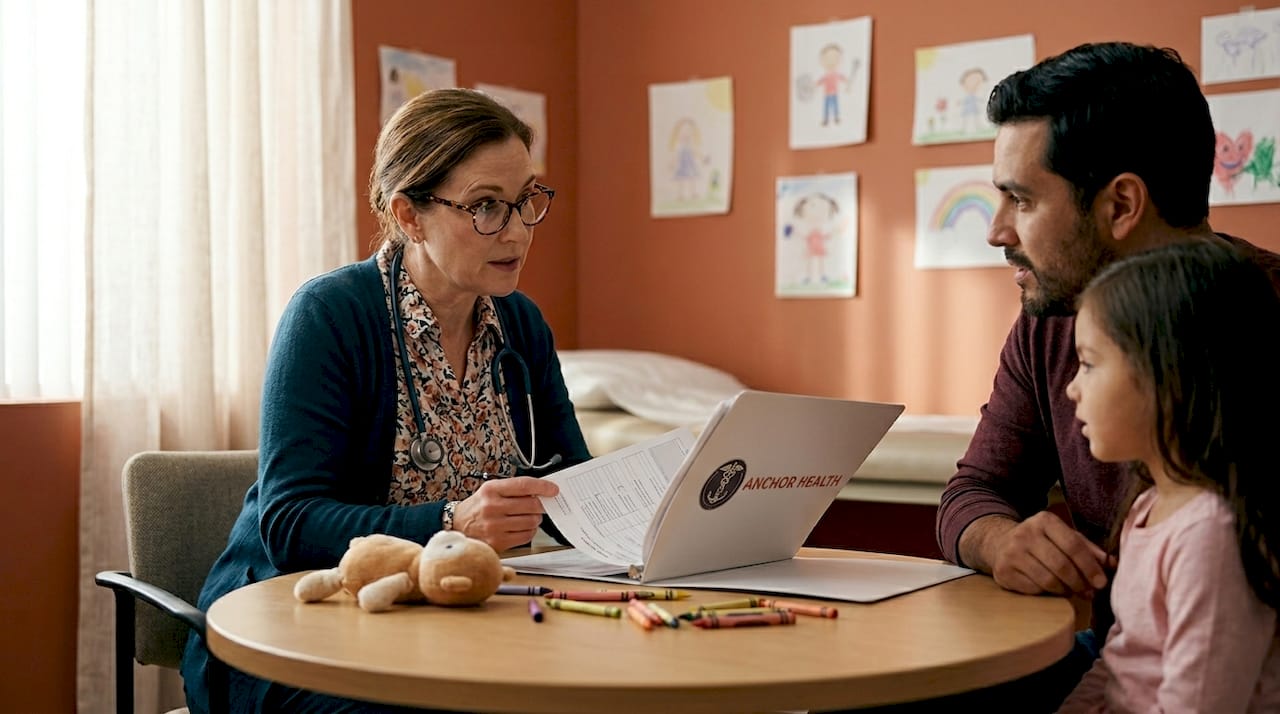
Why does this matter practically? A clinician who has known your child since infancy notices when something is subtly off. A provider who has tracked your blood pressure for five years recognizes a meaningful change before it becomes a crisis. Proactive primary care means your clinician is actively mapping screenings, interpreting gradual health changes, and guiding prevention. That is a fundamentally different experience than visiting an urgent care clinic for each new symptom.
Pro Tip: When evaluating a primary care practice, ask directly: “Will my family see the same provider at each visit?” If the answer is uncertain, that is worth weighing carefully.
Strong family primary care also means the practice takes a whole-person approach. Comprehensive visits assess physical, behavioral, social, emotional, and spiritual health to build personal health plans. That breadth is what separates a genuine primary care relationship from a simple prescription refill service.
Key criteria to look for in a family primary care practice:
- A consistent provider assigned to your family across visits
- Proactive scheduling of preventive screenings, not just sick-visit responses
- Willingness to address mental and behavioral health alongside physical concerns
- Care coordination with specialists when needed, with records shared across the team
- Team-based care models that include nurses, social workers, and pharmacists for broader support
2. Preventive care strategies across every life stage
Preventive care is not one-size-fits-all. The screenings and interventions that protect a toddler are different from those protecting a 45-year-old or a 70-year-old. Effective family health care guidelines organize these by life stage so nothing falls through the cracks.
For children, developmental monitoring is a cornerstone. CDC developmental guidance recommends screening or intervention by 15 months if milestones are missed or regressed, with no screen time under age two for healthy brain development. These are not optional benchmarks. Missing them delays access to early intervention services that produce significantly better long-term outcomes.
Lipid screening is another area where guidelines have sharpened. Universal lipid screening is now recommended for all children aged 9 to 11 years to detect familial hypercholesterolemia early, before puberty’s natural LDL dip masks the true cholesterol burden. Many families are unaware this screening exists for children.
For adults and seniors, the preventive agenda shifts toward cardiovascular risk, cancer screening, and mental health. Blood pressure checks, colorectal cancer screening, mammograms, and depression screening all carry specific age-based timelines your provider should be tracking. Vaccine schedules also evolve with age. The AAFP 2025 immunization update recommends universal COVID-19 vaccination for children 6 to 23 months and pneumococcal vaccination starting at age 50, with additional emphasis on vaccination during pregnancy.
Preventive care across life stages should cover:
- Developmental milestone monitoring at every well-child visit through age five
- Lipid screening for children aged 9 to 11 years
- Annual blood pressure and mental health screening for adults
- Age-appropriate cancer screenings (colorectal, cervical, breast, lung)
- Updated vaccine schedules reviewed at every annual visit for all family members
- Lifestyle counseling on nutrition, sleep, and physical activity tailored to each age group
3. Managing chronic conditions within a primary care framework
Chronic conditions, including asthma, diabetes, hypertension, migraines, and anxiety, require a different kind of care than acute illness. The goal is not to treat flares. The goal is to prevent them through structured, ongoing management.
One of the most practical tools in this space is the symptom diary. Structured symptom tracking improves long-term management of chronic conditions like headaches by helping clinicians identify patterns, adjust treatments, and confirm whether a current plan is working. A parent tracking their child’s asthma triggers over six weeks gives their provider far more useful information than a verbal summary during a rushed appointment.
Structured chronic condition management should include:
- Regular follow-up appointments scheduled proactively, not only when symptoms worsen
- Medication reviews at least annually to assess effectiveness, side effects, and interactions
- Symptom and treatment diaries maintained between visits to capture real-world patterns
- Mental health check-ins built into chronic care visits, since conditions like diabetes and chronic pain carry significant emotional burden
- Specialist coordination managed through your primary care provider to keep records unified and avoid conflicting treatment plans
- Family education so caregivers understand warning signs, medication protocols, and when to seek urgent care
Pro Tip: Ask your provider to give you a written chronic care plan at your next visit. It should list your current medications, target health numbers (like blood pressure or HbA1c), and the schedule for your next follow-up. If you do not have one, request it directly.
Coordinated whole-person care that integrates labs, specialist notes, medications, and risk tracking in one place produces measurably better outcomes and lower costs over time. That coordination belongs with your primary care provider.
4. Comparing primary care models: what works best for families
Not all primary care practices operate the same way. Understanding the differences helps you make a more informed choice for your household.
| Feature | Physician-only model | Team-based model |
|---|---|---|
| Care breadth | Limited to physician’s scope | Includes nurses, social workers, pharmacists |
| Behavioral health | Often referred out | Frequently integrated on-site or via telehealth |
| Chronic care coordination | Physician-managed | Shared across care team |
| Access and availability | Constrained by one schedule | More flexible, multiple points of contact |
| Social determinants addressed | Rarely | More consistently screened and addressed |
Telehealth adds another dimension to this comparison. For families managing multiple schedules, telehealth primary care removes the logistical barriers that cause people to skip preventive visits. A video visit for a medication review or a follow-up on lab results takes 20 minutes without travel. That accessibility translates directly into better adherence to care plans.
What matters most when comparing models:
- Does the practice proactively reach out for overdue screenings, or do you have to remember everything yourself?
- Can you communicate with your care team between visits without waiting for an appointment slot?
- Are social determinants of health like housing stability and food security part of the clinical conversation? Research confirms these factors directly affect long-term health outcomes.
- Is there a clear process for specialist referrals and record sharing?
5. Practical tips to get more from every primary care visit
Knowing the best practices in family medicine is useful. Applying them in real life requires a few deliberate habits.
Appointment preparation is one of the highest-leverage actions a family can take. Bringing a written medication list and a brief health diary allows your clinician to spend the visit analyzing and planning rather than collecting basic information. This is especially true for families managing multiple conditions across different family members.
Practical habits that improve your family’s primary care experience:
- Maintain a running medication list for every family member, updated after any prescription change
- Keep a brief health log between visits noting new symptoms, sleep changes, mood shifts, or anything that feels different
- Schedule preventive visits at the start of each year so they do not get displaced by busy seasons
- Bring a list of questions to each appointment, prioritized so the most important ones come first
- Ask your provider explicitly about behavioral and social health needs, not just physical complaints
- Request a summary of your visit or care plan in writing before you leave
Pro Tip: Create a shared digital document for your household that lists each family member’s medications, allergies, chronic conditions, and last screening dates. Bring it to every appointment. It takes 30 minutes to set up and saves hours over time.
Family physicians consistently emphasize that primary care works best as a partnership. The more information you bring to the relationship, the more your provider can do with it.
My honest take on where families go wrong with primary care
I have spent years watching families use primary care reactively, and it is the single most common pattern that leads to preventable health crises. People schedule a visit when something hurts. They cancel the annual wellness exam when life gets busy. They assume that no news from their doctor means everything is fine.
What I have learned is that the families who get the most from primary care treat it like a standing relationship, not an emergency service. They show up for the preventive visits. They communicate between appointments. They ask questions about what is coming next, not just what is wrong right now.
The other pattern I see consistently is underestimating the value of behavioral and social health in primary care conversations. A child struggling in school, a parent dealing with work stress, a grandparent who has become socially isolated. These are not peripheral concerns. They are clinical ones. The best primary care providers I have seen treat them that way.
Telehealth has genuinely changed what is possible here. Families who previously skipped follow-ups because of scheduling conflicts now have a realistic path to consistent care. That access matters more than most people realize until they have experienced the difference.
The shift I would encourage every family to make is this: stop thinking of primary care as something you access when sick. Start thinking of it as the ongoing relationship that keeps your family from getting sick in the first place.
— Paule
How Myanchorhealthpc supports your family’s health at home
At Myanchorhealthpc, we know that good primary care extends beyond the appointment. Maryland families who want to stay prepared between visits can find practical home health tools in our online store.
Stock your home with the tools that support day-to-day health management. Our digital thermometers make temperature monitoring quick and accurate for every age. We also carry wound care supplies for basic first aid, face masks for infection control during illness season, and support sticks for mobility and injury recovery. Pair these with a consistent telehealth primary care relationship and your family has a genuinely solid foundation for year-round health.
FAQ
What are the most important family primary care best practices?
The most impactful practices are maintaining continuity with a consistent provider, scheduling proactive preventive screenings by age, and managing chronic conditions through structured follow-ups and symptom tracking rather than waiting for flares.
How often should families schedule primary care visits?
Most adults benefit from an annual wellness visit, while children need well-child visits at defined intervals through adolescence. Families managing chronic conditions should schedule additional follow-ups every three to six months depending on the condition.
What is the role of telehealth in family primary care?
Telehealth removes scheduling barriers that cause families to skip preventive and follow-up visits. For medication reviews, chronic care check-ins, and behavioral health support, video visits provide the same clinical value as in-person appointments with significantly less disruption to family schedules.
When should a child be screened for high cholesterol?
Universal lipid screening is now recommended for all children between ages 9 and 11 to catch familial hypercholesterolemia before puberty’s natural cholesterol dip masks elevated levels.
How can families address behavioral health in primary care?
Bring behavioral and social concerns directly to your primary care provider rather than waiting for a specialist referral. Expert-led team care that includes social workers and behavioral health professionals is one of the most effective ways to address these needs within a primary care setting.
Recommended
- Support Stick Archives – My Anchor Health PC – Maryland
- face mask Archives – My Anchor Health PC – Maryland
- Bandage Archives – My Anchor Health PC – Maryland
- Digital Thermometer Archives – My Anchor Health PC – Maryland
Blog & Information Disclaimer
Last Updated: May 23, 2026
The information provided on the Anchor Health website (https://myanchorhealthpc.com/), including but not limited to blog posts, articles, newsletters, graphics, and other materials (collectively, the "Content"), is for general informational and educational purposes only.
By accessing and using this website, you acknowledge and agree to the following terms and conditions:
The Content on this website is not intended to be a substitute for professional medical advice, diagnosis, or treatment. Always seek the advice of your physician, nurse practitioner, or other qualified health provider with any questions you may have regarding a medical condition. Never disregard professional medical advice or delay in seeking it because of something you have read on this website.
Reading, interacting with, or sharing the Content on this website does not establish a patient-provider relationship between you and Anchor Health or any of its clinicians, including Paule Valery Joseph, PhD, MBA, CRNP, FAAN. A formal patient-provider relationship is only established after you have completed the formal intake process, signed our clinical consent forms, and participated in a secure clinical consultation.
If you are experiencing a medical emergency, call 911 or seek emergency medical services immediately.
Anchor Health is a primary care practice and does not provide emergency or crisis intervention services through its website or blog.
While Anchor Health strives to provide thoughtful, evidence-based information grounded in our Anchored Care℠ model, healthcare is a rapidly evolving field. We make no representations or warranties, express or implied, about the completeness, accuracy, reliability, or suitability of the information contained in the Content. Any reliance you place on such information is strictly at your own risk.
Anchor Health is a telehealth practice providing services to patients physically located within the state of Maryland. The information provided on this blog is intended for residents of Maryland and is governed by the laws and regulations of that state. Accessing this information from outside of Maryland does not imply that our clinicians are licensed to practice medicine or provide consultations in your jurisdiction.
Content related to Weight & Metabolic Health, including discussions of GLP-1 medications or other medical therapies, is provided for educational context regarding our clinical approach. Prescriptions and specific medical recommendations are only made following a comprehensive clinical evaluation, diagnostic testing, and shared decision-making within a formal patient-provider relationship.
This website may contain links to external websites that are not provided or maintained by or in any way affiliated with Anchor Health. Please note that Anchor Health does not guarantee the accuracy, relevance, timeliness, or completeness of any information on these external websites.
To the fullest extent permitted by law, Anchor Health, its owners, and its employees shall not be liable for any direct, indirect, incidental, consequential, or punitive damag
Related posts