Telehealth’s Role in Rural Maryland Healthcare Access

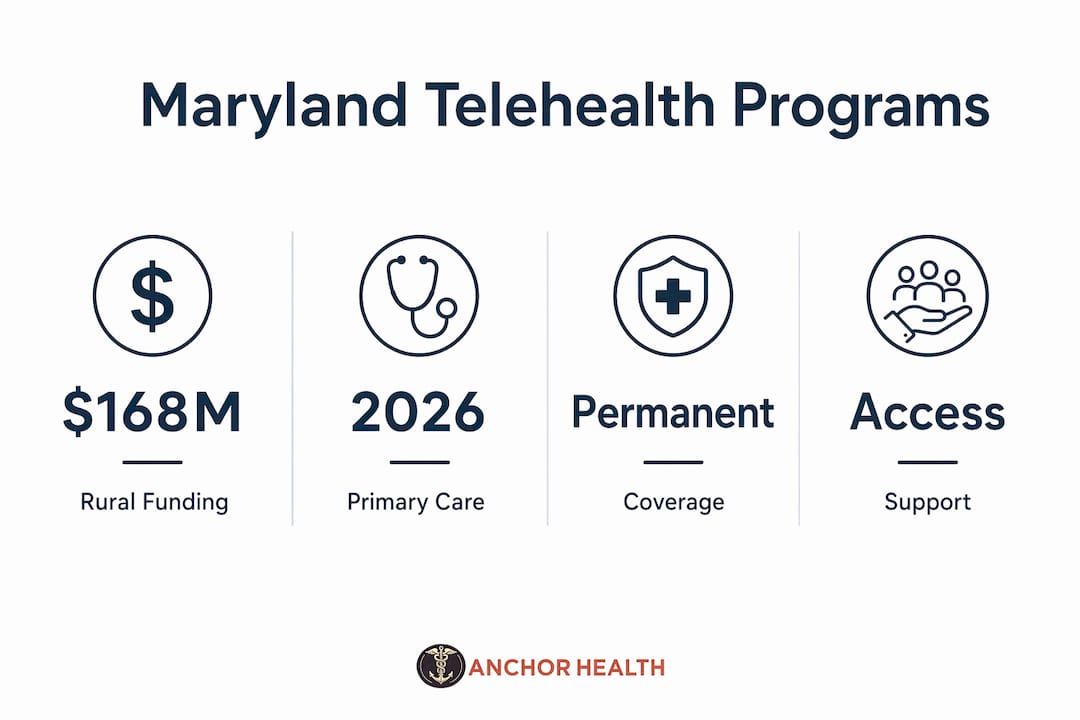
Telehealth is defined as the delivery of medical care through secure video, phone, or digital platforms, and its role in rural Maryland healthcare access is to connect residents with primary care, specialists, and behavioral health services without requiring long drives to distant facilities. Maryland has committed $168 million through the Rural Health Transformation Program to expand care across 18 rural counties. The Preserve Telehealth Access Act, passed in 2025, made telehealth coverage permanent for conditions ranging from diabetes to acute stroke. For families in Garrett County, Somerset County, or Dorchester County, these developments are not abstract policy wins. They translate directly into fewer missed appointments, faster specialist access, and better chronic disease control.
How does telehealth reduce healthcare barriers in rural maryland?
Rural Maryland residents face longer travel distances and higher rates of chronic conditions than their urban counterparts. A resident in Garrett County may drive 60 or more miles to reach a cardiologist or endocrinologist. Telehealth eliminates that trip entirely by delivering the same consultation through a secure video visit.
The specific barriers telehealth addresses include:
- Transportation burden: Virtual visits remove the need to arrange rides, take time off work, or find childcare for a routine follow-up.
- Specialist shortages: Rural Maryland counties have far fewer specialists per capita. Telehealth connects patients to providers in Baltimore, Annapolis, or beyond without relocation.
- Care continuity: Patients managing diabetes, hypertension, or obesity can check in with their provider monthly rather than waiting months for an in-person slot.
- Behavioral health gaps: Mental health providers are especially scarce in rural areas. Telehealth platforms now deliver therapy, psychiatric evaluation, and addiction support directly to patients at home. Telehealth treatment services through Maryland-based behavioral health programs have expanded this reach significantly.
Broadband access remains uneven across rural Maryland counties, which limits telehealth adoption for some households. Hybrid clinic models address this gap by placing telehealth kiosks or facilitators inside local pharmacies, community centers, or rural health clinics. These setups let patients use high-speed connections and receive hands-on support when needed.
Pro Tip: Before your first virtual visit, contact your county’s local health department or Maryland’s 211 helpline to ask about free broadband access points and telehealth resource centers near you.
What state and federal programs support telehealth expansion in maryland?
Maryland has moved aggressively to fund and formalize telehealth infrastructure. The programs below represent the most significant investments shaping rural access right now.
| Program | What It Does | Who It Serves |
|---|---|---|
| Rural Health Transformation Program | Allocates $168 million to expand primary care, behavioral health, and specialty services | 18 rural Maryland counties |
| Preserve Telehealth Access Act (2025) | Permanently extends telehealth coverage for chronic and acute conditions | All Maryland Medicaid and Medicare enrollees |
| Advanced Primary Care Program (2026) | Integrates telehealth into preventive and coordinated care | 1.2 million Medicare and Medicaid enrollees |
| Maryland Health Care Commission Rural Grants | Funds local telehealth infrastructure and provider training | Rural clinics and community health organizations |
The Advanced Primary Care Program is worth understanding in detail. Starting in 2026, it pairs enrolled patients with a consistent primary care provider who coordinates all their care, including virtual visits, specialist referrals, and preventive screenings. That continuity matters enormously for rural residents who have historically bounced between urgent care clinics and ERs due to lack of a regular provider.
The Preserve Telehealth Access Act closes a gap that worried many rural patients. Before its passage, telehealth coverage under Medicaid was tied to temporary pandemic-era rules. Making coverage permanent means your virtual visit for blood pressure management or diabetes monitoring carries the same insurance protection as an office visit.
What are the real limitations of telehealth in rural maryland?
Telehealth is a powerful tool, but it does not solve every problem rural Maryland residents face. Understanding its limits helps you use it wisely.
- Broadband gaps: Digital literacy and broadband access gaps remain critical obstacles in many rural counties. Households without reliable internet cannot complete a video visit, and audio-only calls offer less clinical value for many conditions.
- Technology barriers for older adults: Elderly patients often struggle with video platforms, login processes, and device setup. Without a caregiver or facilitator present, these barriers can prevent access entirely.
- No replacement for emergency care: Telehealth cannot manage a heart attack, a broken bone, or a severe asthma attack. Residents still need a plan for reaching emergency services quickly.
- Incomplete care picture: Social determinants such as food insecurity, transportation, and workforce shortages affect health outcomes in ways a video visit cannot address alone.
- Physical exam limitations: Certain diagnoses require hands-on assessment. Skin conditions, joint injuries, and abdominal pain often need in-person evaluation to be properly diagnosed.
Hybrid telehealth models that combine virtual visits with local clinic support have shown strong results for elderly and less tech-savvy populations. In these models, a local health worker helps the patient connect, handles device setup, and stays present during the visit. This approach brings the benefits of telemedicine rural healthcare to patients who would otherwise be left out.
Pro Tip: If video visits feel difficult, ask your provider whether audio-only telehealth visits are covered under your plan. Many Maryland Medicaid programs allow phone-based visits as a covered alternative.
How can rural maryland residents use telehealth for better health outcomes?
Telehealth delivers the most value when you use it consistently, not just when something goes wrong. Here is a practical framework for making virtual healthcare solutions work for your family.
Conditions telehealth manages well
Remote chronic condition management via telehealth produces clinical outcomes comparable to in-person care and reduces hospitalizations. Diabetes, hypertension, obesity, anxiety, and depression all respond well to regular virtual check-ins combined with remote monitoring tools like blood pressure cuffs or continuous glucose monitors.
Telehealth vs. in-person visits: a practical comparison
| Situation | Telehealth | In-Person Visit |
|---|---|---|
| Chronic disease follow-up | Preferred. Saves travel, maintains continuity | Needed for annual physical or lab review |
| Mental health counseling | Equally effective for most conditions | Preferred for initial psychiatric evaluation |
| Prescription management | Covered for most medications via telehealth | Required for controlled substances in some cases |
| Acute illness (fever, rash) | Good for initial assessment and triage | Needed if physical exam is required |
| Emergency symptoms | Call 911. Telehealth is not appropriate | Go to ER immediately |
Steps to get the most from a telehealth visit
- Test your connection at least 15 minutes before your appointment. Use a device with a camera and microphone.
- Prepare a symptom list with dates, severity, and any medications you are currently taking.
- Have your insurance card and pharmacy information ready so prescriptions can be sent without delay.
- Find a quiet, private space where you can speak openly with your provider.
- Follow up in writing by requesting a visit summary or care plan through your provider’s patient portal.
Federal guidance frames telehealth as a tool for ongoing health management, not just episodic care. That shift in thinking matters. When you treat your virtual visit the same way you would an in-person appointment, including preparation and follow-through, you get the same quality of care. Providers like Myanchorhealthpc build this continuity into every visit through their Anchored Care℠ᴵᴾ model, which prioritizes long-term relationships over one-time encounters.
For families managing multiple members’ health needs, telehealth for busy caregivers offers a practical way to coordinate care without multiple trips to different offices. Pediatric telehealth is also available for children’s routine visits, sick visits, and developmental check-ins. Learn how to establish pediatric telehealth care for your family through Maryland-based providers.
Key takeaways
Telehealth improves rural Maryland healthcare access by removing travel barriers, expanding specialist reach, and supporting chronic disease management through permanent state-backed coverage.
| Point | Details |
|---|---|
| State investment is substantial | Maryland’s $168 million Rural Health Transformation Program funds care expansion across 18 rural counties. |
| Coverage is now permanent | The Preserve Telehealth Access Act (2025) makes telehealth coverage lasting for chronic and acute conditions. |
| Chronic disease management works virtually | Telehealth produces clinical outcomes comparable to in-person care for diabetes, hypertension, and obesity. |
| Broadband gaps remain a real barrier | Digital access and technology literacy challenges limit telehealth adoption for many rural households. |
| Hybrid models fill the gap | Local facilitators and clinic-based kiosks help elderly and less tech-savvy patients access virtual care. |
What i’ve learned about telehealth’s real impact in rural maryland
The conversation around telehealth in rural Maryland often focuses on what the technology can do. I think the more honest conversation is about what it cannot do alone.
Telehealth is genuinely transformative for the right patient in the right situation. A 58-year-old in Somerset County managing Type 2 diabetes who previously skipped follow-ups because of the 45-mile drive to the nearest endocrinologist now has no excuse to miss a check-in. That is real, measurable progress. The proximity to healthcare disparities documented across rural Maryland counties confirm that geographic isolation is a genuine clinical risk, not just an inconvenience.
But I have also seen how quickly the promise fades when a patient does not have reliable internet, does not feel comfortable with video technology, or lives alone without anyone to help them set up a device. The digital divide is not a minor footnote. It is a structural barrier that affects the very populations who need telehealth most.
The programs Maryland is funding in 2026 are moving in the right direction by pairing telehealth with community health workers, local clinic support, and social services. That integrated approach is what actually works. Telehealth alone is a partial answer. Telehealth plus broadband access, plus a trusted consistent provider, plus support for food and transportation needs, is a real solution.
My advice to rural Maryland residents is this: start with what you have. If you have a smartphone and a data plan, you can access telehealth today. Find a provider who will stay with you over time, not just triage you once. The continuity is where the real health gains happen.
— Paule
Start your telehealth primary care journey in maryland
Rural Maryland families deserve care that fits their lives, not the other way around. Myanchorhealthpc delivers primary care, women’s health, mental health support, and chronic disease management through secure video visits across Maryland. No long drives. No rushed appointments. Just consistent, relationship-based care from a provider who knows your history.
Whether you are managing a chronic condition, looking for a trusted provider for your children, or navigating a health transition, Myanchorhealthpc’s Anchored Care℠ᴵᴾ model is built for exactly that. Start by learning how to choose telehealth primary care for your family, and take the first step toward care that actually stays with you. Use our first visit checklist to prepare with confidence.
FAQ
What is telehealth and how does it work in maryland?
Telehealth is the delivery of medical care through secure video or phone platforms. In Maryland, it is covered by Medicaid and Medicare under the Preserve Telehealth Access Act, which made coverage permanent in 2025.
Which conditions can telehealth treat for rural maryland residents?
Telehealth is effective for managing diabetes, hypertension, obesity, anxiety, depression, and routine primary care needs. It also supports prescription management and specialist consultations for most non-emergency conditions.
Does maryland medicaid cover telehealth visits?
Yes. The Preserve Telehealth Access Act permanently extended telehealth coverage under Maryland Medicaid, including for chronic disease management and behavioral health services.
What if i don’t have reliable internet for telehealth?
Audio-only phone visits are covered under many Maryland Medicaid plans. Hybrid telehealth models at local clinics and community centers also provide device access and support for patients without home broadband.
How do i find a telehealth provider in rural maryland?
Start with Maryland’s 211 helpline or your county health department for local resources. You can also use our guide to find telehealth providers in Maryland to identify options that accept your insurance.
Recommended
- How telehealth expands healthcare access for Maryland families
- Top 4 familyclinic.clinic Alternatives Providers 2026
- How to Choose Telehealth Primary Care for Your Family
Blog & Information Disclaimer
Last Updated: May 23, 2026
The information provided on the Anchor Health website (https://myanchorhealthpc.com/), including but not limited to blog posts, articles, newsletters, graphics, and other materials (collectively, the "Content"), is for general informational and educational purposes only.
By accessing and using this website, you acknowledge and agree to the following terms and conditions:
The Content on this website is not intended to be a substitute for professional medical advice, diagnosis, or treatment. Always seek the advice of your physician, nurse practitioner, or other qualified health provider with any questions you may have regarding a medical condition. Never disregard professional medical advice or delay in seeking it because of something you have read on this website.
Reading, interacting with, or sharing the Content on this website does not establish a patient-provider relationship between you and Anchor Health or any of its clinicians, including Paule Valery Joseph, PhD, MBA, CRNP, FAAN. A formal patient-provider relationship is only established after you have completed the formal intake process, signed our clinical consent forms, and participated in a secure clinical consultation.
If you are experiencing a medical emergency, call 911 or seek emergency medical services immediately.
Anchor Health is a primary care practice and does not provide emergency or crisis intervention services through its website or blog.
While Anchor Health strives to provide thoughtful, evidence-based information grounded in our Anchored Care℠ model, healthcare is a rapidly evolving field. We make no representations or warranties, express or implied, about the completeness, accuracy, reliability, or suitability of the information contained in the Content. Any reliance you place on such information is strictly at your own risk.
Anchor Health is a telehealth practice providing services to patients physically located within the state of Maryland. The information provided on this blog is intended for residents of Maryland and is governed by the laws and regulations of that state. Accessing this information from outside of Maryland does not imply that our clinicians are licensed to practice medicine or provide consultations in your jurisdiction.
Content related to Weight & Metabolic Health, including discussions of GLP-1 medications or other medical therapies, is provided for educational context regarding our clinical approach. Prescriptions and specific medical recommendations are only made following a comprehensive clinical evaluation, diagnostic testing, and shared decision-making within a formal patient-provider relationship.
This website may contain links to external websites that are not provided or maintained by or in any way affiliated with Anchor Health. Please note that Anchor Health does not guarantee the accuracy, relevance, timeliness, or completeness of any information on these external websites.
To the fullest extent permitted by law, Anchor Health, its owners, and its employees shall not be liable for any direct, indirect, incidental, consequential, or punitive damag
Related posts