Primary Care’s Role in Caregiver Preventive Screenings

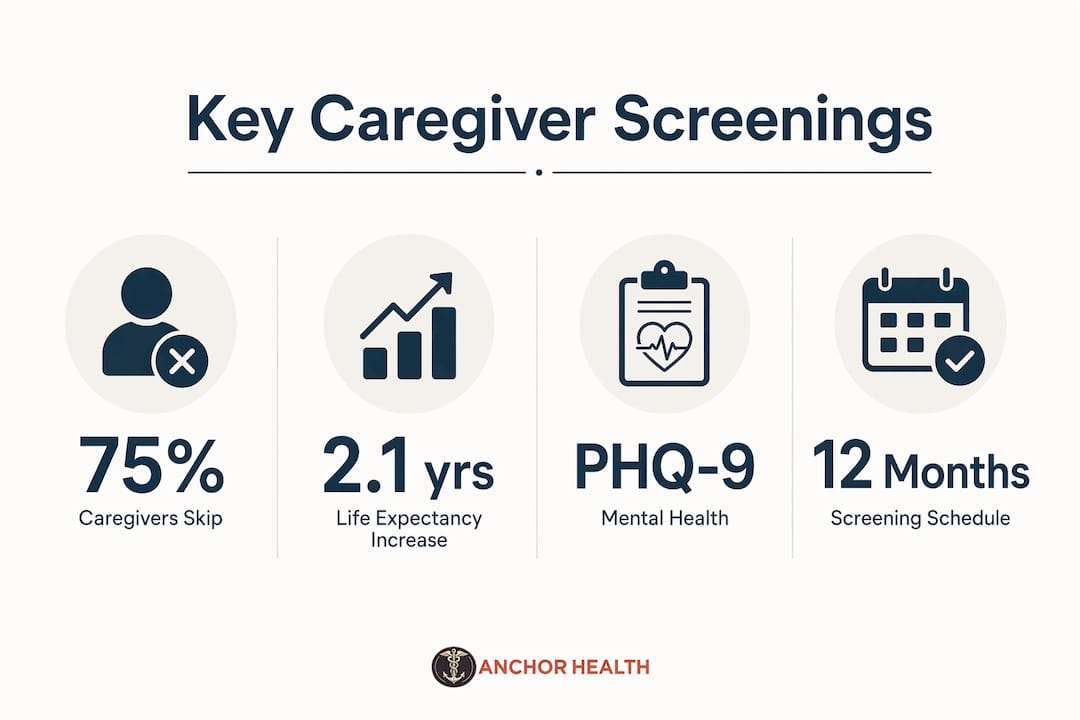
Primary care is the foundation of preventive screenings for caregivers, providing the consistent medical oversight that catches health problems before they become crises. Nearly 75% of family caregivers neglect their own medical care, with over half skipping appointments entirely. That statistic reflects a pattern with serious consequences: untreated hypertension, undetected cholesterol problems, and mounting burnout that no one addresses. The role of primary care in caregiver preventive screenings goes beyond annual checkups. It creates a trusted relationship where your health stays visible, even when you are focused entirely on someone else’s.
How does having a primary care provider improve caregivers’ adherence to preventive screenings?
A consistent primary care provider (PCP) is the single strongest predictor of whether caregivers actually complete their screenings. Adults with a usual source of primary care show preventive screening uptake of 95.5% for chronic disease prevention, compared to 67.6% for those without one. That gap is not a coincidence. It reflects what continuity of care actually does.
The numbers break down further in ways that matter for caregivers specifically:
- Cholesterol screening: 89.2% with a PCP versus 56.7% without
- Mammogram adherence: 83.8% with a PCP versus 54.2% without
- Emergency visits and hospitalizations: significantly lower for patients with ongoing PCP relationships
- Healthcare cost reduction: regular screenings reduce costs by approximately 54% through prevention and early detection
The reason these numbers are so different comes down to trust and accountability. A PCP who knows you over time notices when you have skipped a mammogram or when your blood pressure has been creeping up for two visits. That relationship creates a natural prompt that a one-time urgent care visit never provides. For caregivers who deprioritize their own health by default, that external accountability is not optional. It is protective.
Family-focused primary care also means your provider understands the full context of your life, not just your lab results. That context shapes which screenings get prioritized and when.

What specific preventive screenings are essential for caregivers?
Preventive health exams detect previously undiagnosed conditions in nearly 50% of adults. For caregivers, the most common findings are elevated blood pressure and high LDL cholesterol. Both conditions develop silently and worsen under sustained stress.
Primary care tailors screening schedules to the individual, but caregivers share a recognizable risk profile. The screenings that matter most include:
- Blood pressure monitoring: Caregiving stress directly elevates cardiovascular risk. Routine checks catch hypertension early, before it requires aggressive treatment.
- Cholesterol panels: Elevated LDL is common in caregivers with disrupted sleep and poor diet patterns. A fasting lipid panel gives your PCP a clear picture.
- Cancer screenings: Mammograms, cervical screenings, and colorectal cancer screenings follow age-based guidelines, but your PCP tracks your schedule and flags when you are overdue.
- Mental health evaluations: Standardized tools like the PHQ-9 for depression and the GAD-7 for anxiety are quick, validated, and frequently skipped without a PCP prompting them.
- Diabetes screening: Caregivers with disrupted sleep and high stress carry elevated risk for insulin resistance. A fasting glucose or HbA1c test takes minutes.
Your PCP also uses the visit itself as a screening opportunity. Questions about sleep quality, appetite changes, and energy levels are not small talk. They are clinical data points that inform whether you need a referral, a lab order, or simply a direct conversation about what you are managing at home.
Pro Tip: Tell your PCP that you are a caregiver at the start of every visit. That single disclosure shifts the entire clinical conversation. Your provider can then tailor screenings, counseling, and referrals to your actual risk profile rather than a generic one.
How does primary care help identify and address caregiver burnout?
PCPs function as early warning systems for caregiver burnout, detecting signs during routine exams that caregivers themselves often miss or dismiss. Clinical signs of caregiver strain include blood pressure elevation, irritability, and subtle mood shifts that appear during preventive visits. These are not vague impressions. They are measurable changes that a provider who knows your baseline can identify accurately.
Burnout has physical consequences that standard screenings capture. Approximately 65% of caregivers report significant emotional strain, and 75% report poor sleep quality. Both of those conditions accelerate cardiovascular disease, impair immune function, and increase the risk of depression. A PCP who screens for sleep quality and mood changes is not overstepping. They are doing exactly what preventive care is designed to do.
“Honest communication about stress enables integration of mental health support early, which is crucial for caregivers.” — Physicians supporting family caregivers, published in a peer-reviewed primary care study
The practical value of this early detection is that it opens doors. When you tell your PCP that you are exhausted, not sleeping, and feeling short-tempered, they can connect you with a counselor, a caregiver support group, or a community resource before the situation becomes a crisis. Caregivers who ask for help allow PCP teams to connect them with those resources proactively. The PCP becomes a coordinator, not just a clinician.
The screenings that specifically address burnout risk include:
- Sleep quality assessments using validated tools like the Epworth Sleepiness Scale
- Depression and anxiety screening with PHQ-9 and GAD-7
- Blood pressure trends reviewed across multiple visits, not just a single reading
- Direct questions about social support, respite care, and daily functioning
What practical strategies does primary care offer for busy caregivers?
Time is the most common reason caregivers skip their own screenings. Caregivers spend over three times as many hours on healthcare coordination as non-caregivers, which means their own appointments are the first thing cut when schedules tighten. Primary care addresses this directly through flexible delivery models.
Here are four strategies that work within a caregiver’s actual schedule:
- Use telehealth for routine screenings. Modern primary care offers telehealth and brief check-ins that accommodate limited time. A 20-minute video visit with Myanchorhealthpc covers blood pressure review, medication management, mental health screening, and lab order coordination without requiring travel or waiting rooms.
- Batch your appointments. Schedule your own PCP visit on the same day as your care recipient’s appointment. You are already in a healthcare mindset, transportation is arranged, and the mental barrier is lower.
- Communicate your constraints upfront. Tell your PCP you have 30 minutes and a specific concern. A focused visit with clear priorities is more effective than a rushed general checkup.
- Use care coordination support. Some PCP practices provide direct navigation assistance, helping caregivers manage referrals, lab scheduling, and insurance questions. That support reduces the hidden burden of health system navigation that caregivers carry disproportionately.
Pro Tip: Ask your PCP to create a 12-month screening calendar at your next visit. A written schedule with specific months for each test removes the mental load of tracking it yourself and makes it far easier to stay current.
Learning how to attend a telehealth visit as a caregiver takes less than 10 minutes and removes one of the biggest logistical barriers to consistent preventive care.
How do preventive screenings translate into better long-term health for caregivers?
Continuity with a primary care provider extends median life expectancy by at least 2.1 years. That figure comes from research on preventive health exams and primary care continuity. It reflects what happens when conditions like hypertension, elevated cholesterol, and early-stage depression are caught and managed rather than allowed to progress.
For caregivers, the long-term benefits are both personal and practical:
| Health outcome | Impact of consistent primary care |
|---|---|
| Hypertension detection | Early identification prevents stroke and heart disease |
| Cholesterol management | Reduces cardiovascular events through medication and lifestyle guidance |
| Mental health support | Earlier intervention reduces severity and duration of depressive episodes |
| Emergency visits | Significantly lower rates due to proactive chronic condition management |
| Overall life expectancy | At least 2.1 additional years linked to primary care continuity |
Reduced emergency visits matter for caregivers in a specific way. An unplanned hospitalization does not just affect you. It disrupts the entire care arrangement you have built for your loved one. Staying healthy through preventive care is, in practical terms, part of doing your job as a caregiver well.
The evidence is clear: preventive screenings in primary care are not a luxury for caregivers. They are the infrastructure that keeps you functional, present, and capable of providing care over the long term.
Key Takeaways
Primary care is the most reliable system caregivers have for staying current on preventive screenings, detecting burnout early, and building the long-term health that sustained caregiving requires.
| Point | Details |
|---|---|
| PCP continuity drives screening rates | Adults with a PCP complete preventive screenings at 95.5% versus 67.6% without one. |
| Disclose your caregiver role | Telling your PCP you are a caregiver tailors screenings and counseling to your actual risk profile. |
| Burnout shows up in clinical data | Blood pressure trends, sleep quality, and mood changes are measurable signs your PCP can detect early. |
| Telehealth removes time barriers | Video visits and brief check-ins make preventive care accessible without disrupting caregiving schedules. |
| Continuity adds years | Primary care continuity is linked to at least 2.1 additional years of median life expectancy. |
Why caregivers deserve a provider who sees them as a patient first
Most caregivers I speak with share a version of the same story. They know they should schedule their own screening. They intend to. Then three months pass, and the appointment still has not happened. The reason is not laziness. It is that caregiving creates a psychological frame where your own health feels secondary by definition.
What I have seen change that pattern is not a reminder app or a health article. It is a provider who asks directly: “How are you doing?” That question, asked by someone who knows your history and takes your answer seriously, does something a checklist cannot. It makes your health feel like a legitimate priority rather than a guilty afterthought.
Dr. Riley Lipschitz puts it well: preventive screenings should be a shared, evolving partnership rather than a one-time checklist. That framing matters for caregivers especially. A partnership means your PCP is tracking your screening schedule, noticing what you have missed, and adjusting the plan as your caregiving situation changes. A checklist means you either did it or you did not.
The caregivers I see who maintain their own health most consistently are not the ones with the most time. They are the ones who have a provider they trust enough to be honest with. That honesty, about stress levels, sleep, and what they are actually managing at home, is what makes preventive care work. Without it, screenings become a formality. With it, they become a genuine safety net.
If you are a caregiver reading this, I want you to hear one thing clearly: your health is not separate from your caregiving. It is the foundation of it.
— Paule
Telehealth primary care built for caregivers who cannot wait
Caregivers need a primary care model that fits their schedule, not the other way around. Myanchorhealthpc offers secure video visits that cover the full range of preventive screenings, mental health support, and chronic condition management without requiring you to leave home or rearrange a care schedule.
If you are ready to make your own health a consistent priority, choosing telehealth primary care is the first practical step. Myanchorhealthpc also offers membership-based primary care for families who want enhanced access, longer visits, and a provider who knows them over time. Both options are designed for caregivers in Maryland who need care that works around their responsibilities, not against them.
FAQ
Why do caregivers skip preventive screenings so often?
Nearly 75% of family caregivers neglect their own medical care because caregiving demands consistently displace personal health appointments. Time constraints, guilt about prioritizing themselves, and health system navigation burdens all contribute.
What screenings should caregivers prioritize with their PCP?
Blood pressure monitoring, cholesterol panels, cancer screenings, mental health evaluations using tools like the PHQ-9, and diabetes screening are the most critical for caregivers given their elevated stress and cardiovascular risk.
How does telehealth support caregiver preventive health?
Telehealth visits eliminate travel time and allow caregivers to complete screenings, review labs, and address mental health concerns through a secure video visit without disrupting their caregiving schedule.
Can a PCP detect caregiver burnout during a routine visit?
Yes. PCPs assess blood pressure trends, sleep quality, mood changes, and stress indicators during preventive visits, functioning as early warning systems for burnout before it becomes a medical crisis.
How much does having a PCP actually improve health outcomes?
Adults with a consistent primary care provider show preventive screening rates of 95.5% versus 67.6% without one, and primary care continuity is linked to at least 2.1 additional years of median life expectancy.
Recommended
- Examples of Preventive Care for Kids: Parent’s Guide
- Primary Care’s Role in Women’s Reproductive Health
- Family Primary Care Best Practices for Every Age
- How to Attend a Telehealth Visit as a Caregiver
Blog & Information Disclaimer
Last Updated: May 23, 2026
The information provided on the Anchor Health website (https://myanchorhealthpc.com/), including but not limited to blog posts, articles, newsletters, graphics, and other materials (collectively, the "Content"), is for general informational and educational purposes only.
By accessing and using this website, you acknowledge and agree to the following terms and conditions:
The Content on this website is not intended to be a substitute for professional medical advice, diagnosis, or treatment. Always seek the advice of your physician, nurse practitioner, or other qualified health provider with any questions you may have regarding a medical condition. Never disregard professional medical advice or delay in seeking it because of something you have read on this website.
Reading, interacting with, or sharing the Content on this website does not establish a patient-provider relationship between you and Anchor Health or any of its clinicians, including Paule Valery Joseph, PhD, MBA, CRNP, FAAN. A formal patient-provider relationship is only established after you have completed the formal intake process, signed our clinical consent forms, and participated in a secure clinical consultation.
If you are experiencing a medical emergency, call 911 or seek emergency medical services immediately.
Anchor Health is a primary care practice and does not provide emergency or crisis intervention services through its website or blog.
While Anchor Health strives to provide thoughtful, evidence-based information grounded in our Anchored Care℠ model, healthcare is a rapidly evolving field. We make no representations or warranties, express or implied, about the completeness, accuracy, reliability, or suitability of the information contained in the Content. Any reliance you place on such information is strictly at your own risk.
Anchor Health is a telehealth practice providing services to patients physically located within the state of Maryland. The information provided on this blog is intended for residents of Maryland and is governed by the laws and regulations of that state. Accessing this information from outside of Maryland does not imply that our clinicians are licensed to practice medicine or provide consultations in your jurisdiction.
Content related to Weight & Metabolic Health, including discussions of GLP-1 medications or other medical therapies, is provided for educational context regarding our clinical approach. Prescriptions and specific medical recommendations are only made following a comprehensive clinical evaluation, diagnostic testing, and shared decision-making within a formal patient-provider relationship.
This website may contain links to external websites that are not provided or maintained by or in any way affiliated with Anchor Health. Please note that Anchor Health does not guarantee the accuracy, relevance, timeliness, or completeness of any information on these external websites.
To the fullest extent permitted by law, Anchor Health, its owners, and its employees shall not be liable for any direct, indirect, incidental, consequential, or punitive damag
Related posts