How Primary Care Prevents Diabetes Complications

Primary care prevents most diabetes complications by combining early detection, sustained risk-factor control, medication optimization, and structured self-management support. When your primary care clinician checks your A1C, urine albumin, and estimated glomerular filtration rate (eGFR) on a consistent schedule, orders lipid panels, manages your blood pressure, and connects you with Diabetes Self-Management Education and Support (DSMES), they are doing exactly what the American Diabetes Association (ADA) recommends to prevent microvascular and macrovascular complications before they become irreversible. This is not a single annual visit. It is a longitudinal, outcomes-driven relationship.
Here is what you can do right now:
- Confirm your A1C and urine albumin have been checked within the past year. If not, request them at your next visit.
- Ask about DSMES. Most insurance plans, including Medicare, cover it, and your primary care clinician can refer you.
- If you have cardiovascular or kidney risk factors, ask whether an SGLT2 inhibitor or GLP-1 receptor agonist is appropriate for you. These medications offer cardiorenal protection beyond glucose control.
- Schedule a telehealth follow-up if getting to a clinic is a barrier. Remote visits are a legitimate, effective way to maintain continuity.
The role of primary care in preventing diabetes complications is most powerful when it starts early and stays consistent. Myanchorhealthpc’s Anchored Care℠ᴵᴾ model is built on exactly that principle.
Table of Contents
- How does primary care actually prevent diabetes complications?
- What does your primary care clinician actually do to prevent complications?
- What tests should you expect, and how often?
- Why does DSMES reduce complications, and how do you access it?
- When does primary care bring in specialists?
- What barriers get in the way, and how does primary care address them?
- How do you know prevention is working?
- What should you bring to your next primary care visit?
- How Anchor Health applies this prevention framework in practice
- Key Takeaways
- Why continuity in primary care changes everything
- Myanchorhealthpc: telehealth primary care built around prevention
- Key sources and further reading
How does primary care actually prevent diabetes complications?
Primary care works because it combines frequent contact, risk-based screening, risk-factor optimization, patient education, and care coordination so problems are found at treatable stages. That combination is more protective than any single intervention on its own.

Consensus guidelines from the ADA and the European Association for the Study of Diabetes (EASD) have shifted the field away from person-centered, outcomes-driven treatment that focuses solely on A1C toward a broader framework that addresses blood pressure, kidney function, cardiovascular risk, mental health, and quality of life simultaneously. Your primary care clinician is positioned to manage all of those threads in one relationship.
The Chronic Care Model structures that work around team-based workflows, registries, decision support, and self-management support. Systematic reviews consistently show that self-management support is the most frequent Chronic Care Model intervention associated with improved outcomes for type 2 diabetes in primary care settings. Planned, proactive visits outperform reactive, symptom-driven ones because they catch deterioration before it becomes a crisis.
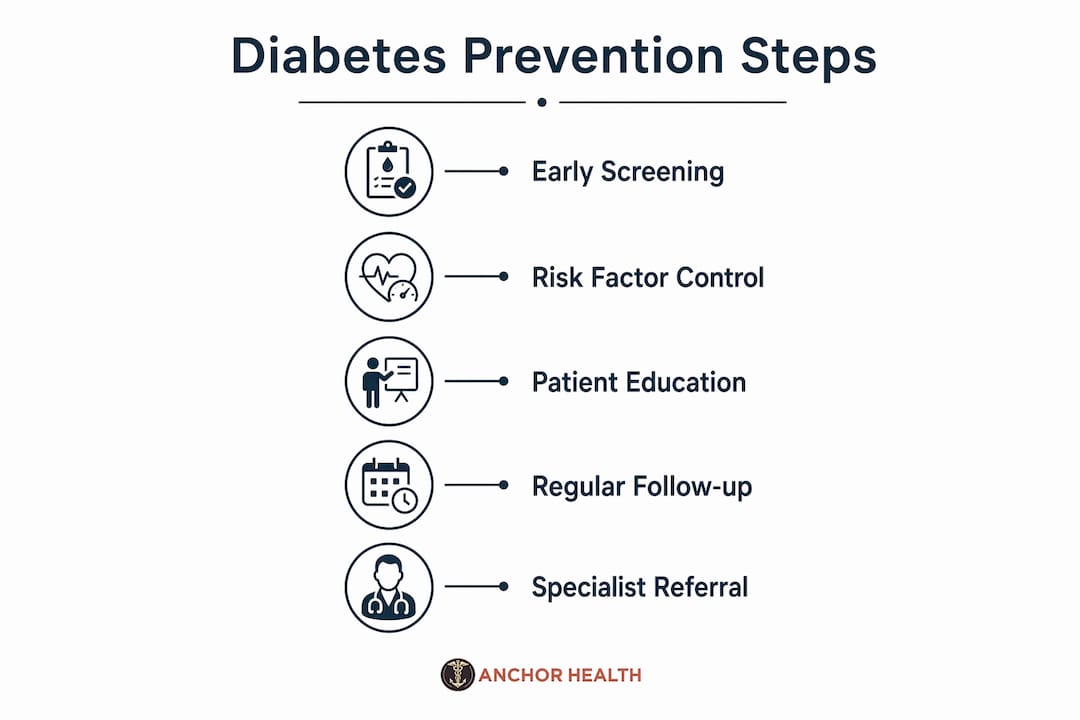
Continuity matters in a specific, clinical way. A clinician who has followed you for two or three years knows your baseline A1C, your medication tolerances, your work schedule, and your financial constraints. That context allows earlier medication changes, better-timed referrals, and more honest conversations about adherence. It is the kind of knowledge that a single urgent-care visit cannot replicate.
Pro Tip: If you have had the same primary care clinician for more than a year, bring a printed list of your last three A1C results to your next visit. Trends matter more than any single number, and your clinician can use that trajectory to decide whether to adjust therapy or refer you sooner.
What does your primary care clinician actually do to prevent complications?
The prevention of diabetes complications happens through a set of repeatable, evidence-based actions your primary care team performs at every visit and on a structured schedule.
- A1C monitoring. Tracks average blood sugar over roughly three months. Keeping A1C at your individualized target reduces the risk of retinopathy, nephropathy, and neuropathy. Your clinician adjusts medications when trends move in the wrong direction.
- Urine albumin and eGFR testing. Detects early kidney damage (diabetic nephropathy) before symptoms appear. When microalbuminuria is found, your clinician can start or titrate an ACE inhibitor or ARB to slow progression, often without waiting for a nephrology referral.
- Blood pressure management. Hypertension accelerates both kidney disease and cardiovascular risk in diabetes. Primary care manages BP at every visit, adjusting medications to reach individualized targets.
- Lipid panel and statin therapy. Most adults with diabetes and elevated cardiovascular risk qualify for statin therapy. Primary care initiates and monitors this, reducing the risk of heart attack and stroke.
- Tobacco cessation counseling. Smoking dramatically worsens vascular complications in diabetes. Primary care provides counseling, prescribes cessation aids, and tracks progress.
- Foot and eye exam referrals. Annual dilated retinal exams (ophthalmology) and foot exams (podiatry or in-office) catch proliferative retinopathy and peripheral neuropathy early, when intervention is still effective.
- Immunizations. People with diabetes face higher risks from influenza, pneumococcal disease, and hepatitis B. Primary care keeps immunizations current.
- Medication optimization, including SGLT2 inhibitors and GLP-1 receptor agonists. Primary care clinicians are usually the first and most frequent point of contact for people with type 2 diabetes. Initiating SGLT2 inhibitors or GLP-1 receptor agonists in appropriate patients provides cardiorenal benefits earlier than waiting for a specialist. Delaying this until disease is advanced is a recognized pitfall, and primary care can act first when monitoring protocols are in place.
- Telehealth-enabled follow-up. Remote blood pressure logs, continuous glucose monitor (CGM) data review, and video visits make consistent monitoring possible for patients who cannot travel frequently. If you want to understand how telehealth supports diabetes monitoring, the workflows are practical and covered by most major insurers.
What tests should you expect, and how often?
Evidence-based primary care uses targeted screenings driven by your individual risk profile, not indiscriminate yearly panels for everyone. The table below reflects ADA-aligned intervals for most adults with established type 2 diabetes.
| Test or Action | Typical Interval | Notes |
|---|---|---|
| A1C | Every 3 months if uncontrolled or recently changed; every 6 months if stable and at goal | Individualized target; more frequent if therapy is adjusted |
| Blood pressure | Every visit | Target typically below 130/80 mmHg for most adults with diabetes |
| Urine albumin-to-creatinine ratio | At least annually; every 3–6 months with CKD or albuminuria | Triggers ACE inhibitor/ARB initiation or nephrology referral |
| eGFR (kidney function) | At least annually; more often with CKD stages 3–5 | Rapid decline triggers nephrology referral |
| Fasting lipid panel | Annually or per ASCVD risk assessment | Guides statin initiation and intensity |
| Dilated retinal exam | Annually; every 1–2 years if stable and low risk | Ophthalmology referral; telehealth retinal imaging emerging |
| Comprehensive foot exam | Annually; more often with neuropathy or prior ulcer | Podiatry referral for high-risk feet |
| Dental exam | At least annually | Periodontal disease worsens glycemic control |
| Immunizations (flu, pneumococcal, hepatitis B) | Per CDC schedule | Flu annually; others per age and risk |
| Depression and anxiety screening | Annually or when clinically indicated | PHQ-9 and GAD-7 commonly used |
| Remote BP or CGM data review | As agreed with your clinician (often monthly or quarterly) | Telehealth visits can substitute for in-person follow-up |
Thresholds that should prompt earlier action or specialist referral: urine albumin above 300 mg/g, eGFR declining more than 5 mL/min/1.73 m² per year, A1C persistently above goal despite medication adjustment, or any new proliferative retinopathy finding.
Why does DSMES reduce complications, and how do you access it?
Diabetes Self-Management Education and Support (DSMES) is a structured program that teaches you the skills to manage diabetes day to day: how to interpret blood sugar readings, what to eat, how to exercise safely, how to handle sick days, and how to recognize and respond to hypoglycemia. The ADA endorses DSMES as a core component of diabetes care, and evidence shows it improves self-management behaviors and physiological outcomes, including A1C reduction.
Your primary care clinician is the most common referral pathway to DSMES. You can simply ask: “Can you refer me to a diabetes education program?” Most hospital systems, community health centers, and telehealth platforms offer accredited DSMES programs. Medicare covers DSMES for people with diabetes, and many commercial insurers do as well.
What DSMES covers in practice:
- Nutrition counseling. Carbohydrate awareness, meal timing, and practical grocery strategies rather than rigid diet prescriptions.
- Physical activity guidance. Safe exercise plans that account for neuropathy, retinopathy, or cardiovascular risk.
- Medication adherence. Understanding what each medication does, managing side effects, and knowing when to call your clinician.
- Hypoglycemia management. Recognizing symptoms, treating low blood sugar correctly, and adjusting insulin or secretagogue doses.
- Sick-day plans. What to do when illness disrupts eating, hydration, or medication schedules.
- Problem-solving and decision-making skills. The competencies that help you adapt your plan when life does not go as expected.
DSMES participation is associated with improved A1C, better blood pressure control, and reduced diabetes-related hospitalizations. It also reduces diabetes distress, which matters because psychological burden directly affects adherence and self-care.
When does primary care bring in specialists?
Primary care manages the majority of diabetes care directly. Specialists enter the picture at specific clinical thresholds, and your primary care clinician coordinates that transition while maintaining your overall care plan.
Common referral triggers:
- Endocrinology: Refractory hyperglycemia despite optimized oral and injectable therapy; complex insulin regimens; type 1 diabetes management; suspected secondary causes of diabetes.
- Nephrology: Rapid eGFR decline, eGFR below 30 mL/min/1.73 m², or persistent heavy proteinuria not responding to primary care management.
- Cardiology: Advanced heart failure, complex arrhythmias, or coronary artery disease requiring intervention beyond primary care scope.
- Ophthalmology: Any proliferative retinopathy, macular edema, or vision changes.
- Podiatry: Active foot ulcers, Charcot foot, or high-risk feet with significant neuropathy or vascular compromise.
- Registered dietitian nutritionist (RDN): Complex dietary needs, disordered eating, or when DSMES nutrition counseling needs deeper individualization.
- Behavioral health: Clinical depression, anxiety, diabetes distress, or eating disorders that affect self-management.
After a specialist visit, your primary care clinician remains the care home. They receive specialist notes, reconcile medication changes, and follow up on recommendations. This coordination prevents the fragmentation that happens when patients bounce between specialists without a consistent provider holding the full picture. Empowering primary care teams to lead in diabetes care is particularly important where specialist access is limited, which describes much of rural and underserved America.
What barriers get in the way, and how does primary care address them?
Access, cost, and health literacy are the three most common barriers to preventive diabetes care in the United States. Primary care is not a passive bystander to these problems.
- Limited specialist access. Telehealth primary care closes geographic gaps. Remote visits for medication management, CGM review, and DSMES referrals mean patients in rural Maryland or underserved urban areas can receive guideline-concordant care without traveling hours to a specialist.
- Medication cost. Generic metformin, ACE inhibitors, and statins are inexpensive. For newer agents like SGLT2 inhibitors and GLP-1 receptor agonists, primary care clinicians can navigate prior authorization, identify manufacturer assistance programs, and document medical necessity to reduce out-of-pocket costs.
- Low health literacy. Teach-back is the standard: your clinician explains a concept, you repeat it back in your own words, and gaps are corrected in the moment. DSMES programs are also designed for varied literacy levels.
- Transportation. Telehealth eliminates this barrier entirely for follow-up visits. For labs and in-person exams, care managers can connect patients with community transportation resources.
- Social determinants of health. Food insecurity, housing instability, and financial stress all worsen glycemic control. Primary care teams increasingly use standardized social needs screening tools and connect patients with community programs, food banks, and financial assistance.
- Clinical inertia. This is the tendency to leave a treatment plan unchanged even when targets are not met. Chronic Care Model interventions, including standing orders, clinical registries, and care managers, reduce inertia by prompting clinicians when a patient is overdue for a medication adjustment or a screening test.
Pro Tip: Ask your primary care practice whether they use a patient registry or care manager. Practices that track overdue screenings and proactively reach out to patients close significantly more care gaps than those that rely on patients to remember their own follow-up schedule.
Managing diabetes supplies efficiently is another practical barrier many patients face. Primary care can help you understand what your insurance covers and when supplies need to be reordered.
How do you know prevention is working?
Prevention is measurable. These are the targets and outcome indicators that show your primary care plan is on track.
- A1C at your individualized goal. For most adults, this is below 7–8%, but your clinician sets a target based on your age, hypoglycemia risk, comorbidities, and preferences.
- Blood pressure below 130/80 mmHg for most adults with diabetes, per ACC/AHA guidelines.
- LDL cholesterol at target based on your ASCVD risk score, or on a guideline-recommended statin intensity.
- Urine albumin stable or declining. Stabilization of albuminuria indicates that kidney protection is working.
- eGFR stable. A declining eGFR trajectory, even within normal ranges, signals accelerating kidney disease.
- Fewer hypoglycemia events. Frequent lows indicate over-treatment and carry their own risks; reducing them is a success metric.
- No new diabetes-related hospitalizations. Emergency department visits for hyperglycemia, hypoglycemia, or diabetic ketoacidosis are preventable with consistent primary care.
- Improved patient-reported quality of life. Validated tools like the Diabetes Distress Scale and PHQ-9 track psychological outcomes that affect adherence.
Clinical registries in primary care practices track these metrics across patient panels and generate recall lists for patients who are overdue. When your practice uses a registry, your clinician is more likely to notice a drifting A1C or a missed urine albumin check before you do.
What should you bring to your next primary care visit?
Preparation makes your visit more productive. Here is a numbered checklist to use before and during your appointment.
- Bring your blood sugar logs or CGM printout. Most CGM apps (Dexterity, LibreView, Clarity) generate a summary report. Print it or pull it up on your phone.
- Write out your full medication list, including doses, frequency, and any supplements. Include over-the-counter medications.
- Record your home blood pressure readings from the past two to four weeks. A pattern matters more than a single in-office reading.
- List any symptoms or side effects you have noticed since your last visit, even if they seem minor.
- Note any social or financial barriers affecting your care: cost of medications, difficulty affording healthy food, or transportation challenges.
- Prepare your questions. Specific ones get specific answers:
- “Am I due for a urine albumin or eGFR check?”
- “Could I benefit from DSMES?”
- “Is an SGLT2 inhibitor or GLP-1 receptor agonist appropriate for my heart or kidney risk?”
- “What are my individualized A1C and blood pressure targets?”
- Bring your insurance card and contact information for any specialist currently involved in your care.
- If you are a younger adult or newly diagnosed, a preventive health checklist can help you identify which screenings apply to your age group.
How Anchor Health applies this prevention framework in practice
Consider a patient in their mid-40s with type 2 diabetes, mild hypertension, and early microalbuminuria, followed longitudinally through Myanchorhealthpc’s Anchored Care℠ᴵᴾ model. At their initial telehealth visit, the clinician orders a baseline A1C, urine albumin-to-creatinine ratio, eGFR, fasting lipid panel, and a depression screen using the PHQ-9. Microalbuminuria is confirmed. Rather than waiting for a nephrology referral, the clinician initiates an ACE inhibitor and discusses whether an SGLT2 inhibitor is appropriate given the patient’s cardiovascular risk profile. A DSMES referral goes out the same week.
Over the following months, the patient shares home blood pressure logs via the patient portal before each telehealth check-in. CGM data is reviewed quarterly. When the retinal exam referral comes back showing no retinopathy, that finding is documented in the registry and the next exam is scheduled for two years out. Podiatry is looped in for an annual foot exam given early neuropathy findings. The care plan is updated collaboratively, with the patient’s work schedule and medication cost constraints factored in.
The Anchored Care℠ᴵᴾ model at Myanchorhealthpc is built around the principle that a trusted, consistent provider who knows your full history can act earlier, coordinate better, and personalize more effectively than any episodic encounter. That continuity is not a soft benefit. It is the mechanism through which complications get prevented.
Pro Tip: Any primary care practice can adopt three structural changes that produce outsized results: a patient registry with automated recall for overdue screenings, standing orders for urine albumin at every annual visit, and a scheduled DSMES referral at diagnosis rather than waiting for complications to appear.
Key Takeaways
Primary care prevents diabetes complications most effectively through early detection, continuous risk-factor control, DSMES participation, and a longitudinal clinician relationship that enables timely medication optimization and coordinated specialist referrals.
| Point | Details |
|---|---|
| Early detection is the foundation | Annual A1C, urine albumin, and eGFR checks catch complications at treatable stages before symptoms appear. |
| Risk-factor control is ongoing | Blood pressure, lipids, and tobacco cessation require management at every visit, not just annually. |
| DSMES reduces complications | ADA-endorsed education programs improve A1C, blood pressure, and self-management skills; ask your clinician for a referral. |
| Medication optimization matters early | SGLT2 inhibitors and GLP-1 receptor agonists offer cardiorenal protection; primary care can initiate them without waiting for a specialist. |
| Myanchorhealthpc’s Anchored Care℠ᴵᴾ | Provides telehealth-enabled, longitudinal primary care in Maryland with DSMES referrals, medication management, and whole-person coordination built in. |
Why continuity in primary care changes everything
What the research makes clear, and what often gets lost in discussions about guidelines and targets, is that the mechanism behind effective diabetes prevention is not any single test or medication. It is the relationship. A clinician who has followed you across multiple years holds a kind of clinical memory that no algorithm or one-time specialist visit can replicate. They know when your A1C started drifting, what life event preceded it, and which medication you stopped because of a side effect you were embarrassed to mention. That context is what makes person-centered care more than a buzzword.
The ADA’s shift toward outcomes-driven, person-centered plans reflects something clinicians in longitudinal practices have known for a long time: shared decision-making only works when there is genuine trust, and trust takes time to build. Patients who feel known by their care team are more likely to disclose barriers, follow through on referrals, and stay engaged with their treatment plan. Those behaviors are what actually prevent complications. The guidelines set the targets. The relationship is what gets you there.
Myanchorhealthpc: telehealth primary care built around prevention
Myanchorhealthpc offers something most fragmented healthcare systems do not: a consistent, relationship-based primary care clinician who follows you over time, manages your diabetes prevention plan proactively, and coordinates with specialists when you need them. Through secure video visits, Myanchorhealthpc provides A1C monitoring, medication management (including GLP-1 and SGLT2 considerations), DSMES referrals, mental health screening, and whole-person care, all within the Anchored Care℠ᴵᴾ framework. There is no need to start over with a new provider every time life gets busy.

If you are ready to build a primary care relationship focused on preventing complications rather than reacting to them, learn how to choose telehealth primary care that fits your family’s needs, or explore how to set health goals with a telehealth provider as a practical first step. Myanchorhealthpc currently serves patients in Maryland via telehealth.
Key sources and further reading
- American Diabetes Association (ADA) Standards of Care — The Clinical Diabetes journal article on primary care’s role in managing type 2 diabetes and cardiorenal disease; the primary clinical reference for medication initiation and monitoring protocols.
- Person-Centered, Outcomes-Driven Treatment for Type 2 Diabetes — NCBI — Explains the paradigm shift from A1C-only care to holistic, multidisciplinary management; useful for understanding why primary care now addresses cardiovascular and kidney outcomes alongside glucose.
- Chronic Care Model Effectiveness — PubMed — Evidence review supporting team-based care, registries, and planned visits as superior to episodic encounters for diabetes outcomes.
- Empowering Primary Care Practitioners in Diabetes — NCBI — Addresses equity and access, explaining how primary care teams can deliver comprehensive diabetes care where specialist access is limited.
- Targeted Periodic Screening in Primary Care — PMC — Supports risk-stratified, outcomes-driven screening intervals rather than blanket annual panels.
- Early Primary Care Initiation of Cardioprotective Agents — PMC — Details why delaying SGLT2 inhibitor initiation until specialist referral is a clinical pitfall and how primary care can act earlier.
- CDC — Living with a Chronic Condition — Practical patient guidance on self-management, monitoring, and treatment adherence for chronic diseases including diabetes.
- CDC — Preventive Care — Overview of routine preventive care, screening, and immunization recommendations relevant to diabetes management.
- NCBI Bookshelf — Person-Centered Primary Care — Covers the clinical and relational foundations of preventive care schedules and outcomes-driven screening in primary care.
Recommended
- Primary Care’s Role in Chronic Disease Management
- Primary Care’s Role in Childhood Obesity Prevention
- Primary Care’s Role in Caregiver Preventive Screenings
- Family Primary Care Best Practices for Every Age
Blog & Information Disclaimer
Last Updated: May 23, 2026
The information provided on the Anchor Health website (https://myanchorhealthpc.com/), including but not limited to blog posts, articles, newsletters, graphics, and other materials (collectively, the "Content"), is for general informational and educational purposes only.
By accessing and using this website, you acknowledge and agree to the following terms and conditions:
The Content on this website is not intended to be a substitute for professional medical advice, diagnosis, or treatment. Always seek the advice of your physician, nurse practitioner, or other qualified health provider with any questions you may have regarding a medical condition. Never disregard professional medical advice or delay in seeking it because of something you have read on this website.
Reading, interacting with, or sharing the Content on this website does not establish a patient-provider relationship between you and Anchor Health or any of its clinicians, including Paule Valery Joseph, PhD, MBA, CRNP, FAAN. A formal patient-provider relationship is only established after you have completed the formal intake process, signed our clinical consent forms, and participated in a secure clinical consultation.
If you are experiencing a medical emergency, call 911 or seek emergency medical services immediately.
Anchor Health is a primary care practice and does not provide emergency or crisis intervention services through its website or blog.
While Anchor Health strives to provide thoughtful, evidence-based information grounded in our Anchored Care℠ model, healthcare is a rapidly evolving field. We make no representations or warranties, express or implied, about the completeness, accuracy, reliability, or suitability of the information contained in the Content. Any reliance you place on such information is strictly at your own risk.
Anchor Health is a telehealth practice providing services to patients physically located within the state of Maryland. The information provided on this blog is intended for residents of Maryland and is governed by the laws and regulations of that state. Accessing this information from outside of Maryland does not imply that our clinicians are licensed to practice medicine or provide consultations in your jurisdiction.
Content related to Weight & Metabolic Health, including discussions of GLP-1 medications or other medical therapies, is provided for educational context regarding our clinical approach. Prescriptions and specific medical recommendations are only made following a comprehensive clinical evaluation, diagnostic testing, and shared decision-making within a formal patient-provider relationship.
This website may contain links to external websites that are not provided or maintained by or in any way affiliated with Anchor Health. Please note that Anchor Health does not guarantee the accuracy, relevance, timeliness, or completeness of any information on these external websites.
To the fullest extent permitted by law, Anchor Health, its owners, and its employees shall not be liable for any direct, indirect, incidental, consequential, or punitive damag
Related posts