What Does Preventive Care Mean for Teens: A Parent’s Guide
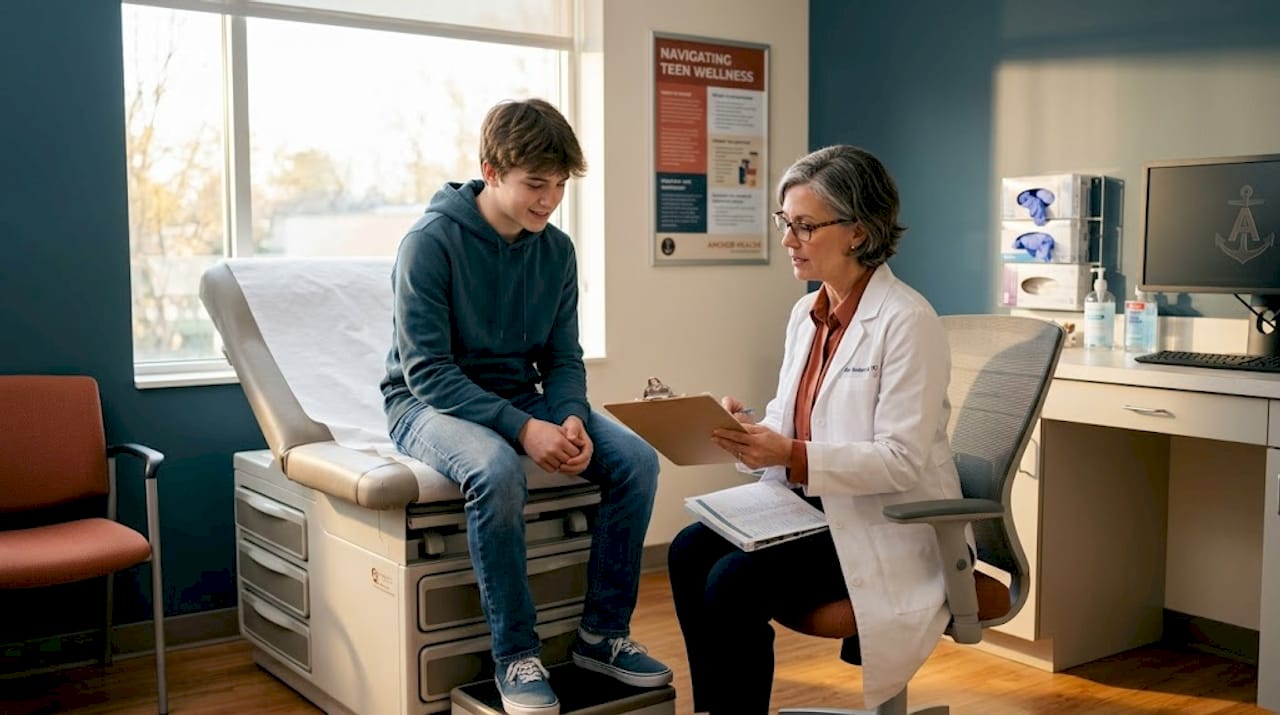
Most parents schedule a teen’s doctor visit only when something is wrong. That instinct is understandable, but it misses what preventive care is actually designed to do. Understanding what does preventive care mean for teens goes well beyond a yearly weigh-in or a form to sign before school sports. It covers screenings, vaccines, mental health conversations, and the kind of ongoing relationship that shapes how your child thinks about their own health for decades. Getting familiar with this framework now gives you a real advantage as your teen grows.
Table of Contents
- Key takeaways
- What preventive care for teens actually includes
- Why privacy during teen visits changes everything
- Understanding insurance coverage for teen preventive care
- How to prepare your teen and yourself for a productive visit
- My perspective on teen preventive care
- Supporting teen health at home with Myanchorhealthpc
- FAQ
Key takeaways
| Point | Details |
|---|---|
| More than a physical exam | Teen preventive care includes screenings, vaccines, counseling, and mental health support at every annual visit. |
| Privacy matters for honesty | Teens who get one-on-one time with their provider are more likely to disclose sensitive concerns that affect their health. |
| Insurance covers most costs | ACA-compliant plans cover preventive services at $0 cost-sharing when visits are in-network and properly coded. |
| Parents support, not control | Letting your teen fill out health forms and ask their own questions builds lifelong self-management skills. |
| Consistency builds outcomes | A trusted, consistent provider who knows your teen’s history delivers far better care than episodic or reactive visits. |
What preventive care for teens actually includes
When people ask what is preventive health for teens, they often picture a height and weight check followed by a signature. The reality is far more structured and purposeful. Preventive services focus on asymptomatic health maintenance, meaning your teen does not need to feel sick for the visit to be medically valuable.
The annual well visit as a foundation
The annual well visit is the core of teen preventive care. It gives a clinician the chance to track physical development, compare results year over year, and catch changes before they become problems. A provider who sees your teen regularly builds context that a walk-in clinic or urgent care visit simply cannot replicate.
During these visits, clinicians use standardized screening tools and questionnaires to assess risk beyond just physical symptoms. These might include questions about mood, sleep, relationships, substance exposure, and safety at home or school. The goal is to catch issues at the earliest possible point, when intervention is most effective.

Screenings your teen should expect
Routine screenings during adolescent well visits typically cover:
- Blood tests such as a lipid profile to check cholesterol levels, and iron screening for teens at risk of anemia
- Vision and hearing checks to identify deficits that affect learning and daily function
- Blood pressure measurement to establish a baseline and flag hypertension, which can appear in teenagers
- Body mass index (BMI) tracking reviewed in the context of growth patterns rather than as a single number
- Depression and anxiety screening using validated tools like the PHQ-A or GAD-7
Each of these screenings has a defined clinical purpose. They are not box-checking. They are the evidence base your child’s provider uses to guide care decisions.
Vaccines and catch-up immunizations
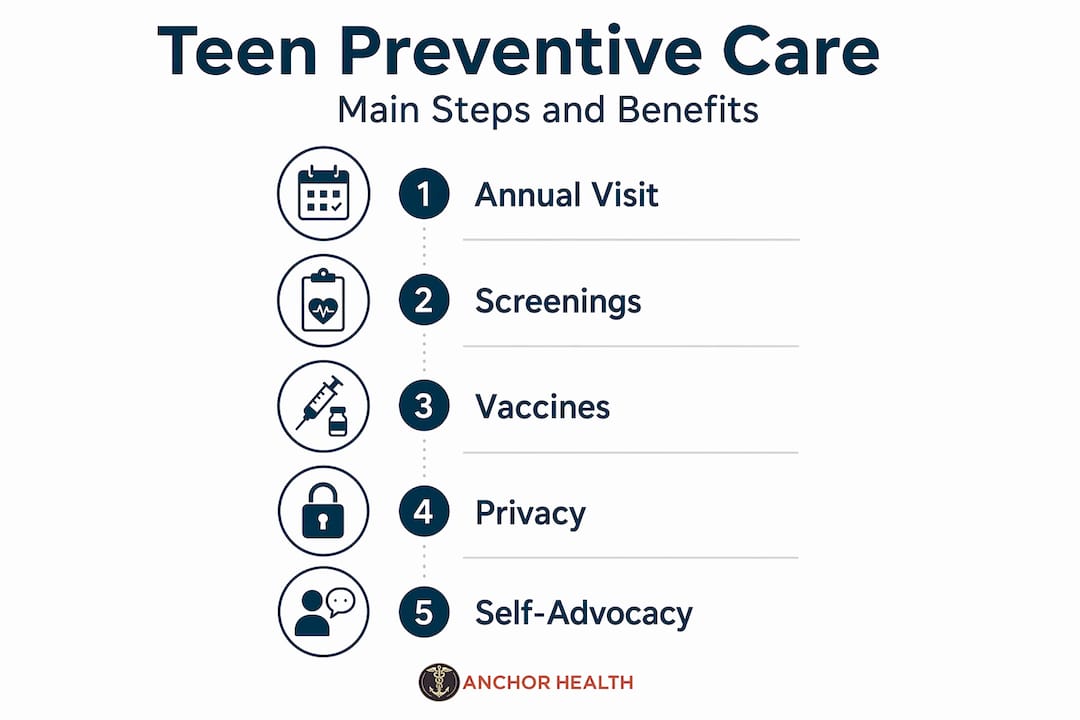
Immunizations are one of the most direct preventive care benefits for youth. The adolescent vaccine schedule includes key vaccines like Tdap, HPV, and meningococcal, plus an annual flu shot. HPV vaccination, when given at the recommended ages, significantly reduces the risk of several cancers in adulthood.
Many teens also need catch-up immunization doses if childhood vaccines were delayed or missed. This requires coordination between the provider and your insurance, and it is worth confirming at every annual visit that your teen’s vaccination record is current.
Pro Tip: Bring your teen’s immunization record to every well visit, even if the provider has it on file. Gaps or timing discrepancies are easier to catch and correct when both parties have the same information in front of them.
Why privacy during teen visits changes everything
Here is something that surprises many parents. Only about one-third of parents report that their teen receives private time alone with a clinician during health visits. That number matters because it means most teens never get the opportunity to speak candidly about things they would not say in front of a parent.
Mental health concerns, questions about sexuality, alcohol or substance exposure, and peer pressure are all topics adolescents are far more likely to raise when a parent is not in the room. Private discussions during preventive visits are teachable moments that build honest communication between teens and their providers.
“Time alone with the clinician supports health care transition preparation, anticipatory guidance, and youth self-advocacy during crucial developmental years.” — American Board of Family Medicine
This is not about keeping parents out of the loop. It is about creating a space where your teen feels safe enough to be honest. A clinician is bound by confidentiality norms and, in most states, has specific obligations around disclosing information that indicates safety risks. The privacy window is typically 10 to 15 minutes within a longer visit that still includes you.
The long-term benefit is significant. Teen self-advocacy skills built during adolescent preventive visits translate directly into adults who can communicate with their doctors, manage their own prescriptions, and understand when to seek care.
Pro Tip: Before the visit, tell your teen directly that you are planning to step out for part of the appointment and that it is completely normal. Framing it as trust rather than exclusion makes a real difference in how they receive it.
Understanding insurance coverage for teen preventive care
One of the most practical aspects of preventive care benefits for youth is that most of it should cost your family nothing out of pocket. Under the Affordable Care Act, preventive services cost $0 with no copay or deductible when you use an in-network provider and the visit is properly coded as preventive.
That coverage includes:
- Annual well visits for adolescents
- Vaccines on the CDC-recommended schedule, including HPV, meningococcal, Tdap, and flu
- Screenings rated Grade A or Grade B by the U.S. Preventive Services Task Force (USPSTF), which includes depression screening and blood pressure checks
- Behavioral and developmental counseling within the preventive visit framework
There are important exceptions. Short-term health plans and grandfathered health plans are not required to follow ACA preventive coverage rules. If your family has either of these plan types, coverage terms may be significantly different, and you should contact your insurer directly before the visit.
Billing code matters more than most parents realize. If your teen mentions an acute issue during the well visit and the provider addresses it, that portion of the visit may be billed separately as a sick visit and could trigger a copay. Knowing this in advance helps you decide whether to address new concerns at a follow-up appointment or understand why a bill arrives despite your expectations.
A few steps that protect you from surprise costs:
- Confirm your teen’s provider is in-network before the appointment.
- Call your insurance to verify which preventive services are covered under your specific plan.
- After the visit, review the Explanation of Benefits to check that services were coded correctly.
How to prepare your teen and yourself for a productive visit
Many families reduce the effectiveness of preventive care without realizing it. Parents who complete health forms on behalf of their teens remove a key opportunity for the teen to engage with their own health narrative. When a provider reads your answers instead of your teen’s, they lose the teen’s voice entirely before the appointment even begins.
Here is a practical approach to getting the most out of every well visit:
- Hand the health forms to your teen. Sit nearby if needed, but let them answer the questions in their own words. This simple shift increases engagement and gives the provider more accurate, youth-centered information.
- Talk through the appointment ahead of time. Ask your teen if there is anything they want to bring up, even if they do not want you in the room for that part. Knowing they have a plan reduces anxiety.
- Make your own list of concerns separately. You will have time with the provider too. Write down anything you have noticed about mood, sleep patterns, weight changes, or behavioral shifts so you do not forget in the moment.
- Model the behaviors you want to see. Teens are watching. How you talk about nutrition, sleep, exercise, and your own healthcare visits shapes their relationship with those topics more than any conversation you initiate directly.
- Ask about referrals proactively. If your teen has shown signs of anxiety, persistent sadness, or has mentioned struggles with friends or identity, ask the provider directly whether a referral to a counselor or specialist makes sense. You do not need to wait for a crisis.
Pro Tip: If your teen is reluctant to attend their well visit, remind them that the appointment is not just about finding problems. It is a chance to ask questions they may not know who else to ask, in a confidential setting with someone whose only job is to help them.
The annual teen checkup offers structured time for emotional and developmental topics that often go unaddressed at home, not because parents do not care, but because the right setting and the right person can make those conversations feel safer for teens.
My perspective on teen preventive care
In my experience working alongside families navigating adolescent health, the most common regret I hear is not that parents were too involved. It is that they were too focused on logistics and not enough on what the visit was actually building.
Preventive care for teenagers is not annual paperwork. It is continuity. It is a relationship your child develops with a provider who tracks their growth, remembers their history, and creates space for them to become the kind of adult who actually shows up for their own health appointments. I have watched teens who had that consistency navigate college, career changes, and health challenges with a confidence that teens without it often lack.
What I have found genuinely helps is when parents reframe their role before the appointment. Your job is not to translate for your teen or to pre-answer their concerns. Your job is to get them there, signal that you trust them with their own health, and be available when the provider addresses anything that needs your input.
The privacy piece is where I see the most resistance, and I understand it. Stepping out of the room feels like surrendering control. But what I have observed, consistently, is that teens who get that private time come out of appointments more engaged, more willing to follow through on care recommendations, and more likely to communicate with their parents about health in general. The privacy creates trust. And trust is what makes preventive care work.
— Paule
Supporting teen health at home with Myanchorhealthpc
Preventive care does not stop when the appointment ends. At Myanchorhealthpc, we believe that what happens between visits matters just as much as what happens during them.
For Maryland families managing teen health proactively, Myanchorhealthpc offers telehealth primary care designed around continuity and personalized attention. Our Anchored Care℠ᴵᴾ model means your teen builds a relationship with a consistent provider who knows their history and checks in over time, not just when something goes wrong. We also carry practical home health essentials to keep your family prepared, including digital thermometers for monitoring symptoms at home and protective face masks to reduce infectious disease exposure between visits. Visit us at myanchorhealthpc.com to learn more about our adolescent and family health services.
FAQ
What is included in a teen’s preventive care visit?
A teen’s preventive care visit typically includes a full physical exam, blood pressure check, vision and hearing screening, relevant blood tests, up-to-date vaccines, and a counseling component covering mental health, safety, and development. Standardized adolescent questionnaires are often used to guide the discussion.
Does insurance cover teen preventive care at no cost?
Yes, under ACA-compliant health plans, preventive services cost $0 when delivered in-network and coded correctly. This includes well visits, recommended vaccines, and screenings rated Grade A or B by the USPSTF. Short-term and grandfathered plans may not follow the same rules.
Why should teens have private time with their doctor?
Private time with a clinician gives teens space to discuss sensitive topics like mental health, substance use, and sexual health without a parent present. This increases honest communication and builds the self-advocacy skills teens need to manage their own health as adults.
Which vaccines does my teen need at their annual visit?
Recommended adolescent vaccines include Tdap, HPV, meningococcal, and an annual flu shot. Your teen may also need catch-up doses if any childhood immunizations were delayed. A current immunization record helps the provider identify and fill any gaps quickly.
How can I help my teen get more out of preventive visits?
Let your teen fill out their own health forms, encourage them to prepare questions in advance, and tell them directly that private time with the provider is normal and expected. According to research, teens who engage actively in their own preventive care visits show better follow-through and stronger long-term health outcomes.
Recommended
- face mask Archives – My Anchor Health PC – Maryland
- Support Stick Archives – My Anchor Health PC – Maryland
- Digital Thermometer Archives – My Anchor Health PC – Maryland
Blog & Information Disclaimer
Last Updated: May 23, 2026
The information provided on the Anchor Health website (https://myanchorhealthpc.com/), including but not limited to blog posts, articles, newsletters, graphics, and other materials (collectively, the "Content"), is for general informational and educational purposes only.
By accessing and using this website, you acknowledge and agree to the following terms and conditions:
The Content on this website is not intended to be a substitute for professional medical advice, diagnosis, or treatment. Always seek the advice of your physician, nurse practitioner, or other qualified health provider with any questions you may have regarding a medical condition. Never disregard professional medical advice or delay in seeking it because of something you have read on this website.
Reading, interacting with, or sharing the Content on this website does not establish a patient-provider relationship between you and Anchor Health or any of its clinicians, including Paule Valery Joseph, PhD, MBA, CRNP, FAAN. A formal patient-provider relationship is only established after you have completed the formal intake process, signed our clinical consent forms, and participated in a secure clinical consultation.
If you are experiencing a medical emergency, call 911 or seek emergency medical services immediately.
Anchor Health is a primary care practice and does not provide emergency or crisis intervention services through its website or blog.
While Anchor Health strives to provide thoughtful, evidence-based information grounded in our Anchored Care℠ model, healthcare is a rapidly evolving field. We make no representations or warranties, express or implied, about the completeness, accuracy, reliability, or suitability of the information contained in the Content. Any reliance you place on such information is strictly at your own risk.
Anchor Health is a telehealth practice providing services to patients physically located within the state of Maryland. The information provided on this blog is intended for residents of Maryland and is governed by the laws and regulations of that state. Accessing this information from outside of Maryland does not imply that our clinicians are licensed to practice medicine or provide consultations in your jurisdiction.
Content related to Weight & Metabolic Health, including discussions of GLP-1 medications or other medical therapies, is provided for educational context regarding our clinical approach. Prescriptions and specific medical recommendations are only made following a comprehensive clinical evaluation, diagnostic testing, and shared decision-making within a formal patient-provider relationship.
This website may contain links to external websites that are not provided or maintained by or in any way affiliated with Anchor Health. Please note that Anchor Health does not guarantee the accuracy, relevance, timeliness, or completeness of any information on these external websites.
To the fullest extent permitted by law, Anchor Health, its owners, and its employees shall not be liable for any direct, indirect, incidental, consequential, or punitive damag
Related posts