Telehealth Accessibility for Caregivers: 2026 Guide
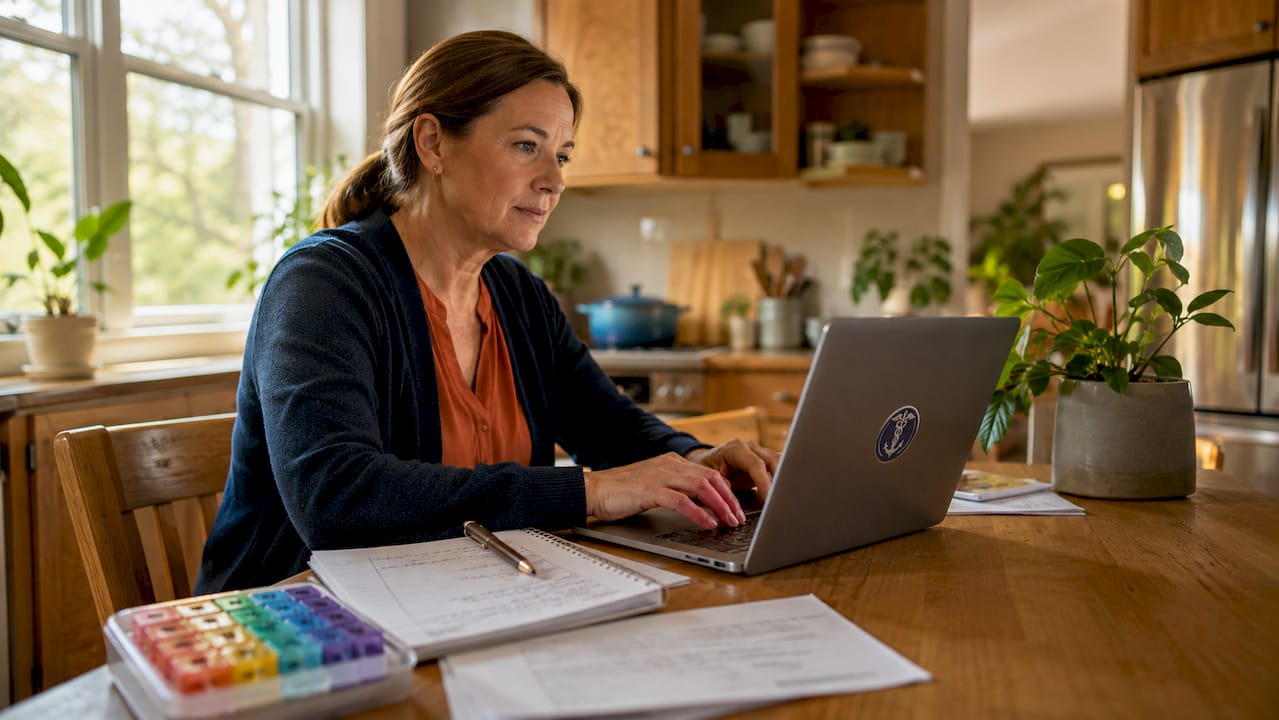
Telehealth accessibility is defined as the degree to which caregivers and patients can reliably reach, use, and benefit from remote healthcare services without barriers related to technology, cost, or scheduling. For family caregivers specifically, understanding what telehealth accessibility means is the difference between a care plan that holds together and one that constantly breaks down. Research published in JMIR Aging confirms that dementia caregivers spend 35 hours per week on care and face out-of-pocket costs four times higher than non-dementia caregivers. Telehealth does not just offer convenience. It restructures how caregivers manage time, coordinate care, and protect their own health in the process.
What does telehealth accessibility mean for caregivers?
Telehealth accessibility, in the caregiving context, means that remote care tools are genuinely usable by the people who depend on them most. The industry term is virtual care delivery, and it covers everything from live video visits to asynchronous messaging, symptom tracking dashboards, and digital coaching programs. For caregivers, accessibility goes beyond having a smartphone. It means the platform works with your schedule, the provider communicates clearly, and the technology does not require a technical degree to operate.
Caregiver access to telehealth reshapes three core responsibilities. First, it allows caregivers to attend medical appointments without leaving work or arranging transportation. Second, it creates a continuous record of health data between visits. Third, it gives caregivers a direct line to clinicians when a loved one’s condition changes suddenly. These are not minor conveniences. They are structural supports that determine whether a caregiver can sustain their role over months and years.
How does telehealth reduce caregiver burden?
The most direct telehealth benefit for caregivers is the elimination of travel. A single specialist appointment can consume half a workday when you factor in transit, parking, waiting rooms, and return travel. Telehealth removes that entirely. For caregivers managing a loved one with dementia, Parkinson’s disease, or a chronic condition requiring frequent check-ins, that time savings compounds quickly across a year.
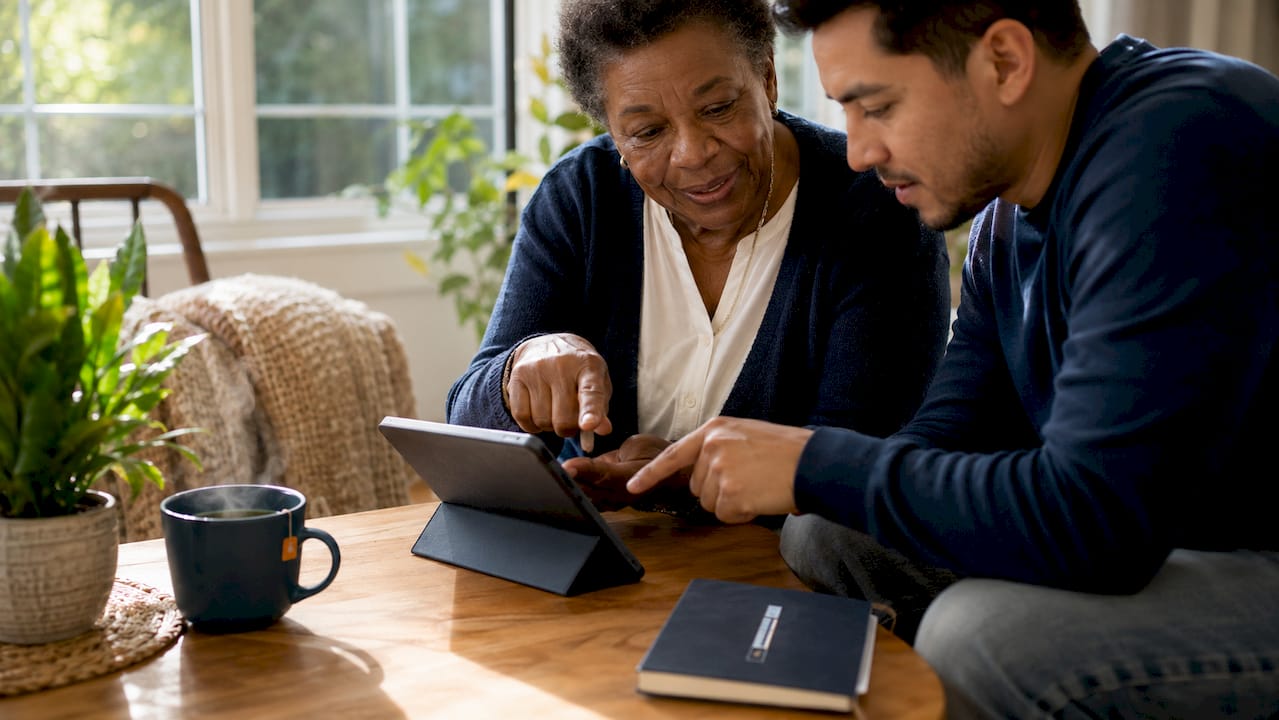
The financial relief is equally significant. Dementia caregivers face out-of-pocket costs four times higher than caregivers of people without dementia. Telehealth reduces transportation costs, reduces missed work hours, and in many cases reduces the need for in-person specialist visits that carry higher copays. That financial breathing room matters for families already stretched thin.
Mental health is the third area where telehealth benefits caregivers directly. A 3-month mobile health support program showed statistically significant improvements in caregiver depression and anxiety symptoms, with p-values of 0.032 and 0.008 respectively. Those numbers confirm what many caregivers already feel: having consistent, accessible support changes the emotional weight of the role. You can also explore the full scope of these benefits in more detail.
Key logistical advantages telehealth provides caregivers include:
- Flexible scheduling that fits around work, school pickups, and care routines
- Reduced travel time for both caregiver and the person receiving care
- Same-day or next-day access to providers for urgent but non-emergency concerns
- Continuous monitoring tools that catch changes between scheduled visits
- Lower transportation and copay costs compared to in-person specialist visits
Pro Tip: When selecting a telehealth service, confirm that appointment slots are available outside standard business hours. Evening and weekend availability is the single most important scheduling feature for working caregivers.
What challenges do caregivers face with telehealth technology?
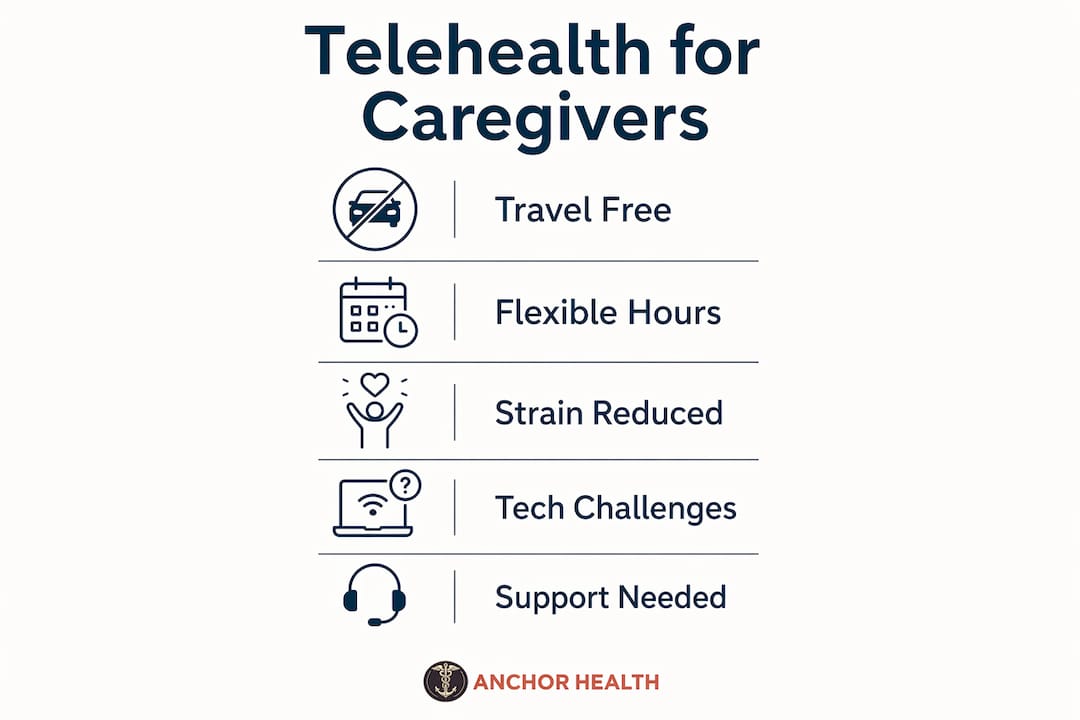
Telehealth creates a hidden layer of work that health systems rarely acknowledge. Research published in Rural Remote Health identifies caregivers as digital brokers in telehealth, meaning they manage device setup, troubleshoot connectivity problems, and translate clinical instructions into plain language for the person in their care. This role adds cognitive and emotional load on top of an already demanding job.
The most common barriers caregivers report fall into three categories.
- Digital literacy gaps: Many caregivers, particularly those over 60, have limited experience with video platforms, patient portals, or symptom-tracking apps.
- Connectivity problems: Rural and low-income households face unreliable broadband, which disrupts video visits at critical moments.
- Platform complexity: When interfaces are cluttered or require multiple logins, caregivers spend more time managing technology than focusing on care.
Research on telemedicine usability confirms that younger family members’ involvement is often decisive for whether older caregivers stick with telehealth over time. That finding reframes the problem. Telehealth adoption depends less on a caregiver’s baseline digital skill and more on whether they have support around them. Without intentional design and training, vulnerable populations face reinforced disparities rather than improved access. Older adults, low-income households, and minority communities are disproportionately affected.
The cognitive load of digital brokerage is real. Caregivers who troubleshoot tech, manage digital records, and relay clinician instructions are doing skilled work that goes unrecognized in most care plans. Acknowledging that labor is the first step toward designing systems that actually support it.
Pro Tip: Identify one younger family member or trusted neighbor who can serve as a technology facilitator. Even one person who can help with setup and troubleshooting reduces caregiver tech stress significantly.
Which telehealth models best support caregivers?
Not all telehealth programs deliver the same results. The model matters as much as the technology itself. Research published in JMIR confirms that hybrid telehealth models combining digital tools with human support produce better real-world outcomes for caregivers than fully self-guided applications. A standalone app with no human coaching component consistently underperforms compared to programs that include a care coordinator, digital coach, or facilitator.
The table below compares the three main telehealth delivery models on dimensions that matter most to caregivers.
| Telehealth model | Human support | Caregiver flexibility | Evidence of strain reduction |
|---|---|---|---|
| Live video visits only | High | Moderate | Moderate |
| Fully self-guided app | None | High | Low |
| Hybrid human-digital | High | High | Strong |
The hybrid model wins on nearly every measure. It combines the convenience of asynchronous tools like symptom dashboards and secure messaging with the accountability of a real clinician or coach. Caregivers benefit from team-based telehealth frameworks grounded in psychological support models, where monitoring, feedback, and human connection work together. That combination is what produces measurable reductions in caregiver depression and anxiety, as confirmed by recent teletherapy trials.
Asynchronous tools deserve specific attention. Symptom tracking, secure messaging, and care dashboards allow caregivers to document changes between appointments without waiting for the next scheduled visit. That capability is especially valuable when managing a loved one with a condition that fluctuates daily, such as heart failure, diabetes, or early-stage dementia.
How can caregivers maximize telehealth accessibility?
Getting the most from telehealth requires preparation and the right framework. These five steps give caregivers a practical starting point.
-
Choose platforms with simplified design. Look for telehealth services with large text, minimal navigation steps, and clear instructions. Complexity is the enemy of consistent use. Platforms that require multiple logins or frequent software updates create friction that erodes adherence over time.
-
Advocate for caregiver inclusion in care planning. Ask providers directly whether you can join video visits as a participant. Many platforms support multi-party visits, and your presence improves the accuracy of the clinical picture. Guidance on attending a telehealth visit as a caregiver covers this in practical detail.
-
Build a digital support network. Identify family members, neighbors, or community volunteers who can help with technology setup and troubleshooting. Successful telehealth adoption depends more on supportive networks than on individual digital skill. You do not need to manage this alone.
-
Prepare for each visit in advance. Write down the three most important questions or observations before every appointment. Have the patient’s medication list, recent symptom notes, and insurance information ready. Preparation reduces visit time and improves the quality of clinical decisions.
-
Integrate telehealth into a team caregiving model. Share access to care dashboards and appointment summaries with other family members involved in care. When multiple people can see the same health data, decisions improve and no single caregiver carries the full information burden. Resources on managing appointments remotely offer concrete strategies for this approach.
Key Takeaways
Telehealth accessibility gives caregivers the tools to reduce logistical burden, protect their mental health, and deliver more consistent care when platforms are designed with human support and caregiver flexibility at the center.
| Point | Details |
|---|---|
| Telehealth reduces caregiver burden | Eliminating travel and enabling flexible scheduling cuts time and financial costs significantly. |
| Mental health benefits are measurable | Hybrid telehealth programs show statistically significant reductions in caregiver depression and anxiety. |
| Digital brokerage adds hidden labor | Caregivers manage tech setup and translation duties that health systems rarely recognize or support. |
| Hybrid models outperform self-guided apps | Programs combining digital tools with human coaching produce the strongest real-world outcomes. |
| Support networks drive adoption | Successful telehealth use depends more on facilitation and training than on baseline digital literacy. |
Why caregiver-centered telehealth design is still unfinished work
I have spent years watching telehealth get described as a solution to caregiver burden, and I want to be direct about where that framing falls short. Telehealth is a genuine improvement. The evidence is clear. But the systems delivering it were mostly designed for patients, not for the people managing patients’ care from the outside.
Caregivers are doing skilled clinical work every time they set up a device, relay a symptom, or document a medication change. That labor is invisible in most care plans and uncompensated in every one. Until health systems formally recognize caregivers as participants in the care team rather than passive bystanders, telehealth will keep delivering partial results.
The equity gap is the part that concerns me most. When telehealth design ignores older adults, low-income households, and communities with limited broadband, it does not just fail those groups. It actively widens the gap between who gets good care and who does not. Accessibility cannot be an afterthought added to a platform after launch. It has to be the starting point.
My practical advice: do not wait for the system to catch up. Seek out providers who treat you as a partner in care, ask directly about caregiver inclusion in visits, and push for platforms that offer real human support alongside digital tools. The caregivers who get the most from telehealth are the ones who advocate clearly for what they need.
— Paule
How Myanchorhealthpc supports caregivers through telehealth
At Myanchorhealthpc, we built our care model around the reality that caregivers need a provider who makes things easier, not harder. Our Anchored Care℠ᴵᴾ framework prioritizes continuity, flexible scheduling, and direct provider access through secure video visits across Maryland.
Whether you are coordinating care for an aging parent, a child with a chronic condition, or a family member managing a new diagnosis, we are here to be a consistent partner. You can start by exploring how to choose telehealth primary care that fits your family’s needs, or go straight to our guide on attending a telehealth visit as a caregiver. We accept insurance and offer membership options designed for families who need more than a rushed appointment.
FAQ
What is telehealth accessibility for caregivers?
Telehealth accessibility for caregivers means that remote healthcare tools are reliably available, easy to use, and designed to fit caregiving schedules and technical skill levels. It includes flexible scheduling, simplified platforms, and human support alongside digital tools.
How does telehealth help reduce caregiver stress?
A 3-month mobile health support program showed statistically significant improvements in caregiver depression and anxiety symptoms. Eliminating travel, providing flexible scheduling, and offering continuous monitoring all reduce the daily pressure caregivers carry.
What is the biggest barrier caregivers face with telehealth?
Digital literacy and connectivity are the most common barriers, but research shows that the decisive factor is access to a support network. Caregivers with a family member or facilitator to assist with technology are far more likely to use telehealth consistently.
Are hybrid telehealth models better than apps alone?
Yes. Research confirms that hybrid models combining digital tools with human coaching or care coordination produce stronger outcomes for caregivers than fully self-guided applications. The human support component is what drives measurable reductions in strain.
Can a caregiver join a telehealth visit with their loved one?
Many telehealth platforms support multi-party video visits, and caregiver participation improves clinical accuracy. Ask your provider directly about joining as a participant, and prepare a list of observations and questions before the appointment.
Recommended
- How to Attend a Telehealth Visit as a Caregiver
- Telehealth Benefits for Busy Caregivers in 2026
- How telehealth expands healthcare access for Maryland families
Blog & Information Disclaimer
Last Updated: May 23, 2026
The information provided on the Anchor Health website (https://myanchorhealthpc.com/), including but not limited to blog posts, articles, newsletters, graphics, and other materials (collectively, the "Content"), is for general informational and educational purposes only.
By accessing and using this website, you acknowledge and agree to the following terms and conditions:
The Content on this website is not intended to be a substitute for professional medical advice, diagnosis, or treatment. Always seek the advice of your physician, nurse practitioner, or other qualified health provider with any questions you may have regarding a medical condition. Never disregard professional medical advice or delay in seeking it because of something you have read on this website.
Reading, interacting with, or sharing the Content on this website does not establish a patient-provider relationship between you and Anchor Health or any of its clinicians, including Paule Valery Joseph, PhD, MBA, CRNP, FAAN. A formal patient-provider relationship is only established after you have completed the formal intake process, signed our clinical consent forms, and participated in a secure clinical consultation.
If you are experiencing a medical emergency, call 911 or seek emergency medical services immediately.
Anchor Health is a primary care practice and does not provide emergency or crisis intervention services through its website or blog.
While Anchor Health strives to provide thoughtful, evidence-based information grounded in our Anchored Care℠ model, healthcare is a rapidly evolving field. We make no representations or warranties, express or implied, about the completeness, accuracy, reliability, or suitability of the information contained in the Content. Any reliance you place on such information is strictly at your own risk.
Anchor Health is a telehealth practice providing services to patients physically located within the state of Maryland. The information provided on this blog is intended for residents of Maryland and is governed by the laws and regulations of that state. Accessing this information from outside of Maryland does not imply that our clinicians are licensed to practice medicine or provide consultations in your jurisdiction.
Content related to Weight & Metabolic Health, including discussions of GLP-1 medications or other medical therapies, is provided for educational context regarding our clinical approach. Prescriptions and specific medical recommendations are only made following a comprehensive clinical evaluation, diagnostic testing, and shared decision-making within a formal patient-provider relationship.
This website may contain links to external websites that are not provided or maintained by or in any way affiliated with Anchor Health. Please note that Anchor Health does not guarantee the accuracy, relevance, timeliness, or completeness of any information on these external websites.
To the fullest extent permitted by law, Anchor Health, its owners, and its employees shall not be liable for any direct, indirect, incidental, consequential, or punitive damag
Related posts