Cut GLP-1 Side Effects: 5 Clinician Led Steps With Telehealth Support

Most people who start a GLP-1 medication will notice some nausea, bloating, or changed bowel habits, especially in the first few weeks or right after a dose increase. These symptoms are usually mild and fade as your body adjusts, particularly when your clinician titrates slowly. A small number of patients face rarer but serious risks, including pancreatitis, dehydration-related kidney injury, and gallbladder disease, which is why ongoing monitoring matters.
TL;DR:
- Most gastrointestinal side effects, such as nausea and bloating, peak during the first few weeks and typically improve within three to four months with proper titration.
- Serious risks like pancreatitis and dehydration-related kidney injury are rare but require prompt medical attention if symptoms like severe abdominal pain or persistent dizziness occur.
- Slow dose escalation, small low-fat meals, and early clinician involvement can significantly reduce discomfort and prevent discontinuation of the medication.
- Factors like rapid weight loss can cause “Ozempic face,” but gradual weight reduction and proper skin care can minimize visible facial changes.
- Regular hydration logging and awareness of warning signs improve safety, and patients should inform their surgical team of GLP-1 use before procedures due to aspiration risks.
Table of Contents
- Understanding GLP-1 Side Effects: How These Medications Work
- How Common Are GLP-1 Side Effects, and When Do They Show Up?
- Serious GLP-1 Safety Concerns That Warrant Immediate Attention
- How to Reduce GLP-1 Side Effects Safely
- What Causes “Ozempic Face” and How to Prevent It
- Anchor Health’s Approach to Safe GLP-1 Care
- Paule’s Take: Why Side-Effect Management Deserves More Attention Than It Gets
- Sources
Understanding GLP-1 Side Effects: How These Medications Work
GLP-1 receptor agonists mimic a natural gut hormone that regulates blood sugar and appetite. They’re prescribed for type 2 diabetes and, increasingly, for weight management. Their side effects trace directly back to the mechanism: these drugs slow gastric emptying and boost feelings of fullness, which is exactly why they help with weight loss, and exactly why so many patients feel queasy, bloated, or constipated.
You may recognize some of the more familiar names in this drug class:
- Semaglutide (marketed as Ozempic and Wegovy)
- Tirzepatide (marketed as Mounjaro and Zepbound)
- Exenatide (an earlier GLP-1 agent, marketed as Byetta and Bydureon)
Each works a little differently. Tirzepatide, for instance, also activates a second hormone receptor (GIP), which some research suggests may explain its distinct side-effect profile compared to semaglutide-only drugs. But the family resemblance is strong: slower digestion, faster satiety, and a gut that needs time to catch up.
How Common Are GLP-1 Side Effects, and When Do They Show Up?
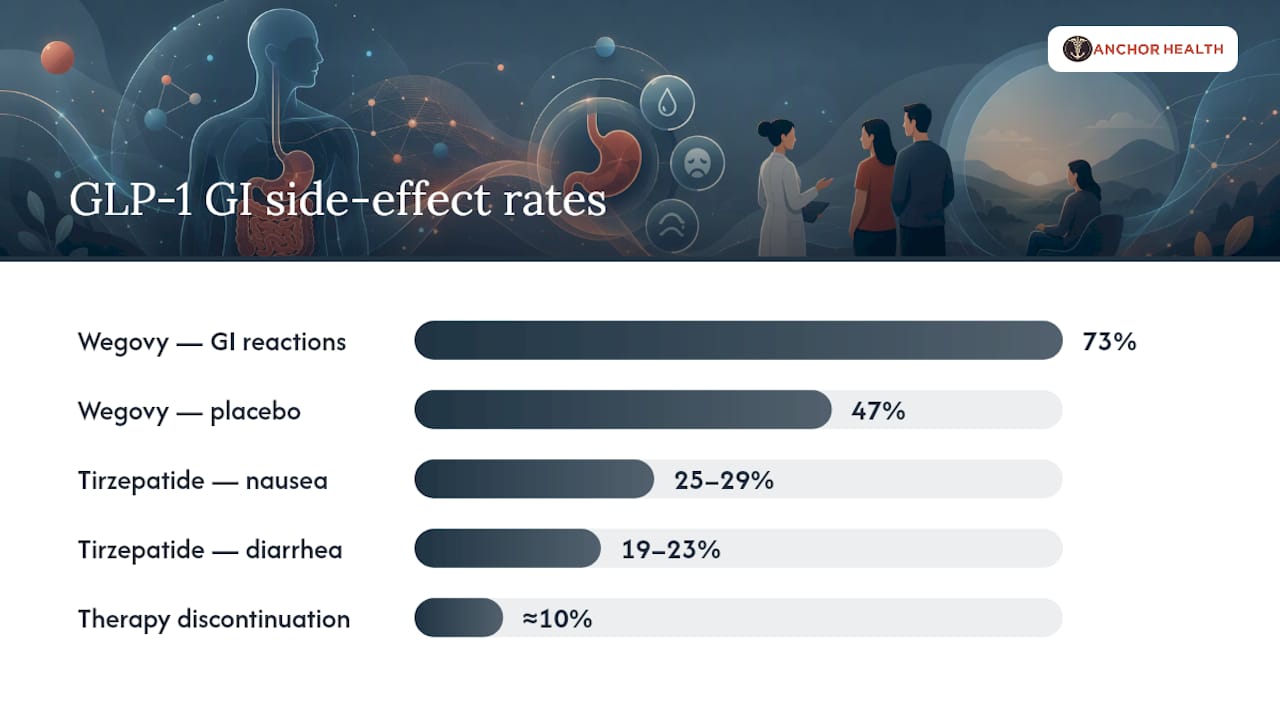
Gastrointestinal symptoms aren’t a rare inconvenience. They’re the norm.
In Wegovy’s clinical trials, 73% of treated patients reported gastrointestinal reactions, compared with 47% of those on placebo. Some patients experienced severe gastrointestinal reactions. Tirzepatide trials for weight management show a similar pattern: nausea in 25 to 29% of participants (versus 8% on placebo), vomiting in 8 to 13%, and diarrhea in 19 to 23%.
The timing follows a predictable rhythm:
- Symptoms peak during the first few weeks after starting the medication.
- A second wave often follows each dose increase, then settles within days to a couple of weeks.
- Many patients report that nausea and bloating ease noticeably by the third or fourth month, once the body adjusts to the new dose.
Beyond the digestive symptoms, you might notice injection-site redness or mild itching, occasional lightheadedness (especially if you’re not drinking enough fluids), and a slightly faster resting heart rate in some patients. None of these are typically dangerous on their own, but they’re worth mentioning to your clinician, particularly if dizziness is frequent.
Gastrointestinal intolerance is also the leading reason patients quit therapy altogether. Reviews suggest discontinuation rates run around 10%, and proactive symptom management, not just white-knuckling through it, is what keeps people on track.
Serious GLP-1 Safety Concerns That Warrant Immediate Attention
Most GLP-1 side reactions are uncomfortable rather than dangerous. But a smaller set of risks deserves real attention, both from you and your care team.
- Pancreatitis. Regulatory and clinical reviews document cases of acute pancreatitis in patients on GLP-1 therapy, though causality isn’t fully settled. Persistent, severe abdominal pain, especially radiating to the back, along with nausea and vomiting, needs urgent evaluation. Most guidance calls for stopping the medication immediately if pancreatitis is suspected.
- Acute kidney injury. Severe vomiting or diarrhea can cause enough fluid loss to strain the kidneys. This is one of the more preventable risks on this list, and it’s why hydration isn’t just a comfort measure.
- Gallbladder disease. Rapid weight loss, which GLP-1 drugs are designed to produce, raises the risk of gallstones and gallbladder inflammation.
- Thyroid tumor warnings. Animal studies linked GLP-1 agents to thyroid C-cell tumors, which is why these drugs carry a contraindication for anyone with a personal or family history of medullary thyroid carcinoma or MEN2 syndrome.
- Hypoglycemia. Combining a GLP-1 drug with insulin or a sulfonylurea raises the risk of low blood sugar, so dosing adjustments to those other medications often need to happen at the same time.
Pro Tip: Keep a simple hydration log during your first few dose increases, tracking fluid intake and any vomiting or diarrhea episodes. If you notice dark urine, reduced urination, or persistent dizziness, call your clinician the same day rather than waiting for your next visit.
How to Reduce GLP-1 Side Effects Safely
Managing GLP-1 side effects isn’t about toughing it out. It’s about working the process correctly from day one.
- Start low and go slow. Titration schedules exist for a reason. Jumping doses faster than recommended is the single biggest driver of severe nausea and vomiting, and slower increases with check-ins at each step measurably reduce dropout.
- Adjust your plate before you adjust your dose. Small, low-fat meals go a long way in the first few weeks. Greasy food, strong odors, and large portions tend to trigger nausea fastest, while ginger tea, plain crackers, and smaller, more frequent meals often help.
- Treat hydration as part of the medication, not an afterthought. If you’re losing fluids through vomiting or diarrhea, replace them actively rather than passively.
- Loop in your clinician early, not after weeks of misery. Antiemetics, temporary dose holds, or adjustments to other glucose-lowering medications are all reasonable tools your care team can offer.
- Flag any upcoming surgery. Delayed gastric emptying carries a theoretical aspiration risk under general anesthesia, so tell your surgical team you’re on a GLP-1 well ahead of any procedure. Some anesthesiology guidance recommends pausing the medication beforehand.
Pro Tip: If nausea hits hardest in the evening, try moving your injection day to a morning you don’t have early obligations. Some patients find the worst of the queasiness passes by bedtime that way.
For patients navigating other metabolic risk factors alongside GLP-1 therapy, understanding prediabetes and primary care options can round out the bigger picture. Partner resources like Legacy Meds’ safety information page also offer useful program-level guidance for patients comparing options.
What Causes “Ozempic Face” and How to Prevent It
Facial hollowing and looser-looking skin after significant weight loss have earned the nickname “Ozempic face,” but the cause has nothing to do with the drug itself. It’s simply what happens when fat is lost from the face faster than the skin can adjust, a known consequence of any rapid weight loss, medication-driven or not.
You can reduce the odds of noticeable facial changes:
- Aim for a gradual pace of weight loss rather than the fastest possible timeline.
- Prioritize adequate protein intake to help preserve muscle and skin structure.
- Stay consistent with hydration, moisturizer, and daily sunscreen.
If facial volume loss persists and bothers you, a cosmetic consultation is a reasonable next step, but it’s worth discussing the pace of your weight loss with your clinician first. Sometimes slowing the titration schedule is the simpler fix.
Anchor Health’s Approach to Safe GLP-1 Care
At Myanchorhealthpc, GLP-1 prescribing starts with real screening, not a quick checkbox. We review your health history, run baseline labs, and build a titration schedule paced to how your body responds, not a generic template. Follow-ups happen on a set schedule during dose increases, when side effects are most likely to appear.
Telehealth gives us an advantage here: if nausea flares after a dose change, you don’t wait weeks for an appointment. We can address it in days. That said, some situations, like signs of pancreatitis or dehydration severe enough to need IV fluids, call for in-person or emergency care right away, and we’ll tell you clearly when that line has been crossed.
If you’re wondering whether a GLP-1 medication fits your health picture, our guide on who qualifies for GLP-1 treatment walks through the clinical criteria we use before writing a prescription.
Paule’s Take: Why Side-Effect Management Deserves More Attention Than It Gets
The GLP-1 conversation has been dominated by results, pounds lost, A1C improvements, before-and-after photos. Side effects get treated almost like fine print, something to skim past on the way to the good part. That’s backwards, and it’s costing patients.
Roughly one in ten people who start these medications quit because of gastrointestinal intolerance, not because the drug stopped working, but because nobody built them a real plan for the nausea. That’s not a failure of the medication. That’s a failure of the support structure around it. A dose that’s titrated too fast, a patient who doesn’t know ginger tea and bland meals can blunt the worst of week two, a clinic that only checks in every three months instead of during the actual adjustment period. Those gaps are fixable, and they’re where most of the preventable suffering happens.
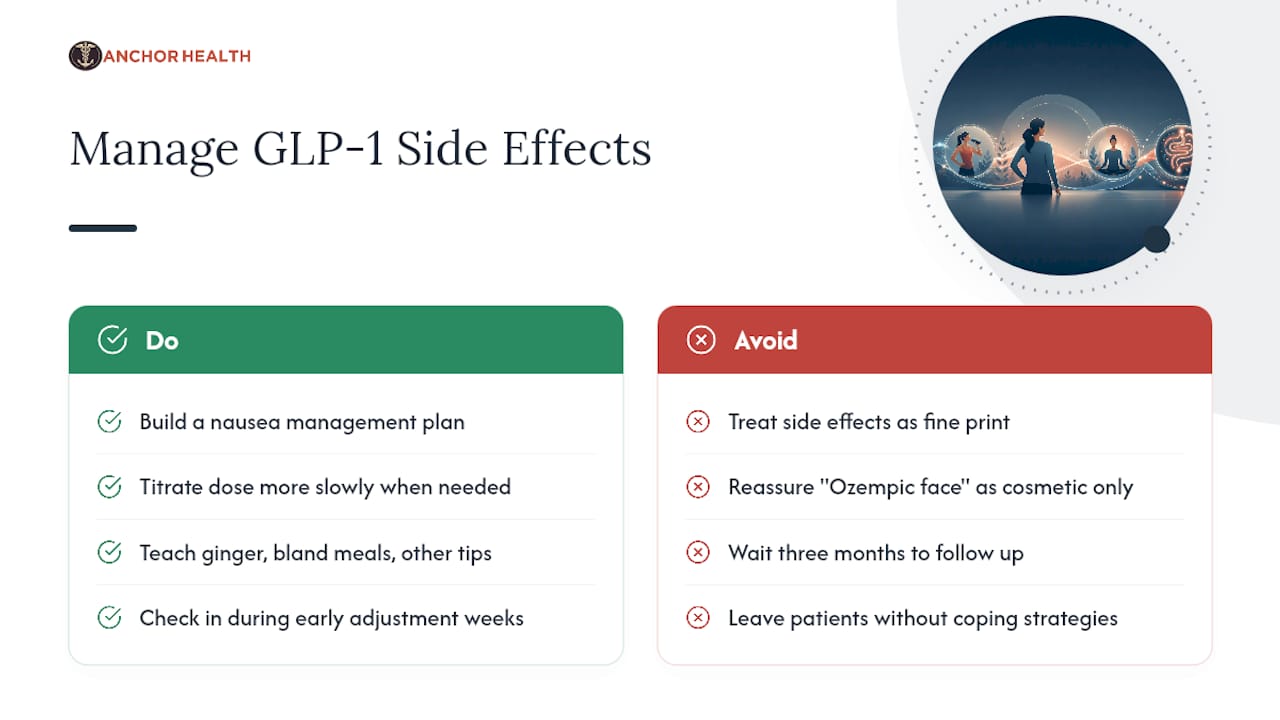
I’d also push back on treating “Ozempic face” as a footnote curiosity. It’s a legitimate signal that weight loss is happening faster than a patient’s body, or their care plan, can keep up with. When patients raise it, the right response isn’t reassurance that it’s just cosmetic. It’s a real conversation about whether the pace of the taper needs to change.
The medications work. The mechanism is well understood, the incidence data is solid, and the serious risks, while rare, are well documented enough that clinicians know what to watch for. What’s inconsistent is the follow-through. Patients deserve a care model built around the weeks that matter most, not just the prescription itself.
— Paule
This article is general information, not a substitute for advice from a qualified doctor. Consult a qualified healthcare professional about your own circumstances before acting on anything here.
Sources
- DailyMed – WEGOVY- semaglutide injection, solution
- PMC article on GLP-1 side effect timing and titration
- Glucagon-Like Peptide-1 Receptor Agonists – StatPearls – NCBI Bookshelf
- Tirzepatide Side Effects: Common, Severe, Long Term
- Semaglutide injection patient information – MedlinePlus
Recommended
- Who Qualifies for GLP-1 Medications and Why It Matters
- How to Manage Diabetes Care Through Telehealth
- Build Healthy Habits With Telehealth Support: A Patient Guide
- Chronic Disease Telehealth Management Tips That Work
Blog & Information Disclaimer
Last Updated: May 23, 2026
The information provided on the Anchor Health website (https://myanchorhealthpc.com/), including but not limited to blog posts, articles, newsletters, graphics, and other materials (collectively, the "Content"), is for general informational and educational purposes only.
By accessing and using this website, you acknowledge and agree to the following terms and conditions:
The Content on this website is not intended to be a substitute for professional medical advice, diagnosis, or treatment. Always seek the advice of your physician, nurse practitioner, or other qualified health provider with any questions you may have regarding a medical condition. Never disregard professional medical advice or delay in seeking it because of something you have read on this website.
Reading, interacting with, or sharing the Content on this website does not establish a patient-provider relationship between you and Anchor Health or any of its clinicians, including Paule Valery Joseph, PhD, MBA, CRNP, FAAN. A formal patient-provider relationship is only established after you have completed the formal intake process, signed our clinical consent forms, and participated in a secure clinical consultation.
If you are experiencing a medical emergency, call 911 or seek emergency medical services immediately.
Anchor Health is a primary care practice and does not provide emergency or crisis intervention services through its website or blog.
While Anchor Health strives to provide thoughtful, evidence-based information grounded in our Anchored Care℠ model, healthcare is a rapidly evolving field. We make no representations or warranties, express or implied, about the completeness, accuracy, reliability, or suitability of the information contained in the Content. Any reliance you place on such information is strictly at your own risk.
Anchor Health is a telehealth practice providing services to patients physically located within the state of Maryland. The information provided on this blog is intended for residents of Maryland and is governed by the laws and regulations of that state. Accessing this information from outside of Maryland does not imply that our clinicians are licensed to practice medicine or provide consultations in your jurisdiction.
Content related to Weight & Metabolic Health, including discussions of GLP-1 medications or other medical therapies, is provided for educational context regarding our clinical approach. Prescriptions and specific medical recommendations are only made following a comprehensive clinical evaluation, diagnostic testing, and shared decision-making within a formal patient-provider relationship.
This website may contain links to external websites that are not provided or maintained by or in any way affiliated with Anchor Health. Please note that Anchor Health does not guarantee the accuracy, relevance, timeliness, or completeness of any information on these external websites.
To the fullest extent permitted by law, Anchor Health, its owners, and its employees shall not be liable for any direct, indirect, incidental, consequential, or punitive damag

Related posts