Primary Care’s Role in Pregnancy Planning: A Complete Guide

Your primary care provider is your most consistent partner in pregnancy planning, not just a referral gateway. They assess your reproductive goals at routine visits, coordinate every screening and specialist handoff, and stay with you from preconception through postpartum. That continuity is what separates a well-supported pregnancy from a fragmented one.
The role of primary care in pregnancy planning centers on four core functions that family medicine researchers call the “4 Cs”: first contact, continuity, comprehensiveness, and coordination. Together, these functions make primary care the ideal setting for managing pregnancy as a long-term life event rather than an isolated medical episode. Here is what that looks like in practice:
- Pregnancy intention screening: Your provider uses tools like the One Key Question® initiative (“Do you want to become pregnant in the next year?”) to open the conversation and tailor counseling toward either preconception preparation or contraception.
- Preconception counseling: This covers folic acid supplementation, chronic disease management, medication safety reviews, and vaccination status, ideally starting at least three months before you try to conceive.
- Prenatal visit coordination: Your provider organizes and manages the full prenatal visit schedule, orders required labs, and tracks results across trimesters.
- Specialist referral and coordination: When your pregnancy involves elevated risk, your primary care provider connects you with obstetric specialists while maintaining your complete health record.
- Mental health and social support: Screening for perinatal depression and addressing social factors like food security and housing stability are built into the care model, not treated as afterthoughts.
Approximately 45%–50% of US pregnancies are unintended, which means most people who could benefit from preconception counseling never receive it before conception. A trusted primary care provider closes that gap by making pregnancy planning a routine part of every relevant visit.
How primary care structures your prenatal visit schedule
The prenatal visit schedule follows a well-established framework, and your primary care provider is responsible for keeping you on track throughout. Standard guidelines call for visits every four weeks through 28 weeks of gestation, every two weeks from 28 to 36 weeks, and then weekly until delivery. The first prenatal intake appointment ideally happens between six and ten weeks of gestation, when your provider confirms the pregnancy, establishes your due date, and orders the initial panel of labs.

What makes primary care delivery of prenatal visits distinct is flexibility. Many providers now offer a combination of in-person and virtual appointments, which reduces the burden of frequent travel without sacrificing clinical oversight. Telehealth visits work well for routine check-ins, blood pressure monitoring updates, and counseling sessions, while in-person visits remain the standard for physical exams and certain screenings.
Postpartum care is part of the same continuum. Visits at two weeks and six weeks after delivery allow your provider to assess physical recovery, screen for postpartum depression, and address any concerns about infant feeding or sleep. This follow-through is one of the clearest advantages of continuity in prenatal care: you are not starting over with a new provider at every stage.
| Pregnancy stage | Visit frequency | Primary focus |
|---|---|---|
| Conception to 6 weeks | As needed | Pregnancy confirmation, initial counseling |
| 6 weeks | First prenatal intake | Labs, due date, health history review |
| — | Every 4 weeks | Growth monitoring, screening tests |
| 28–36 weeks | Every 2 weeks | Blood pressure, glucose, fetal position |
| 36 weeks to delivery | Weekly | Labor readiness, final screenings |
| Postpartum (2 weeks) | Once | Physical recovery, mental health screen |
| Postpartum (6 weeks) | Once | Full assessment, contraception counseling |
A few things your provider tracks at each stage:
- Fundal height and fetal heart rate at every visit from the second trimester onward
- Blood pressure trends, which can signal preeclampsia risk before symptoms appear
- Weight gain relative to pre-pregnancy body mass index guidelines
- Emotional wellbeing, using validated screening tools like the Edinburgh Postnatal Depression Scale
- Any new medications or supplements you have started since the last visit
What screenings does primary care manage during pregnancy?
Screening during pregnancy is not a single event. It is a layered process that unfolds across trimesters, and your primary care provider coordinates each layer. The initial prenatal lab panel, typically drawn at the first intake visit, covers blood type and Rh factor, a complete blood count, rubella and varicella immunity status, hepatitis B surface antigen, HIV, syphilis, and gonorrhea and chlamydia screening. These results shape decisions made throughout the rest of the pregnancy.
Prepregnancy counseling and care research published in JAMA confirms that screening for and treating syphilis and HIV prior to and during pregnancy decreases rates of fetal and neonatal infection. That is a concrete outcome tied directly to a test ordered at a routine visit.
Genetic screening adds another layer. First-trimester combined screening, which pairs a nuchal translucency ultrasound with blood markers, and cell-free fetal DNA testing are both options your provider can discuss and order based on your age, family history, and personal preferences. Timing matters here: first-trimester screening is most accurate between 11 and 14 weeks, so your provider needs to have this conversation early.
| Screening | Timing | What it detects |
|---|---|---|
| Blood type and Rh factor | First prenatal visit | Rh incompatibility risk |
| Infectious disease panel | First prenatal visit | HIV, syphilis, hepatitis B, STIs |
| Rubella and varicella immunity | First prenatal visit | Vaccination gaps before next pregnancy |
| Cell-free fetal DNA (cfDNA) | — | Chromosomal conditions |
| First-trimester combined screen | 11–14 weeks | Down syndrome |
| Glucose challenge test | 28 weeks | Gestational diabetes |
| Group B Streptococcus (GBS) | 37 weeks | Neonatal infection risk |
| Blood pressure monitoring | Every visit | Preeclampsia, gestational hypertension |
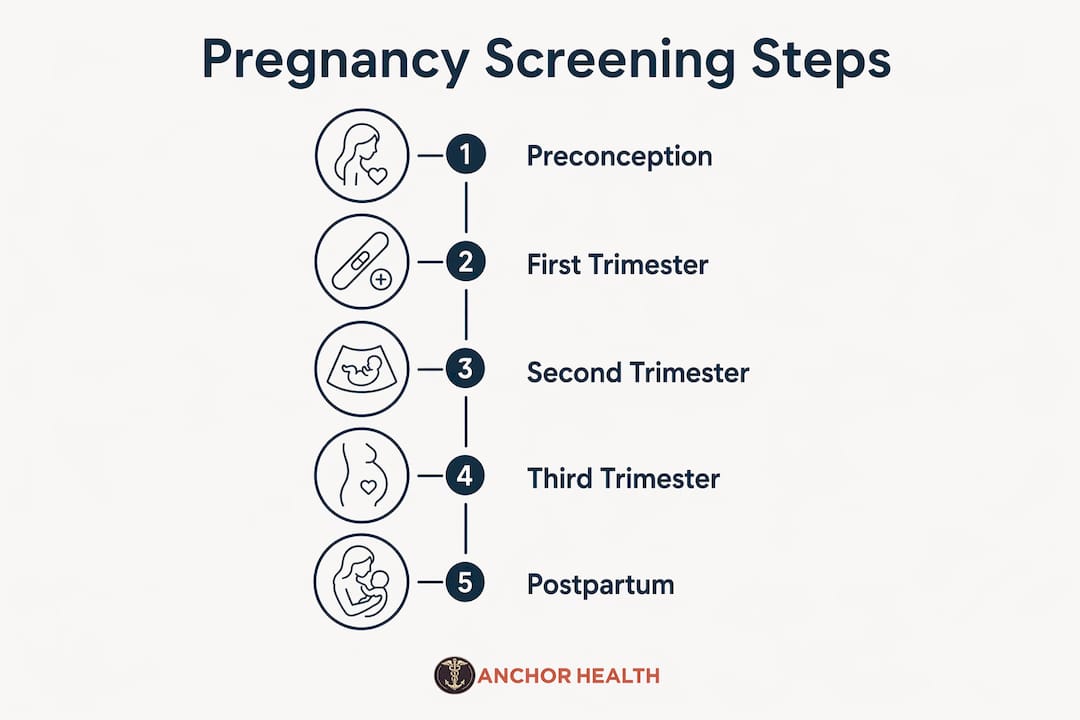
Vaccination status review is part of the screening process, not a separate conversation. Influenza and Tdap immunizations are recommended during pregnancy to protect both the birthing person and the newborn, who cannot receive certain vaccines until several months after birth. Your provider confirms which vaccines you have already received and which are due, then advises on safe timing.
Nutrition, lifestyle, and chronic condition management before pregnancy
The single most evidence-backed preconception intervention is also one of the simplest: daily folic acid at a minimum of 400 mcg, started at least one month before conception. Folic acid supplementation is associated with a reduced relative risk of fetal neural tube defects, and your primary care provider will confirm the right dose for your specific situation, since those with certain genetic variants or prior affected pregnancies may need a higher amount.

Lifestyle adjustments go hand in hand with supplementation. Your provider will review your current weight relative to pre-pregnancy body mass index guidelines, since overweight and obesity are associated with increased risk of gestational diabetes, gestational hypertension, and cesarean delivery. Physical activity recommendations during pregnancy planning generally align with standard adult guidelines: at least 150 minutes of moderate-intensity movement per week, adjusted based on your baseline fitness and any existing conditions.
Chronic disease management is where preconception care becomes especially consequential. For people with type 1 or type 2 diabetes, hemoglobin A1c below 6.5% before conception is associated with a meaningfully lower risk of fetal anomaly compared with higher A1c levels. Hypertension, thyroid disease, asthma, and depression all require review and stabilization before pregnancy, because uncontrolled conditions carry risks that compound once gestation begins. Your primary care provider coordinates this optimization directly, and refers to specialists when the complexity warrants it.
Key point: Tobacco smoking during pregnancy is associated with increased risks of stillbirth, neonatal death, and perinatal death. Cessation counseling and treatment, including pharmacotherapy when appropriate, are part of preconception care that primary care providers deliver at every relevant visit.
Medication safety review is equally critical. Some commonly prescribed drugs, including certain blood pressure medications, acne treatments, and mood stabilizers, carry teratogenic risk. Your provider conducts a full medication reconciliation before conception and substitutes safer alternatives where possible, rather than waiting until a positive pregnancy test to address the issue.
Education and counseling topics your primary care provider covers
Primary care providers address a broader range of counseling topics in pregnancy planning than most people expect. Family planning and contraception counseling is the natural starting point: understanding your current method, how quickly fertility returns after stopping it, and what timing looks like for your specific situation. This conversation happens at routine visits, not only when you announce you are trying to conceive.
Mental and emotional health screening is built into the prenatal care framework. Perinatal depression affects a meaningful portion of pregnant and postpartum people, and unintended pregnancies carry a higher associated risk of postpartum depression than planned ones. Your provider uses validated tools to screen at multiple points across the pregnancy and postpartum period, not just at the six-week visit.
Pro Tip: Bring your medication list, including over-the-counter supplements and herbal products, to your preconception visit. Many people are surprised to learn that common supplements like high-dose vitamin A or certain herbal teas carry pregnancy risks. Your provider can review everything in one appointment and flag anything that needs to change before you conceive.
Vaccination counseling extends beyond the influenza and Tdap shots recommended during pregnancy. Before conception, your provider checks your immunity to rubella, varicella, and hepatitis B. Vaccines that use live virus, like the MMR and varicella vaccines, need to be given before pregnancy and cannot be administered once you are pregnant. Getting this review done early means you have time to complete the series and wait the recommended interval before conceiving.
Medication risk communication is a counseling skill that primary care providers practice regularly. The goal is not to alarm you but to give you accurate, specific information about what is safe, what needs to change, and why. That kind of preconception healthcare advice delivered during a non-reproductive visit, such as a blood pressure check or an annual physical, normalizes pregnancy planning and increases the likelihood that you will engage with it proactively.
The breadth of these counseling topics reflects what women’s reproductive health in primary care actually looks like: not a single preconception appointment, but an ongoing relationship where pregnancy planning is woven into every relevant interaction.
How primary care addresses social determinants in pregnancy planning
Social determinants of health influence approximately 80% of health outcomes, and pregnancy is no exception. Your zip code, income level, access to transportation, housing stability, and food security all shape your pregnancy risk profile in ways that clinical labs alone cannot capture. Primary care providers are positioned to screen for these factors and connect you with resources, because they see you across time and context, not just at a single specialist visit.
Screening tools like the PRAPARE (Protocol for Responding to and Assessing Patients’ Assets, Risks, and Experiences) questionnaire help providers identify social needs systematically. When food insecurity surfaces, your provider can connect you with WIC (the Special Supplemental Nutrition Program for Women, Infants, and Children) or local food assistance programs. Housing instability may trigger referrals to social work or community health workers embedded in the practice.
The link between social factors and specific pregnancy risks is well-documented. Depression and anxiety during pregnancy are more common among people experiencing financial stress, intimate partner violence, or social isolation. Preterm birth rates are higher in communities with limited access to prenatal care. Addressing these upstream factors is not separate from clinical care. It is part of it.
What this looks like in practice:
- Food security screening at prenatal visits, with referrals to WIC and community food programs when needed
- Housing stability assessment to identify risks that affect stress levels, sleep, and safe infant sleep environments
- Transportation support coordination to reduce missed appointments, which directly affects prenatal care adequacy
- Intimate partner violence screening using validated tools like the HITS (Hurt, Insult, Threaten, Scream) questionnaire, with safety planning resources available
- Mental health referrals when screening scores indicate perinatal depression or anxiety that exceeds what primary care can manage alone
- Community health worker connections for patients navigating multiple social needs simultaneously
Primary care providers who integrate corporate counselling selection steps for HR leaders screening into pregnancy planning do not just treat the pregnancy. They treat the whole person, in the context of the life they are actually living. That approach, grounded in the 4 Cs framework of primary care, is what makes this model of care genuinely different from episodic specialist visits.
How primary care coordinates with obstetric specialists
Primary care providers do not manage every pregnancy in isolation. They function as what family medicine research describes as the “captains of the care team,” maintaining your comprehensive health record and coordinating with obstetric specialists when clinical complexity warrants it. That coordination is structured, not reactive.
Risk stratification happens early. At the first prenatal intake, your provider reviews your full medical history and identifies factors that may require obstetric or maternal-fetal medicine involvement: prior preterm birth, multiple gestation, preexisting cardiovascular disease, poorly controlled diabetes, or a history of severe preeclampsia. The referral happens before a complication develops, not after.
For low-risk pregnancies, primary care providers often manage the full prenatal course, including delivery in practices that maintain obstetric privileges. For higher-risk pregnancies, the model shifts to co-management: your primary care provider continues to handle your overall health, while an OB/GYN or maternal-fetal medicine specialist manages the pregnancy-specific risks. Your records follow you across both settings, so neither provider is working without the full picture.
Strong relationships between family physicians and obstetric colleagues are a documented facilitator of safe pregnancy care in primary care settings. Joint clinical guidelines, shared protocols for escalation, and clear communication channels between practices reduce the risk of care gaps at the handoff points that matter most.
Why telehealth primary care works well for pregnancy planning
Telehealth removes one of the most common barriers to consistent prenatal care: the logistical difficulty of frequent in-person appointments. For people managing work schedules, childcare, or limited transportation, a secure video visit with a primary care provider can mean the difference between keeping an appointment and skipping it. Skipped prenatal visits have real consequences for monitoring blood pressure trends, catching gestational diabetes early, and staying current on counseling topics.
Myanchorhealthpc delivers pregnancy planning support through its Anchored Care℠ model, which prioritizes long-term, relationship-based care over episodic treatment. Patients in Maryland can access preconception counseling, prenatal visit coordination, chronic disease management, and mental health screening through secure video visits, without the friction of a traditional clinic model. The provider relationship carries across every stage, from the first conversation about pregnancy intention through postpartum follow-up.
If you are planning a pregnancy and want a provider who will stay with you through every step, telehealth primary care offers the continuity and accessibility that pregnancy planning requires. Myanchorhealthpc accepts insurance and offers membership options for patients who want enhanced access. Visit myanchorhealthpc.com to learn more about starting your care.
Key Takeaways
Primary care is the most effective setting for pregnancy planning because it delivers continuity, comprehensive screening, and coordinated specialist access across the full preconception-to-postpartum timeline.
| Point | Details |
|---|---|
| Start preconception care early | Begin at least three months before conception to allow time for medication review, vaccination, and chronic disease optimization. |
| Follow the prenatal visit schedule | Visits every four weeks through 28 weeks, every two weeks to 36 weeks, then weekly until delivery, per NIH guidelines. |
| Folic acid is the first step | Take at least 400 mcg daily before and during early pregnancy to reduce neural tube defect risk. |
| Chronic disease control matters | An A1c below 6.5% before conception is associated with lower risk of fetal anomaly in people with pregestational diabetes. |
| Social factors shape outcomes | Social determinants influence approximately 80% of health outcomes; primary care screens and addresses these alongside clinical care. |
Recommended
- Primary Care’s Role in Women’s Reproductive Health
- Family Primary Care Best Practices for Every Age
- What Gynecological Primary Care Includes for Women
- Examples of Preventive Care for Kids: Parent’s Guide
Blog & Information Disclaimer
Last Updated: May 23, 2026
The information provided on the Anchor Health website (https://myanchorhealthpc.com/), including but not limited to blog posts, articles, newsletters, graphics, and other materials (collectively, the "Content"), is for general informational and educational purposes only.
By accessing and using this website, you acknowledge and agree to the following terms and conditions:
The Content on this website is not intended to be a substitute for professional medical advice, diagnosis, or treatment. Always seek the advice of your physician, nurse practitioner, or other qualified health provider with any questions you may have regarding a medical condition. Never disregard professional medical advice or delay in seeking it because of something you have read on this website.
Reading, interacting with, or sharing the Content on this website does not establish a patient-provider relationship between you and Anchor Health or any of its clinicians, including Paule Valery Joseph, PhD, MBA, CRNP, FAAN. A formal patient-provider relationship is only established after you have completed the formal intake process, signed our clinical consent forms, and participated in a secure clinical consultation.
If you are experiencing a medical emergency, call 911 or seek emergency medical services immediately.
Anchor Health is a primary care practice and does not provide emergency or crisis intervention services through its website or blog.
While Anchor Health strives to provide thoughtful, evidence-based information grounded in our Anchored Care℠ model, healthcare is a rapidly evolving field. We make no representations or warranties, express or implied, about the completeness, accuracy, reliability, or suitability of the information contained in the Content. Any reliance you place on such information is strictly at your own risk.
Anchor Health is a telehealth practice providing services to patients physically located within the state of Maryland. The information provided on this blog is intended for residents of Maryland and is governed by the laws and regulations of that state. Accessing this information from outside of Maryland does not imply that our clinicians are licensed to practice medicine or provide consultations in your jurisdiction.
Content related to Weight & Metabolic Health, including discussions of GLP-1 medications or other medical therapies, is provided for educational context regarding our clinical approach. Prescriptions and specific medical recommendations are only made following a comprehensive clinical evaluation, diagnostic testing, and shared decision-making within a formal patient-provider relationship.
This website may contain links to external websites that are not provided or maintained by or in any way affiliated with Anchor Health. Please note that Anchor Health does not guarantee the accuracy, relevance, timeliness, or completeness of any information on these external websites.
To the fullest extent permitted by law, Anchor Health, its owners, and its employees shall not be liable for any direct, indirect, incidental, consequential, or punitive damag
Related posts