Choosing Perimenopause Telehealth Care That Actually Fits

Choose a clinician-led perimenopause telehealth practice with menopause-trained providers, clear insurance coverage, and real continuity of care. Anchor Health fits this model directly, offering women’s health visits built around the same clinician over time rather than a rotating cast of prescribers. Before you book anywhere, verify three things.
- Specialization and training: Has the clinician completed menopause-specific education, and does the practice involve a broader care team?
- Insurance and price transparency: Is the service in-network with your plan, and are lab and pharmacy costs disclosed upfront?
- Continuity and visit length: Will you see the same clinician at follow-up, and are visits long enough to cover a full symptom history?
Ask these questions during intake, before your first video visit. A practice that answers clearly is usually the one worth staying with.
Key Takeaways
Perimenopause telehealth works best when it pairs menopause-trained clinicians with continuity of care rather than one-off, prescription-first visits.
| Point | Details |
|---|---|
| Verify clinician training | Confirm board certification and menopause-specific training before booking, not after. |
| Treat labs as one data point | Single hormone tests can mislead in perimenopause, so symptom tracking matters more. |
| Confirm insurance in-network status | Ask specifically whether your plan is in-network, since coverage varies by state and plan. |
| Prioritize visit length and continuity | Longer video visits with the same clinician capture symptom history better than quick messaging. |
| Anchor Health offers continuity-first care | Anchored Care℠ᴵᴾ pairs women’s health, mental health, and metabolic support through consistent telehealth visits. |
Table of Contents
- What specialization and clinician expertise should you look for?
- Which treatment approaches make sense during perimenopause?
- What should you check about licensing, insurance, and costs?
- What should a perimenopause telehealth visit actually look like?
- When does telehealth need to refer you for in-person care?
- Why Anchor Health’s approach fits perimenopause telehealth care
- A primary care lens on menopause-focused telehealth
- How Anchor Health can help you get started
- Frequently Asked Questions
- Sources
What specialization and clinician expertise should you look for?
Perimenopause rarely shows up as one clean symptom. Sleep disruption, mood shifts, irregular cycles, and metabolic changes often overlap, and a clinician untrained in menopause care can miss how they connect. That’s why menopause-trained clinicians and multi-disciplinary teams matter: they read the whole pattern instead of treating each symptom in isolation.
Look for these signals when you’re comparing providers:
- Board certification in family medicine, internal medicine, or OB/GYN, plus documented menopause-specific training or certification.
- A care team that includes or coordinates with dietitians and therapists, not just a prescriber.
- Clear state licensing that covers where you live, since telehealth clinicians must be licensed in your state.
Verify this before booking, not after. Read clinician bios directly on the practice’s site, ask about their menopause training during intake, and confirm their license status through your state medical board if it isn’t listed. Specialized clinics staffed by menopause-trained clinicians tend to deliver more coordinated multidisciplinary perimenopause care than general urgent-care telehealth.
Pro Tip: Ask directly: “How many perimenopause patients do you see in a typical month?” A clinician who hesitates probably treats this as a side interest, not a focus.
Which treatment approaches make sense during perimenopause?
Hormone therapy for perimenopause looks different than it does after menopause, largely because your hormone levels are still fluctuating rather than steadily low. Clinicians often use cyclic hormone therapy timed to your remaining cycle, while fully postmenopausal patients typically move to continuous dosing. Non-hormonal options, including certain antidepressants for hot flashes and cognitive behavioral approaches for sleep and mood, remain appropriate choices when hormones aren’t the right fit or aren’t wanted.
A single blood draw rarely tells the full story here. Because perimenopause hormone levels swing day to day, research on hormone testing in perimenopause shows that one-time lab values often don’t match how a patient actually feels. Experienced clinicians weight symptom patterns and functional impact, such as disrupted sleep or mood changes affecting work, more heavily than an isolated number.
- Ask whether treatment decisions rely on symptom tracking over time, not just one lab result.
- Ask how the practice adjusts hormone therapy as your cycle changes.
- Confirm any medication plan accounts for your personal health history, including migraine, clotting risk, or breast cancer history.
Guidance from The North American Menopause Society reinforces that both hormonal and non-hormonal paths can be evidence-based, depending on your history. Always discuss options directly with a clinician rather than self-selecting a treatment based on what worked for a friend.
What should you check about licensing, insurance, and costs?
Telehealth only works if the clinician is legally allowed to treat you, and the billing is clear before you commit. Run through these checks first:
- Confirm the clinician holds an active license in your state. Telehealth doesn’t waive this requirement.
- Ask whether the practice is in-network with your specific insurance plan, not just whether it “accepts insurance” generally.
- Get a plain answer on how labs and prescriptions get billed. Some services bundle these into a subscription; others bill separately through your pharmacy and lab benefits.
- Ask about cancellation and renewal terms before your first payment, especially for membership-style plans.
Coverage details vary by plan and state, and insurance-covered telehealth providers still require you to confirm your own plan’s terms rather than take a site’s claim at face value. A practice that answers cost questions without prompting is telling you something useful about how they operate.
What should a perimenopause telehealth visit actually look like?
Live video visits work better than quick messaging exchanges for perimenopause, mainly because your history matters as much as your current symptoms. A clinician needs time to ask about cycle changes over months, not just today’s hot flash count. Shorter, transactional visits tend to miss that context entirely.
Look for these features when comparing visit formats:
- A detailed intake questionnaire completed before your appointment, so visit time goes toward discussion, not data entry.
- Asynchronous messaging available for follow-up questions between visits, without requiring a full new appointment.
- Access to a broader team, including a registered dietitian or therapist, when your symptoms touch sleep, weight, or mood.
Before your visit, confirm the platform is secure and HIPAA-compliant, and test your camera and audio a few minutes early.
Pro Tip: Write down your last three menstrual cycle dates and your top two symptoms before the visit starts. It saves time and helps the clinician see the pattern faster.

When does telehealth need to refer you for in-person care?
Telehealth handles most perimenopause management well, but it has limits. Clinicians typically order a TSH to rule out thyroid issues, a basic metabolic panel, and sometimes targeted hormone tests, understanding that a single hormone reading can undersell or overstate what you’re experiencing.
Certain situations require stepping outside video visits:
- Unusually heavy or prolonged bleeding that needs a pelvic exam or imaging.
- Pain, masses, or symptoms suggesting something beyond typical hormonal fluctuation.
- Any acute or urgent symptom that can’t wait for a scheduled follow-up.
Good telehealth practices coordinate this smoothly: they order labs through a local partner, then bring the results back into your ongoing care plan rather than treating the referral as a dead end. If a symptom pattern needs a closer look, an existing resource on irregular periods and telehealth walks through how that evaluation typically works.
Why Anchor Health’s approach fits perimenopause telehealth care
Anchor Health built its Anchored Care℠ᴵᴾ model around a simple premise: perimenopause is a life stage, not a single appointment to resolve. Care runs through secure video visits with a clinician who stays consistent over time, which matters when your symptoms shift month to month.
Services relevant to this stage of life include:
- Women’s health visits that cover cycle changes, hormone concerns, and symptom tracking over time.
- Mental and emotional health support integrated into primary care, not referred out separately.
- Weight and metabolic health management, including GLP-1 medications where clinically appropriate.
- Ongoing medication management as your treatment plan evolves.
Continuity means your clinician already knows your history when a new symptom shows up. You’re not re-explaining your last six months every time you log in.
Anchor Health’s approach to women’s hormonal health reflects this continuity-first structure directly.
A primary care lens on menopause-focused telehealth
Most telehealth marketing around perimenopause leans hard on prescriptions, framing hormone therapy as the finish line rather than one tool among several. That framing undersells what actually helps most patients: a clinician who tracks sleep, mood, and metabolic health together, then adjusts treatment as those pieces shift.

The conventional advice tells women to find “a menopause specialist” as if that credential alone guarantees good care. It doesn’t. A specialist who sees you for fifteen minutes and never follows up isn’t more useful than a well-trained primary care clinician who knows your full history and checks in consistently. Continuity does more clinical work than a narrow credential, especially during a transition this variable.
If you’re prioritizing anything first, prioritize the relationship, not the label. Ask how often you’ll see the same person, how follow-up works between visits, and whether your treatment plan gets revisited as symptoms change. Perimenopause telehealth succeeds when it treats you as an ongoing patient, not a transaction. Everything else, including which specific medication you start on, tends to sort itself out once that foundation is in place.
How Anchor Health can help you get started
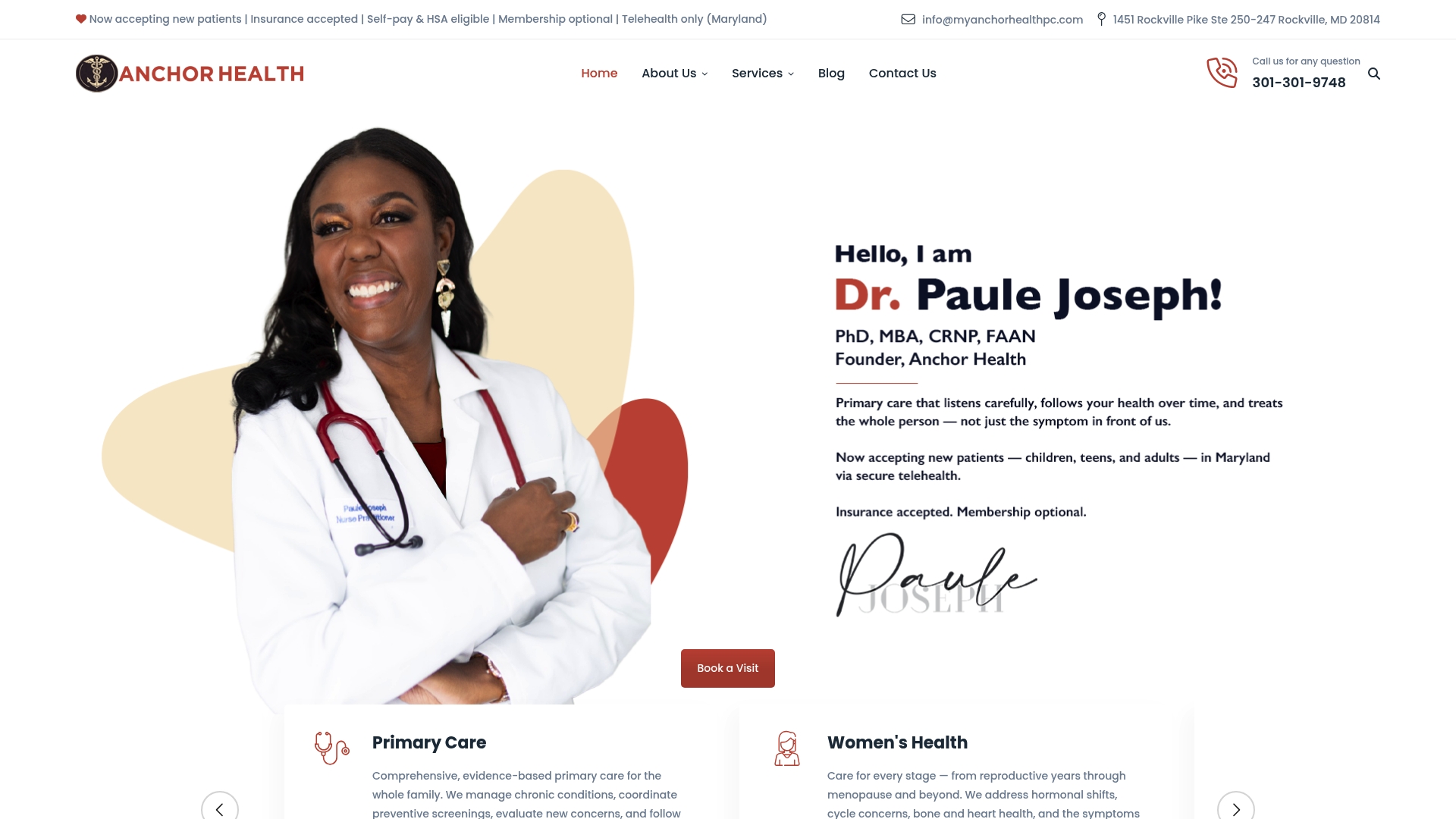
Anchor Health offers women’s health, mental and emotional health support, and metabolic management, including GLP-1 medications where appropriate, all through secure telehealth visits in Maryland. Unlike a one-off prescription service, care here builds around the same clinician over repeated visits, so your perimenopause symptoms get tracked and adjusted rather than treated as isolated complaints.
Anchor Health accepts insurance, self-pay, and HSA/FSA funds, with an optional membership for patients who want longer visits and closer follow-up. Before your first appointment, jot down your recent symptoms and cycle changes so your clinician has real context to work with from day one. If you’re weighing your options, how to choose telehealth primary care for your family walks through what to expect, and you can also review how telehealth manages women’s hormonal health for more detail on the women’s health service line. When you’re ready, book a visit and bring your questions. That first conversation is where continuity starts.
If you’d rather explore adjunctive support alongside clinical care, a partner resource on perimenopause supplements covers what’s commonly used, though any supplement decision should still go through your clinician first.
Frequently Asked Questions
Is perimenopause telehealth as effective as an in-person visit?
For most symptom management, ongoing medication adjustments, and follow-up, yes. Telehealth becomes less appropriate when you need a pelvic exam, imaging, or urgent evaluation for unusual bleeding or pain, situations that still require in-person care.
Can a telehealth clinician prescribe hormone therapy for perimenopause?
Licensed telehealth clinicians can prescribe hormone therapy when clinically appropriate, provided they’re licensed in your state. Cyclic dosing is common in perimenopause since hormone levels are still fluctuating, unlike the continuous dosing typically used postmenopause.
Does stress make perimenopause symptoms worse?
Cortisol and stress physiology can worsen sleep and mood symptoms during perimenopause, which is one reason clinicians who address mental health alongside hormones tend to see better outcomes than those focused on medication alone.
Will my insurance cover perimenopause telehealth visits?
It depends on your specific plan and state, even at practices that describe themselves as insurance-friendly. Confirm in-network status directly with the practice and your insurer before your first visit.
How long should a perimenopause telehealth visit last?
Longer visits, often built for a full symptom history rather than a quick prescription refill, tend to produce better treatment plans. If a service only offers short, transactional visits, ask whether follow-up appointments run longer.
This article is general information, not a substitute for advice from a qualified doctor. Consult a qualified healthcare professional about your own circumstances before acting on anything here.
Sources
- Pomelo Care | Expert (Peri)menopause Care
- Menopause
- Review: Hormone testing limitations in perimenopause (PMC article)
- Midi Health — insurance-covered care (site)
Recommended
- How to Balance Caregiving Work with Telehealth
- Telehealth vs Endocrinologist for Chronic Care in Maryland
- Postpartum Care Telehealth Benefits for New Mothers
Blog & Information Disclaimer
Last Updated: May 23, 2026
The information provided on the Anchor Health website (https://myanchorhealthpc.com/), including but not limited to blog posts, articles, newsletters, graphics, and other materials (collectively, the "Content"), is for general informational and educational purposes only.
By accessing and using this website, you acknowledge and agree to the following terms and conditions:
The Content on this website is not intended to be a substitute for professional medical advice, diagnosis, or treatment. Always seek the advice of your physician, nurse practitioner, or other qualified health provider with any questions you may have regarding a medical condition. Never disregard professional medical advice or delay in seeking it because of something you have read on this website.
Reading, interacting with, or sharing the Content on this website does not establish a patient-provider relationship between you and Anchor Health or any of its clinicians, including Paule Valery Joseph, PhD, MBA, CRNP, FAAN. A formal patient-provider relationship is only established after you have completed the formal intake process, signed our clinical consent forms, and participated in a secure clinical consultation.
If you are experiencing a medical emergency, call 911 or seek emergency medical services immediately.
Anchor Health is a primary care practice and does not provide emergency or crisis intervention services through its website or blog.
While Anchor Health strives to provide thoughtful, evidence-based information grounded in our Anchored Care℠ model, healthcare is a rapidly evolving field. We make no representations or warranties, express or implied, about the completeness, accuracy, reliability, or suitability of the information contained in the Content. Any reliance you place on such information is strictly at your own risk.
Anchor Health is a telehealth practice providing services to patients physically located within the state of Maryland. The information provided on this blog is intended for residents of Maryland and is governed by the laws and regulations of that state. Accessing this information from outside of Maryland does not imply that our clinicians are licensed to practice medicine or provide consultations in your jurisdiction.
Content related to Weight & Metabolic Health, including discussions of GLP-1 medications or other medical therapies, is provided for educational context regarding our clinical approach. Prescriptions and specific medical recommendations are only made following a comprehensive clinical evaluation, diagnostic testing, and shared decision-making within a formal patient-provider relationship.
This website may contain links to external websites that are not provided or maintained by or in any way affiliated with Anchor Health. Please note that Anchor Health does not guarantee the accuracy, relevance, timeliness, or completeness of any information on these external websites.
To the fullest extent permitted by law, Anchor Health, its owners, and its employees shall not be liable for any direct, indirect, incidental, consequential, or punitive damag

Related posts