Primary Care’s Role in Childhood Obesity Prevention

Primary care is defined as the first and most consistent point of contact for identifying, counseling, and coordinating care around childhood obesity. The role of primary care in childhood obesity prevention spans screening at routine well-child visits, diagnosing weight-related health risks, providing nutrition counseling, and connecting families to community resources. Clinical frameworks like the 5As counseling model (Assess, Advise, Agree, Assist, Arrange) and the Obesity Chronic Care Model give providers a structured path forward. CDC and clinical guidelines define this role as initiating collaborative relationships and supporting parents in building sustainable habits around sleep, meals, and physical activity. Preventing childhood obesity requires more than a single conversation. It requires a trusted, consistent provider who shows up visit after visit.
What evidence-based strategies do primary care providers use to prevent childhood obesity?
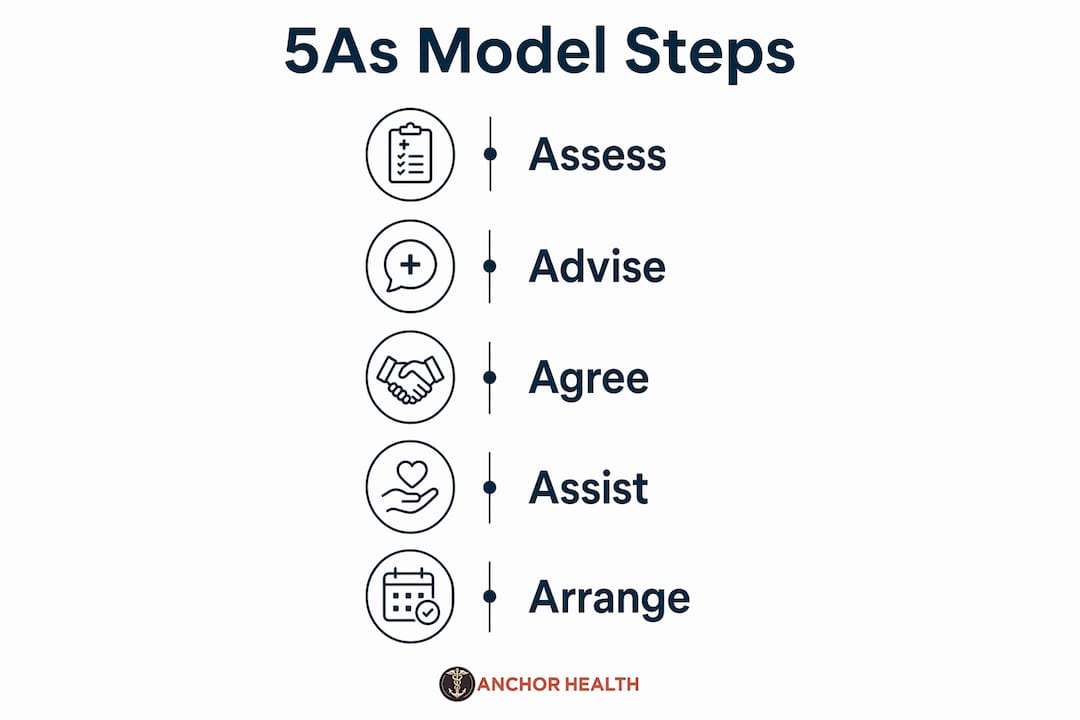
The 5As counseling model is the most widely adopted framework for primary care obesity strategies. It moves conversations away from judgment and toward collaborative problem-solving. Each step builds on the last: providers assess a child’s weight status and risk factors, advise on health risks without shaming, agree on realistic goals with the family, assist by identifying barriers, and arrange follow-up or referrals. This patient-centered model improves long-term adherence to lifestyle changes by addressing real obstacles like food insecurity and time constraints.
Multidisciplinary support is the second pillar of effective childhood obesity interventions. Standard programs typically involve 12 to 14 individual or group sessions led by dietitians, exercise specialists, and behavior coaches. These programs achieve an average weight loss of 8 kg (5%–10%) over 6 months. That outcome is meaningful because it reflects sustained behavioral change, not just short-term calorie restriction.

Motivational Interviewing is a specific technique that strengthens the counseling process. It addresses a child’s or parent’s ambivalence about change by drawing out their own reasons for wanting healthier habits. Motivational Interviewing in primary care effectively enhances internal motivation and boosts adherence to long-term obesity prevention strategies. Providers who use this technique report more productive conversations and fewer defensive reactions from families.
Here is a numbered breakdown of how the 5As model applies in a typical well-child visit:
- Assess body mass index (BMI) percentile using age-appropriate growth charts and review family history.
- Advise the family on health risks tied to excess weight, using clear, non-stigmatizing language.
- Agree on one or two specific, achievable behavior goals the family chooses, such as swapping sugary drinks for water.
- Assist by identifying barriers like limited access to fresh food or safe outdoor spaces, and problem-solve together.
- Arrange a follow-up visit within 4–6 weeks and refer to a dietitian or behavioral specialist when appropriate.
Pro Tip: Ask parents to name one habit they feel ready to change before the visit ends. Families who leave with a self-chosen goal are far more likely to follow through than those handed a generic handout.
How do primary care providers collaborate with families to support sustainable behavior changes?
The Obesity Chronic Care Model requires continuous, relationship-based engagement. Providers act as facilitators, not external coaches. Parents implement the actual behavioral changes at home. That division of responsibility is not a limitation. It is the design. Providers who try to control every detail of a family’s diet or schedule often lose the family’s trust and cooperation.
Effective collaboration means understanding what families are actually dealing with. Common barriers include:
- Food insecurity: Families without reliable access to fresh produce cannot simply “eat more vegetables.” Providers can connect them to local food assistance programs or WIC (Women, Infants, and Children).
- Time constraints: Working parents may have limited capacity for meal prep or structured physical activity. Short, realistic goals work better than ideal plans.
- Cultural food norms: Dietary advice that ignores cultural context gets ignored. Providers who ask about a family’s food traditions build more trust and get better results.
- Parental ambivalence: Some parents do not see their child’s weight as a medical concern. Motivational Interviewing helps providers meet parents where they are without triggering defensiveness.
Long-term childhood obesity prevention requires ongoing relationships and active family involvement, not sporadic visits focused on weight numbers alone. Families who see the same provider consistently report higher confidence in making changes and greater follow-through on referrals. This is why continuity of care is not a convenience feature. It is a clinical advantage.
Pro Tip: At each visit, review the goal set at the last appointment before introducing anything new. Acknowledging progress, even small progress, builds the family’s confidence and keeps the relationship collaborative rather than corrective.
Providers who use preventive care frameworks for kids are better positioned to catch weight concerns early, before they become entrenched patterns.
What challenges do primary care providers face in childhood obesity prevention?
Therapeutic inertia is the most common and most underestimated barrier in clinical practice. Providers often delay obesity intervention, expecting children to outgrow excess weight or waiting for parents to raise the topic first. Neither assumption holds up. Children rarely outgrow obesity without structured support, and many parents wait for the provider to lead the conversation.
Several other challenges compound this problem:
- Narrow focus on weight metrics: Providers who track only BMI miss the behavioral and environmental factors driving weight gain. Behavior change, not the number on the scale, predicts long-term outcomes.
- Limited visit time: A 15-minute well-child visit cannot accommodate a full obesity counseling session. Structured tools like the 5As help providers cover the most critical ground efficiently.
- Training gaps: Many providers report feeling underprepared to counsel families on obesity without stigmatizing the child or the parent. Targeted training in Motivational Interviewing and weight-neutral communication closes this gap.
- Access barriers: Families in rural or underserved areas may lack access to dietitians, behavioral specialists, or community programs. Telehealth addresses this directly.
Telehealth improves accessibility and continuity of obesity prevention counseling by removing geographic and scheduling barriers. Virtual visits enable sustained family engagement and self-monitoring support between in-person appointments. For families who cannot easily travel to a clinic, telehealth is not a workaround. It is the most practical path to consistent care.
Proactive use of growth charts and routine weight status discussions by both providers and parents can overcome therapeutic inertia and improve early detection. Parents who ask about their child’s BMI percentile at well-child visits prompt earlier conversations and earlier interventions.
How do primary care settings connect families to community resources?
Primary care referrals to intensive behavioral treatment programs produce better BMI improvements than brief in-office interventions alone. More contact hours and physical activity sessions correlate directly with greater BMI change. This means the provider’s job is not to deliver every intervention personally. It is to connect families to the right programs and maintain oversight of their progress.
Community-based programs extend what primary care starts. Programs like Dynamo Kids! demonstrate that culturally tailored, scalable interventions improve obesity prevention outcomes and address health inequities, particularly in safety-net health systems. These programs work because they meet families in their own communities, in their own languages, with culturally relevant content.
The table below shows how different resource types complement primary care:
| Resource type | What it provides | Best fit for |
|---|---|---|
| Intensive behavioral treatment | Structured sessions with dietitians, coaches, and exercise specialists | Children with BMI at or above the 95th percentile |
| Community nutrition programs | Group education on meal planning and food access | Families with food insecurity or limited nutrition knowledge |
| eHealth and digital tools | Self-monitoring apps, virtual coaching, and family tracking | Families with limited clinic access or busy schedules |
| School-based programs | Physical activity promotion and nutrition education during school hours | Children ages 5–12 in structured educational settings |
| WIC and food assistance | Supplemental food access and nutrition counseling | Low-income families with children under age 5 |
Digital eHealth interventions tailored to cultural, linguistic, and geographic needs enhance engagement and equity in childhood obesity prevention. Providers who build referral pathways to these resources extend their clinical reach without adding to their own caseload. Family primary care best practices consistently show that multidisciplinary coordination produces better long-term outcomes than any single provider working alone.
Key Takeaways
Primary care’s most powerful contribution to preventing childhood obesity is consistent, relationship-based engagement that connects clinical assessment to family behavior change and community resources.
| Point | Details |
|---|---|
| 5As model drives counseling | Structured Assess, Advise, Agree, Assist, Arrange conversations improve adherence and reduce stigma. |
| Family roles are distinct | Providers diagnose and monitor; parents implement behavioral changes at home. |
| Therapeutic inertia is the top barrier | Providers must initiate weight conversations proactively rather than waiting for parents to ask. |
| Community referrals amplify outcomes | Intensive behavioral programs with more contact hours produce greater BMI improvements than brief office visits. |
| Telehealth extends reach | Virtual visits sustain family engagement and remove geographic and scheduling barriers to consistent care. |
What I’ve learned about primary care and childhood obesity that most articles miss
Most articles on this topic focus on what providers should do. Very few address the mindset shift that makes any of it work. After years of observing how families respond to obesity conversations in primary care, the single most consistent finding is this: families disengage when they feel evaluated and re-engage when they feel supported.
The 5As model and Motivational Interviewing are not just clinical techniques. They are relationship tools. A provider who uses them well is not delivering a protocol. They are building enough trust that a parent will call back when their child’s habits slip, instead of avoiding the next appointment out of embarrassment.
The other thing most articles understate is the role of the parent as the actual change agent. Providers cannot be in the kitchen or at the park. Parents can. The most effective primary care providers I have seen treat parents as informed partners, not passive recipients of advice. They ask what the family has already tried. They acknowledge what is hard. They celebrate small wins out loud.
Telehealth has made this kind of relationship more accessible, not less personal. Families who connect with a trusted provider from home often open up faster than they would in a clinical exam room. That access matters enormously for families who face transportation barriers, inflexible work schedules, or anxiety about clinical settings.
If you are a parent reading this, the most useful thing you can do at your child’s next well-child visit is ask your provider to review the growth chart with you and name one behavior goal together. That single conversation, repeated consistently, is how prevention actually happens.
— Paule
Telehealth primary care that supports your family’s health goals
Myanchorhealthpc offers telehealth primary care for families across Maryland, including pediatric and adolescent health services focused on weight, nutrition, and long-term wellness. Care is delivered through secure video visits with providers who prioritize continuity and personalized attention over rushed appointments.
Families managing concerns about childhood weight benefit from a provider who tracks progress over time, not just at a single visit. Myanchorhealthpc’s Anchored Care℠ᴵᴾ model is built for exactly that kind of ongoing relationship. If you are ready to find a provider who will partner with your family on prevention, choosing telehealth primary care that fits your schedule and your child’s needs is a practical first step.
FAQ
What is the role of primary care in childhood obesity prevention?
Primary care providers screen for obesity at routine well-child visits, counsel families using frameworks like the 5As model, and coordinate referrals to dietitians, behavioral specialists, and community programs. Their consistent presence over time is what makes prevention sustainable.
How does the 5As model work in pediatric obesity care?
The 5As model guides providers through Assess, Advise, Agree, Assist, and Arrange. It shifts the conversation from directive advice to collaborative goal-setting, which improves family adherence to lifestyle changes.
What is therapeutic inertia in childhood obesity?
Therapeutic inertia occurs when providers delay obesity intervention, often assuming children will outgrow excess weight or waiting for parents to raise the concern first. Proactive use of growth charts at every well-child visit is the most direct way to counter it.
Can telehealth support childhood obesity prevention effectively?
Telehealth improves access and continuity for obesity prevention counseling, enabling sustained family engagement and self-monitoring between visits. It is especially effective for families facing geographic or scheduling barriers to in-person care.
When should a primary care provider refer a child to a specialist?
Referral to an intensive behavioral treatment program is appropriate when a child’s BMI reaches or exceeds the 95th percentile, or when brief in-office counseling has not produced behavior change after several visits. Programs with more contact hours and structured physical activity sessions produce the greatest BMI improvements.
Recommended
- Examples of Preventive Care for Kids: Parent’s Guide
- Family Primary Care Best Practices for Every Age
- Primary Care’s Role in Women’s Reproductive Health
- How Telehealth Removes Barriers for Young Patients
Blog & Information Disclaimer
Last Updated: May 23, 2026
The information provided on the Anchor Health website (https://myanchorhealthpc.com/), including but not limited to blog posts, articles, newsletters, graphics, and other materials (collectively, the "Content"), is for general informational and educational purposes only.
By accessing and using this website, you acknowledge and agree to the following terms and conditions:
The Content on this website is not intended to be a substitute for professional medical advice, diagnosis, or treatment. Always seek the advice of your physician, nurse practitioner, or other qualified health provider with any questions you may have regarding a medical condition. Never disregard professional medical advice or delay in seeking it because of something you have read on this website.
Reading, interacting with, or sharing the Content on this website does not establish a patient-provider relationship between you and Anchor Health or any of its clinicians, including Paule Valery Joseph, PhD, MBA, CRNP, FAAN. A formal patient-provider relationship is only established after you have completed the formal intake process, signed our clinical consent forms, and participated in a secure clinical consultation.
If you are experiencing a medical emergency, call 911 or seek emergency medical services immediately.
Anchor Health is a primary care practice and does not provide emergency or crisis intervention services through its website or blog.
While Anchor Health strives to provide thoughtful, evidence-based information grounded in our Anchored Care℠ model, healthcare is a rapidly evolving field. We make no representations or warranties, express or implied, about the completeness, accuracy, reliability, or suitability of the information contained in the Content. Any reliance you place on such information is strictly at your own risk.
Anchor Health is a telehealth practice providing services to patients physically located within the state of Maryland. The information provided on this blog is intended for residents of Maryland and is governed by the laws and regulations of that state. Accessing this information from outside of Maryland does not imply that our clinicians are licensed to practice medicine or provide consultations in your jurisdiction.
Content related to Weight & Metabolic Health, including discussions of GLP-1 medications or other medical therapies, is provided for educational context regarding our clinical approach. Prescriptions and specific medical recommendations are only made following a comprehensive clinical evaluation, diagnostic testing, and shared decision-making within a formal patient-provider relationship.
This website may contain links to external websites that are not provided or maintained by or in any way affiliated with Anchor Health. Please note that Anchor Health does not guarantee the accuracy, relevance, timeliness, or completeness of any information on these external websites.
To the fullest extent permitted by law, Anchor Health, its owners, and its employees shall not be liable for any direct, indirect, incidental, consequential, or punitive damag
Related posts