How Telehealth Removes Barriers for Young Patients

Telehealth is defined as the delivery of healthcare services through secure video, phone, or digital platforms, and it is the most direct solution to the access gaps that keep young patients from getting consistent care. How telehealth removes barriers for young patients comes down to three forces: it eliminates travel, reduces cost, and replaces the clinical office with a familiar home setting that children actually tolerate. Virtual care for young patients saw a 154% surge in visits during the pandemic, and that number reflects real demand, not novelty. Myanchorhealthpc, the American Telemedicine Association, and the U.S. Department of Health and Human Services all recognize telehealth as a proven tool for expanding pediatric access. This article gives parents the evidence and practical steps to use it well.
How telehealth removes barriers for young patients: the core access problem
Young patients face a specific set of obstacles that adults do not. Children cannot drive themselves to appointments, cannot advocate for themselves in clinical settings, and are far more sensitive to unfamiliar environments than adults.
Financial barriers sit at the top of the list. More than 40% of U.S. households lack enough assets to cover a typical deductible. That figure means a single sick-child visit can force a real budget decision for many families. Telehealth cuts the indirect costs of care, including gas, parking, and the time a parent loses from work.

Logistical barriers compound the financial ones. Transportation is a consistent obstacle for rural and low-income families. Telehealth addresses transportation and geographic barriers by connecting families to specialists regardless of location. A child in a rural Maryland county can see a pediatric behavioral health provider without a two-hour round trip.
Childcare logistics create a separate layer of delay. Married individuals face more than twice the odds of delaying care due to childcare obligations. When one parent takes a sick child to a clinic, someone still has to manage the other children at home. A telehealth visit removes that equation entirely.
Key barriers telehealth addresses for young patients:
- Financial: Eliminates travel costs, reduces time off work, and lowers indirect expenses tied to in-person visits
- Geographic: Connects rural and underserved families to pediatric specialists without transportation requirements
- Logistical: Removes secondary childcare needs and scheduling conflicts for working parents
- Psychological: Replaces the clinical office with a home setting that reduces visit-related anxiety in children
- Continuity: Supports consistent follow-up care, which reduces no-show rates and keeps treatment on track
How does telehealth improve the experience for children and families?
The home environment is a clinical advantage, not just a convenience. Children express symptoms more openly when they are in a space they control. Pediatric mental health specialists report reduced stress and better engagement in telehealth visits compared to office appointments. That outcome matters because a child who is less anxious gives a more accurate history, which leads to better clinical decisions.
Telehealth also improves care continuity for busy families. Missed appointments are one of the most common reasons children fall behind on preventive care and chronic condition management. Virtual sessions reduce no-show rates and enable consistent progress, particularly for children receiving behavioral health support. A child managing ADHD or anxiety benefits from weekly check-ins that a family simply cannot sustain if every visit requires a clinic trip.
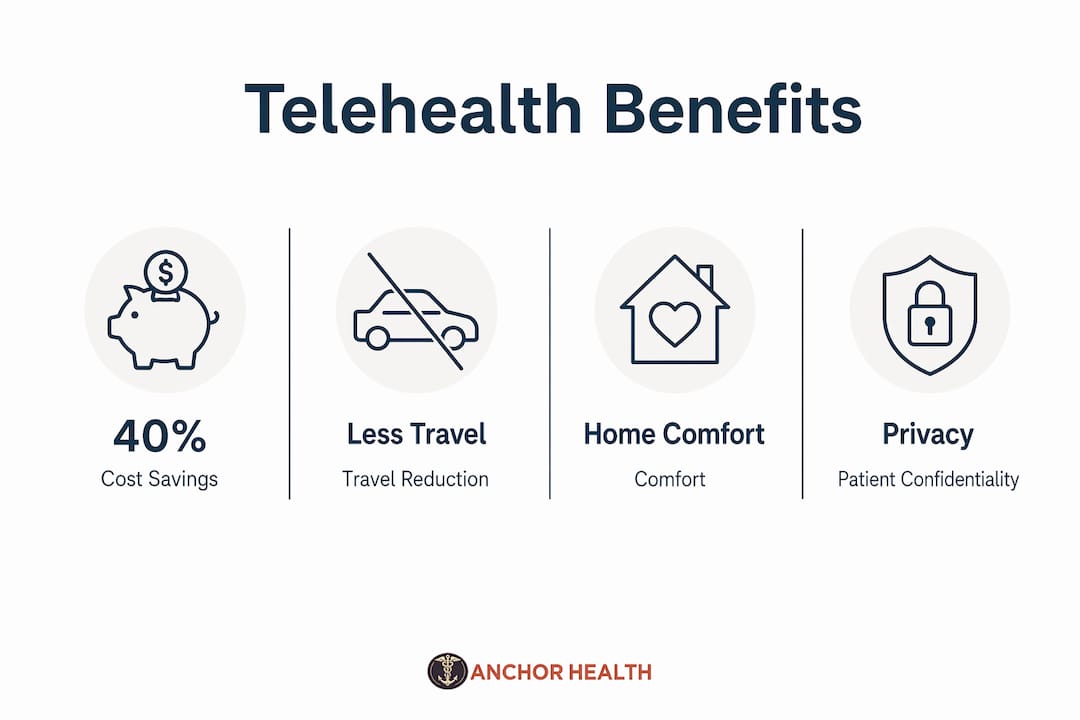
Privacy is another underrated benefit. Telehealth platforms designed for pediatric care protect patient confidentiality while allowing parents to stay present and involved. The American Telemedicine Association emphasizes age-appropriate communication about privacy as a core part of effective pediatric telehealth. When children understand that their conversation is private and safe, they open up faster.
For minor acute illnesses, brief telehealth visits are clinically sufficient. Typical visits for minor illnesses last 5–15 minutes and are designed for efficiency and reassurance. A parent does not need to take a half-day off work to confirm that a child’s sore throat is viral and needs rest, not antibiotics.
Pro Tip: Before your child’s telehealth visit, let them sit in front of the camera for a few minutes and get comfortable with seeing themselves on screen. Children who are familiar with the setup engage more naturally with the provider.
What are the limitations and best practices for telehealth with young patients?
Telehealth does not replace every type of pediatric care. Infants and newborns often require in-person exams because physical assessment is central to their care. Emergency conditions, suspected fractures, severe respiratory distress, and situations requiring hands-on diagnostics all require an in-person visit or emergency care. Parents should treat telehealth as a primary care tool, not an emergency substitute.
Age and attention span shape what a telehealth visit can accomplish. Toddlers and preschool-age children have limited tolerance for screen-based interaction. Providers trained in pediatric telehealth adjust their approach by shortening sessions, using visual cues, and involving parents as active participants. Older children and teenagers generally adapt well and often prefer the privacy of a home-based visit.
The physical environment directly affects the quality of the visit. A noisy, crowded room undermines a behavioral health session. Children’s engagement improves significantly in private, familiar settings where they feel safe to speak openly. For mental health visits in particular, a quiet room with the door closed is not optional. It is a clinical requirement.
Steps to prepare for a pediatric telehealth visit:
- Test your technology at least 15 minutes before the appointment. Check your camera, microphone, and internet connection.
- Choose a quiet, private room where your child feels comfortable and distractions are minimal.
- Gather relevant information in advance: current medications, symptom timeline, and any recent temperature readings or observations.
- Explain the visit to your child in age-appropriate terms. Tell younger children they will talk to a doctor on the computer, just like a video call with a family member.
- Stay present and engaged during the visit. Your observations as a parent are part of the clinical picture.
Pro Tip: For behavioral health visits, let your child know ahead of time that what they share with the provider is private. This simple step builds trust and encourages more honest communication during the session.
How can parents prepare their children for telehealth appointments?
Preparation is the single most reliable predictor of a productive telehealth visit. Parents who treat the appointment as a structured clinical encounter, rather than a casual video call, get better outcomes for their children. The American Telemedicine Association guidance is clear: pediatric telehealth is a structured clinical encounter that requires the same intentionality as an in-person visit.
Children communicate differently than adults, and good telehealth providers know this. Some children express symptoms better through drawing or demonstration than through verbal description. Encourage your child to show the provider where it hurts, or to draw how they feel if words are difficult. This approach is especially useful for younger children and those with communication challenges.
Scheduling matters more than most parents realize. Avoid booking telehealth visits during nap times, meal times, or high-energy periods of the day. A child who is hungry or overtired will not engage well with a provider on screen. Mid-morning appointments tend to work well for school-age children on days when they are home.
Follow-up is where continuity of care is built or lost. After the visit, confirm next steps with the provider: prescription details, follow-up timing, and any warning signs that would require an in-person visit. Parents who attend telehealth visits as active caregivers rather than passive observers get more from every appointment.
Practical preparation steps for parents:
- Confirm the appointment link or platform login the day before
- Write down your child’s symptoms, their duration, and any changes you have noticed
- Have your child’s insurance card and medication list accessible
- Set up the device in the room where your child is most relaxed
- Plan a brief, calm activity for your child to do immediately before the visit to reduce pre-appointment energy
- Ask the provider at the end of the visit what to watch for and when to follow up
For a complete preparation framework, the pediatric telehealth visit checklist from Myanchorhealthpc walks families through every step before their first virtual appointment.
Key takeaways
Telehealth removes barriers for young patients by eliminating travel, reducing costs, and placing care in a home environment where children engage more openly and honestly with providers.
| Point | Details |
|---|---|
| Financial barriers drop significantly | Telehealth cuts indirect costs like travel and childcare, making care accessible for the 40%+ of households that struggle with deductibles. |
| Home settings improve child engagement | Children show less anxiety and communicate more openly in familiar environments, leading to better clinical outcomes. |
| Not all conditions suit telehealth | Infants, emergencies, and physical assessments require in-person care; telehealth works best for primary and behavioral health. |
| Preparation determines visit quality | Testing technology, choosing a quiet room, and explaining the visit to your child directly improves the outcome of every appointment. |
| Continuity reduces missed care | Virtual visits lower no-show rates and support consistent follow-up, especially for children managing behavioral health conditions. |
What I have learned from watching families use telehealth for their children
The families who get the most from pediatric telehealth are not the ones with the fastest internet or the newest devices. They are the ones who show up prepared and treat the visit like a real appointment. That sounds obvious, but it is the most common gap I see.
What surprises most parents is how quickly children adapt. A child who would cry in a waiting room will often chat openly with a provider on a laptop screen within minutes. The home environment does real clinical work. It is not a compromise. For behavioral health especially, I have seen children share things in a telehealth session that they would never say in an office.
The limitation I take most seriously is technology equity. Telehealth assumes reliable internet and a working device. Families without those resources face a different kind of barrier, and that gap is real. The solution is not to dismiss telehealth but to pair it with community resources and flexible scheduling that account for access differences.
My honest recommendation: use telehealth for primary care, behavioral health, and follow-up visits. Use in-person care for physical exams, urgent concerns, and anything that requires a provider’s hands. The two approaches work best together, not as substitutes for each other. Myanchorhealthpc’s Anchored Care℠ᴵᴾ model is built on exactly that principle: a consistent provider relationship that uses virtual care thoughtfully, not reflexively.
— Paule
Telehealth primary care for your family at Myanchorhealthpc
Myanchorhealthpc is a Maryland-based telehealth primary care practice built for families who need consistent, relationship-based care without the logistical weight of traditional clinic visits. The practice offers pediatric and adolescent health services, behavioral health support, and primary care for all ages through secure video visits.

For parents who want to understand their options before committing, the guide on choosing telehealth primary care for your family covers what to look for in a provider, how to evaluate fit, and what questions to ask. Myanchorhealthpc accepts insurance and offers membership options for families who want more direct access to their care team. If you are ready to establish care for your child, pediatric telehealth setup is straightforward and designed to work around your schedule.
FAQ
What conditions can telehealth treat in children?
Telehealth is well-suited for minor acute illnesses, behavioral health concerns like anxiety and ADHD, follow-up visits, and preventive care conversations. Typical telehealth visits for minor illnesses last 5–15 minutes and are clinically sufficient for most common childhood complaints.
Is telehealth effective for children’s mental health?
Yes. Research shows high effectiveness and strong patient satisfaction for virtual behavioral health services in youth, including therapy for anxiety, ADHD, depression, and trauma-related concerns. Children often engage more openly at home than in a clinical office.
How do I keep my child focused during a telehealth visit?
Choose a quiet, private room, minimize distractions, and schedule the visit during a calm part of your child’s day. Providers trained in pediatric telehealth use age-appropriate communication and visual engagement techniques to hold children’s attention.
When should I choose in-person care over telehealth for my child?
Choose in-person care for emergencies, suspected injuries, newborn exams, and any situation requiring a physical assessment. Infants and newborns in particular require hands-on evaluation that telehealth cannot replicate.
Does telehealth work for families in rural areas?
Telehealth directly addresses geographic and transportation barriers that rural families face, connecting children to pediatric specialists without requiring travel. The main requirement is a reliable internet connection and a device with a working camera.
Recommended
- How Telehealth Works for College Students in 2026
- Why Convenience Drives Telehealth Adoption for Families
- How Telehealth Handles Sick Child Visits for Families
- How to Establish Pediatric Care Telehealth for Your Family
Blog & Information Disclaimer
Last Updated: May 23, 2026
The information provided on the Anchor Health website (https://myanchorhealthpc.com/), including but not limited to blog posts, articles, newsletters, graphics, and other materials (collectively, the "Content"), is for general informational and educational purposes only.
By accessing and using this website, you acknowledge and agree to the following terms and conditions:
The Content on this website is not intended to be a substitute for professional medical advice, diagnosis, or treatment. Always seek the advice of your physician, nurse practitioner, or other qualified health provider with any questions you may have regarding a medical condition. Never disregard professional medical advice or delay in seeking it because of something you have read on this website.
Reading, interacting with, or sharing the Content on this website does not establish a patient-provider relationship between you and Anchor Health or any of its clinicians, including Paule Valery Joseph, PhD, MBA, CRNP, FAAN. A formal patient-provider relationship is only established after you have completed the formal intake process, signed our clinical consent forms, and participated in a secure clinical consultation.
If you are experiencing a medical emergency, call 911 or seek emergency medical services immediately.
Anchor Health is a primary care practice and does not provide emergency or crisis intervention services through its website or blog.
While Anchor Health strives to provide thoughtful, evidence-based information grounded in our Anchored Care℠ model, healthcare is a rapidly evolving field. We make no representations or warranties, express or implied, about the completeness, accuracy, reliability, or suitability of the information contained in the Content. Any reliance you place on such information is strictly at your own risk.
Anchor Health is a telehealth practice providing services to patients physically located within the state of Maryland. The information provided on this blog is intended for residents of Maryland and is governed by the laws and regulations of that state. Accessing this information from outside of Maryland does not imply that our clinicians are licensed to practice medicine or provide consultations in your jurisdiction.
Content related to Weight & Metabolic Health, including discussions of GLP-1 medications or other medical therapies, is provided for educational context regarding our clinical approach. Prescriptions and specific medical recommendations are only made following a comprehensive clinical evaluation, diagnostic testing, and shared decision-making within a formal patient-provider relationship.
This website may contain links to external websites that are not provided or maintained by or in any way affiliated with Anchor Health. Please note that Anchor Health does not guarantee the accuracy, relevance, timeliness, or completeness of any information on these external websites.
To the fullest extent permitted by law, Anchor Health, its owners, and its employees shall not be liable for any direct, indirect, incidental, consequential, or punitive damag
Related posts