Fertility Health Checkup Checklist: Your Complete Guide

Your fertility health checkup checklist at a glance
A fertility health checkup is a structured evaluation covering diagnostic tests, physical exams, and lifestyle factors for both partners. Think of it as a proactive reproductive health review, not a last resort. Starting with this checklist gives you and your provider a clear picture of where you stand before concerns become complications.
For women:
- Complete blood count (CBC) and metabolic panel
- Hormonal panel: FSH, LH, estradiol, AMH, TSH, prolactin, progesterone
- Pelvic ultrasound to assess uterus, ovaries, and antral follicle count
- Hysterosalpingogram (HSG) or saline sonogram to evaluate fallopian tube patency
- Ovulation confirmation (mid-luteal progesterone or LH tracking)
- STI screening, including chlamydia
- BMI, blood pressure, and thyroid exam
- Full reproductive and menstrual history
For men:
- Semen analysis: concentration, motility, and morphology
- Hormonal panel: testosterone, FSH, LH
- Physical genital exam including testicular size and varicocele check
- STI screening
- Review of medications, supplements, and heat exposure history
- Lifestyle review: smoking, alcohol, recreational drug use
For both partners:
- Family medical history and genetic carrier screening (when indicated)
- Vaccination review and update
- Mental and emotional health assessment
- Discussion of conception goals and timeline
What women need to know about their fertility evaluation
Ovarian reserve is one of the most telling indicators of a woman’s reproductive potential. AMH blood testing and antral follicle count via ultrasound together predict how the ovaries will respond to stimulation, which becomes especially relevant after age 35 or following ovarian surgery. FSH and estradiol drawn on cycle day 2 or 3 add further context to that picture.
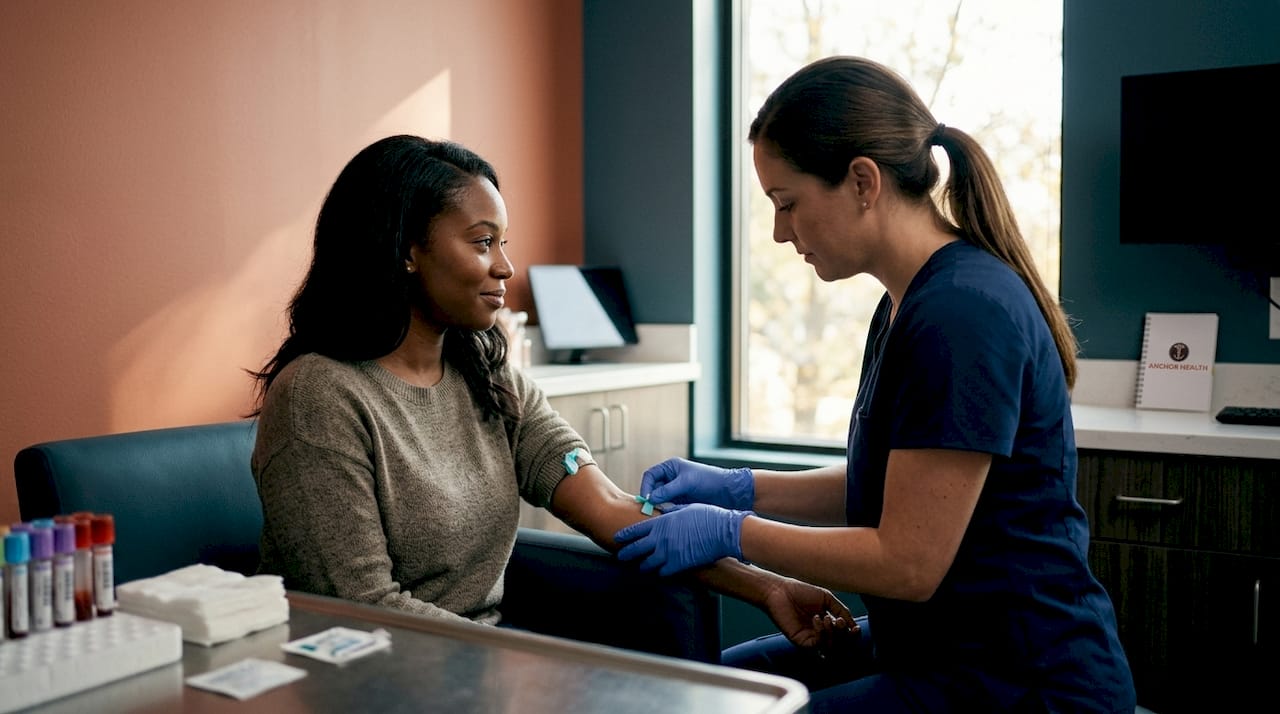
Hormonal balance extends well beyond estrogen and progesterone. TSH and prolactin levels are routinely checked because thyroid dysfunction and elevated prolactin are two correctable causes of ovulatory disruption that are easy to miss without targeted testing. A mid-luteal progesterone draw confirms whether ovulation actually occurred in a given cycle.
Structural assessment matters just as much as hormones. A pelvic ultrasound can identify fibroids, ovarian cysts, or signs of endometriosis that may interfere with implantation. When tube patency is in question, an HSG provides a clear image of whether the fallopian tubes are open. Your reproductive health screening should also include a chlamydia swab, since past infections can cause silent tubal scarring.
“A comprehensive history is important in establishing the likelihood of infertility and potential risk factors that could be contributing to it. Some readily apparent causes of infertility can be identified through a comprehensive medical history and examination.” — NCBI Bookshelf, Approach to Evaluation and Management of Infertility
Reproductive history rounds out the picture. Previous pregnancies, miscarriages, irregular cycles, and any prior fertility treatment all shape the clinical approach your provider will take.
What men need to know about their fertility evaluation
Male factor infertility contributes to roughly half of all infertility cases, yet men are often the last to be evaluated. Semen analysis is the cornerstone of male fertility assessment. It measures sperm concentration, motility, and morphology; abnormal results in any of these parameters prompt further specialist workup.

A physical exam adds clinical detail that lab work alone cannot provide. Your provider will assess testicular size and consistency, check for varicocele (an enlarged vein in the scrotum that raises scrotal temperature and impairs sperm production), and review the vas deferens and epididymis for signs of obstruction.
Lifestyle factors carry real weight. Heat exposure from hot tubs or saunas can transiently suppress sperm quality, as can certain supplements and medications. Smoking, heavy alcohol use, and anabolic steroids all affect sperm parameters. Men considering testosterone replacement therapy should be aware that exogenous testosterone suppresses the body’s own sperm production; a detailed discussion of TRT and fertility is worth having before starting any such treatment.
“The diagnostic pathway, referral and management plan for either partner ought to be informed by the results of the tests of the other partner, and be progressively adjusted to optimize efficiency.” — NCBI Bookshelf, Approach to Evaluation and Management of Infertility
Hormonal testing for testosterone, FSH, and LH helps distinguish between primary testicular failure and a hormonal signaling problem originating higher in the brain. Both are treatable, but the treatment paths differ significantly.
Lifestyle and supplement choices that support fertility
The LAMPS framework organizes preconception health into five domains: Lifestyle, Adjuncts (supplements), Medical, Physical, and Social/Emotional wellbeing. Working through each domain with your provider is more thorough than addressing isolated lab values.
Key lifestyle steps:
- Stop smoking. Cigarette smoke damages egg DNA and reduces sperm motility.
- Limit alcohol to occasional, low amounts during the preconception period.
- Aim for a BMI in the healthy range; both underweight and overweight status disrupt ovulation and sperm production.
- Exercise regularly but avoid extreme endurance training, which can suppress reproductive hormones.
- Build a consistent stress management practice. Chronic stress elevates cortisol, which competes with reproductive hormone signaling.
Supplements worth discussing with your provider:
- Folate (or methylfolate): 400–800 mcg daily before conception reduces neural tube defect risk and supports early embryo development.
- Vitamin D: Deficiency is common and linked to ovulatory dysfunction and poor sperm motility.
- DHA (omega-3): Supports sperm membrane integrity and early fetal brain development.
Pro Tip: Track your cycle with a basal body temperature app or LH ovulation predictor kits for at least two months before your fertility appointment. Bringing that data gives your provider a concrete ovulation pattern to work with, not just your best estimate.
Mental and emotional health belong in this conversation too. Fertility preparation can be stressful, and that stress is bidirectional. Connecting with a counselor or a peer support group before challenges arise, rather than after, tends to produce better outcomes for both partners.
What updated guidelines say about timing and preparation
Fertility testing is recommended after 12 months of unprotected intercourse for most couples, or after 6 months for women over 35 or those with irregular cycles, pelvic conditions, or known risk factors. Waiting the full year when risk factors are already present delays care without clinical benefit.
“Any visit with reproductive potential is an opportunity for preconception counseling to optimize health proactively.” — ACOG Preconception Counseling Guidelines
Preparation improves the quality of your first appointment. Bringing detailed health histories, a current medication list, and a clear statement of your conception timeline allows your provider to move directly into personalized planning rather than spending the visit on background collection. Both partners attending together is strongly preferred, since evaluating both simultaneously identifies common causes faster and avoids the delay of sequential workups.
At Myanchorhealthpc, our Anchored Care℠ model means your fertility evaluation connects directly to your ongoing primary care record. Your provider already knows your chronic conditions, medications, and health history, so the conversation starts further along. Women’s reproductive health is woven into continuous care, not treated as a separate specialty silo.
When should you see a fertility specialist?
Your primary care provider can initiate and coordinate most of the fertility evaluation steps above. Referral to a reproductive endocrinologist (REI) is appropriate when:
- Semen analysis shows significantly abnormal results on two separate samples
- AMH is very low or FSH is elevated, suggesting diminished ovarian reserve
- HSG reveals blocked fallopian tubes or significant uterine abnormalities
- You have a confirmed diagnosis of endometriosis, polycystic ovary syndrome (PCOS) with anovulation, or premature ovarian insufficiency
- You are over 40 and have not conceived after three to six months of trying
- Unexplained infertility persists after a complete evaluation of both partners
A referral is not a failure. It is a logical next step when the initial workup points toward conditions that require assisted reproductive technology or surgical intervention.
How to interpret your fertility test results
Lab results rarely tell a single, definitive story. A low AMH, for example, indicates reduced ovarian reserve but does not rule out natural conception. An abnormal semen analysis on one sample warrants a repeat test before drawing firm conclusions, since sperm quality fluctuates with illness, stress, and heat exposure.
Your provider will interpret results in context: your age, how long you have been trying, your partner’s results, and your overall health history all factor into what a given number actually means for your specific situation. Unexplained infertility, where all standard tests return normal, accounts for a meaningful share of cases and still has effective treatment pathways.
The goal of interpretation is a clear, prioritized plan. That might mean a lifestyle modification period, a referral, ovulation induction, or simply continued monitoring. If you leave your appointment without a defined next step and a follow-up date, ask for one. Continuity of care through this process, the kind Myanchorhealthpc is built around, makes that follow-through far more consistent.
Key Takeaways
A complete fertility evaluation covers both partners simultaneously, starting with the least invasive tests and building toward specialist referral only when results indicate the need.
| Point | Details |
|---|---|
| Test both partners together | Male factor contributes to roughly half of infertility cases; concurrent evaluation saves time and improves accuracy. |
| Timing for evaluation | Seek evaluation after a year of trying, or sooner if you are over 35 or have known risk factors. |
| Core female tests | AMH, antral follicle count, FSH, TSH, prolactin, progesterone, pelvic ultrasound, and HSG form the standard panel. |
| Core male tests | Semen analysis measuring concentration, motility, and morphology is the essential first step for men. |
| Lifestyle supports results | Folate, vitamin D, DHA, smoking cessation, and stress management all influence fertility outcomes for both partners. |
Recommended
- Primary Care’s Role in Women’s Reproductive Health
- Young Adult Preventive Health Checklist: 2026 Guide
- Preventive Care for Ages 18–25: Your 2026 Guide
Blog & Information Disclaimer
Last Updated: May 23, 2026
The information provided on the Anchor Health website (https://myanchorhealthpc.com/), including but not limited to blog posts, articles, newsletters, graphics, and other materials (collectively, the "Content"), is for general informational and educational purposes only.
By accessing and using this website, you acknowledge and agree to the following terms and conditions:
The Content on this website is not intended to be a substitute for professional medical advice, diagnosis, or treatment. Always seek the advice of your physician, nurse practitioner, or other qualified health provider with any questions you may have regarding a medical condition. Never disregard professional medical advice or delay in seeking it because of something you have read on this website.
Reading, interacting with, or sharing the Content on this website does not establish a patient-provider relationship between you and Anchor Health or any of its clinicians, including Paule Valery Joseph, PhD, MBA, CRNP, FAAN. A formal patient-provider relationship is only established after you have completed the formal intake process, signed our clinical consent forms, and participated in a secure clinical consultation.
If you are experiencing a medical emergency, call 911 or seek emergency medical services immediately.
Anchor Health is a primary care practice and does not provide emergency or crisis intervention services through its website or blog.
While Anchor Health strives to provide thoughtful, evidence-based information grounded in our Anchored Care℠ model, healthcare is a rapidly evolving field. We make no representations or warranties, express or implied, about the completeness, accuracy, reliability, or suitability of the information contained in the Content. Any reliance you place on such information is strictly at your own risk.
Anchor Health is a telehealth practice providing services to patients physically located within the state of Maryland. The information provided on this blog is intended for residents of Maryland and is governed by the laws and regulations of that state. Accessing this information from outside of Maryland does not imply that our clinicians are licensed to practice medicine or provide consultations in your jurisdiction.
Content related to Weight & Metabolic Health, including discussions of GLP-1 medications or other medical therapies, is provided for educational context regarding our clinical approach. Prescriptions and specific medical recommendations are only made following a comprehensive clinical evaluation, diagnostic testing, and shared decision-making within a formal patient-provider relationship.
This website may contain links to external websites that are not provided or maintained by or in any way affiliated with Anchor Health. Please note that Anchor Health does not guarantee the accuracy, relevance, timeliness, or completeness of any information on these external websites.
To the fullest extent permitted by law, Anchor Health, its owners, and its employees shall not be liable for any direct, indirect, incidental, consequential, or punitive damag
Related posts