Same-Day Telehealth Availability: What It Means for You

Same-day telehealth appointment availability means you can access a virtual medical consultation within 24 hours of requesting care, using digital methods like video calls, phone, or secure messaging. No driving, no waiting room, no scheduling weeks out. You describe your symptoms, connect with a licensed provider, and get a clinical assessment, all from wherever you are. This model focuses on non-emergency urgent care: the kind of health concern that genuinely needs attention today but does not require an emergency room.
Common conditions well-suited for same-day virtual visits include:
- Respiratory infections such as colds, sinus infections, and mild flu symptoms
- Urinary tract infections and other common bacterial concerns
- Skin rashes, minor allergic reactions, and insect bites
- Medication management and prescription refill reviews
- Mental and emotional health concerns, including anxiety and mild depression
- Follow-up care for ongoing chronic conditions
The core promise is timely access. Whether you book a fixed appointment slot or join an on-demand virtual queue, the goal is the same: care today, not next week.
Table of Contents
- How telehealth works and what the terminology actually means
- Why same-day telehealth appointments are genuinely convenient
- How to schedule and prepare for a same-day telehealth visit
- Limitations and considerations you should know about
- Telehealth equity, terminology, and how service models differ
- What “same-day availability” actually means in practice
- How same-day telehealth access affects health outcomes and patient satisfaction
- Key Takeaways
- Same-day virtual care with a provider who actually knows you
How telehealth works and what the terminology actually means
Telehealth is defined by HRSA as the use of electronic information and telecommunication technologies to support long-distance clinical healthcare, patient education, health administration, and public health. It is an umbrella term. Telemedicine, by contrast, refers specifically to remote clinical diagnosis and treatment. In everyday same-day care contexts, these terms overlap considerably, and most patients use them interchangeably without any practical consequence.
Virtual visits happen through three main channels: live video calls, telephone consultations, and secure messaging through patient portals. The Mayo Clinic notes that patient portals allow you to message your provider, request prescription refills, and review test results, all through a protected digital environment. Video visits tend to be the most clinically thorough because they allow the provider to observe you directly.
Two distinct models exist for accessing same-day care. Scheduled appointments give you a fixed time slot, much like a traditional office visit, just virtual. On-demand visits place you in a virtual queue where you wait for the next available provider. Both can happen within the same day, but the experience differs meaningfully.
Why same-day telehealth appointments are genuinely convenient
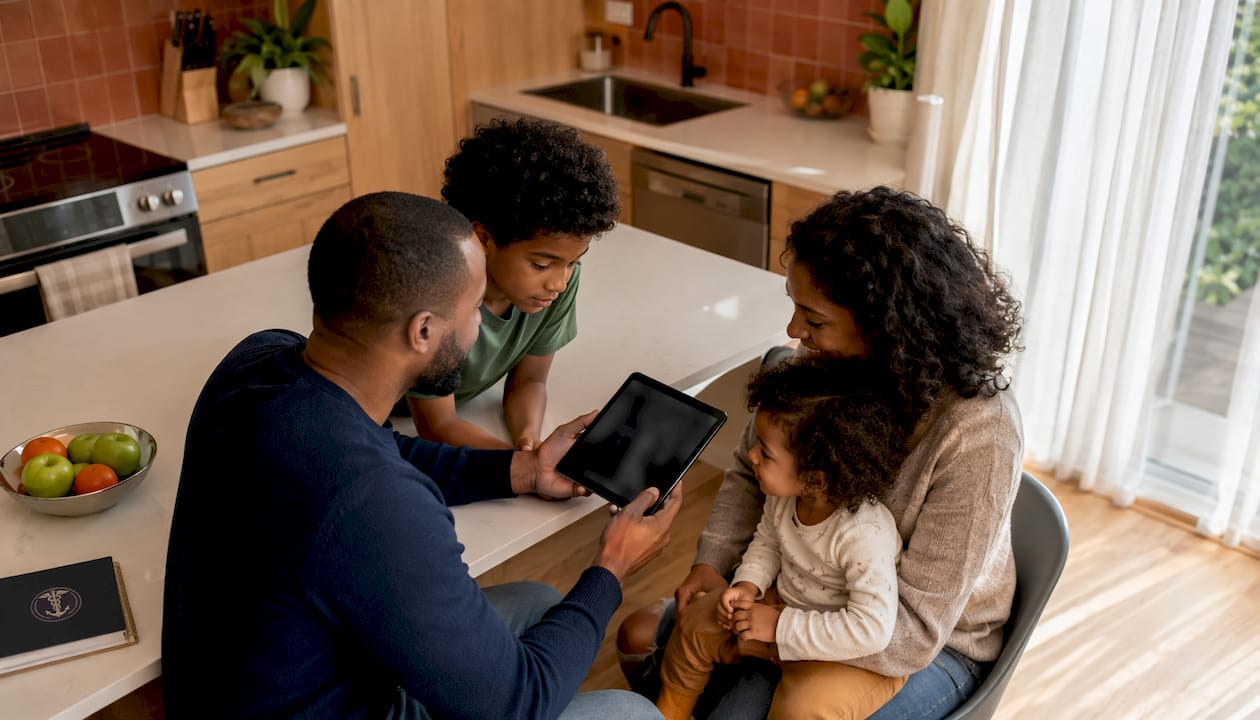
The practical advantages go beyond simple convenience. Telehealth effectively manages non-emergency conditions like common infections, medication management, and mental health support, offering a quick alternative to in-person care. For families with young children, working adults with limited flexibility, or anyone managing a chronic condition, that speed matters.
Key benefits include:
- No travel required. You connect from home, your car, or your office.
- Reduced emergency room visits. Prompt virtual access for non-critical issues keeps unnecessary ER trips down, which also reduces costs and wait times for those with genuine emergencies.
- Flexibility in scheduling. Many platforms offer evening and weekend slots that traditional offices do not.
- Cost transparency. Telehealth visits often carry lower copays than urgent care or ER visits, and many insurance plans cover them.
- Continuity of care. When you see a consistent provider virtually, your medical history travels with you.
Telehealth adoption has grown significantly among families seeking convenient, timely care. When access is easy, people are more likely to seek care early rather than waiting until a condition worsens.
How to schedule and prepare for a same-day telehealth visit
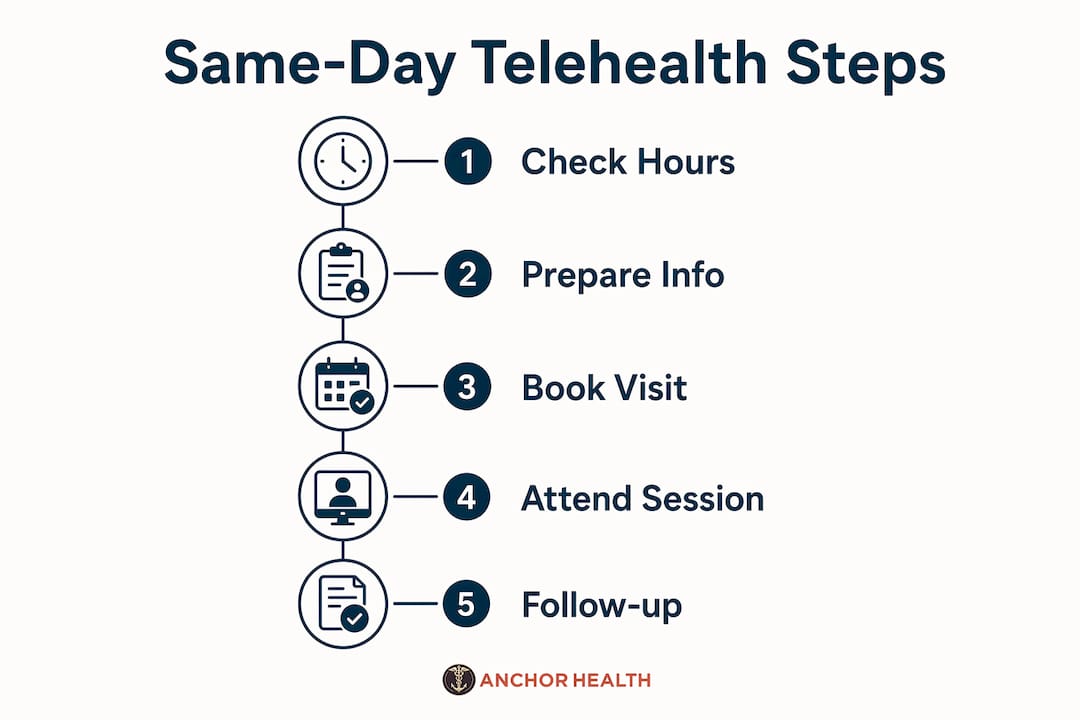
The process is more straightforward than many people expect. Here is how it typically works:
- Create or log into your account. Most platforms require a patient profile with basic demographic and insurance information.
- Complete a symptom and history intake. You will describe your current concern, relevant medical history, and any medications you take. Some platforms use symptom checkers and triage tools to prioritize patients by urgency.
- Choose your visit type. Select a scheduled appointment slot or join an on-demand virtual queue, depending on what the platform offers.
- Review and sign consent forms. These cover telehealth-specific privacy disclosures and your agreement to virtual care.
- Test your technology. Confirm your camera, microphone, and internet connection work before the visit starts.
- Attend your visit. Join via the platform’s video interface or phone line at your scheduled time or when the provider is ready for you.
- Follow up as needed. After the visit, review any care instructions, prescriptions, or referrals through your patient portal.
Pro Tip: Check the provider’s specific service hours before assuming 24/7 availability. Many virtual primary care services operate during standard business hours, while dedicated urgent care telehealth platforms may extend into evenings and weekends. Knowing the difference saves frustration when you need care on a Sunday afternoon.
Having your insurance card, a list of current medications, and your pharmacy’s information ready before you log in will make the visit run smoothly.
Limitations and considerations you should know about
Same-day telehealth is genuinely useful, but it has real boundaries worth understanding before you rely on it.
- Not for emergencies. Chest pain, difficulty breathing, stroke symptoms, or severe injuries require emergency services, not a virtual queue.
- Prescriptions are not guaranteed. Providers issue prescriptions based on clinical judgment during the visit, just as they would in person. Fast access does not mean automatic treatment.
- Service hours vary. Many virtual primary care services run during standard business hours rather than around the clock. Not every platform is a 24/7 urgent care service.
- On-demand queues involve wait times. Virtual queues can mean waiting for a short period after logging in after you log in, which differs from a fixed appointment time.
- Privacy and security matter. Reputable platforms use encrypted video calls and secure patient portals compliant with health information protection standards. Always verify a platform’s security credentials before sharing personal health information.
- Telehealth etiquette applies. Find a private, quiet space. Dress appropriately. Treat the visit with the same seriousness you would an in-person appointment.
- Insurance acceptance varies. Confirm your plan covers telehealth visits with your specific provider before booking.
Telehealth equity, terminology, and how service models differ
Not everyone has equal access to same-day telehealth, and that gap is worth naming directly. Access to telehealth is shaped by geographic location, insurance status, and digital literacy. Rural patients may face unreliable broadband. Older adults or those less comfortable with technology may find virtual platforms harder to navigate. Uninsured or underinsured patients face cost barriers that same-day availability alone does not solve.

Research on mental health treatment facilities illustrates how uneven adoption can be. A RAND study found that community mental health centers were significantly more likely to offer telehealth for children than non-community facilities, and that facilities not accepting Medicaid were less likely to provide telehealth-based medication management. The pattern holds more broadly: access disparities persist even as telehealth grows.
Scheduled appointments and on-demand queue models serve different needs. Scheduled visits suit patients who can plan ahead and want a specific provider. On-demand queues work better for acute concerns that arise without warning. Understanding which model a platform uses helps you set realistic expectations about wait times and provider continuity. For mental health support specifically, breaking down barriers to access often requires both flexible scheduling and culturally responsive care.
What “same-day availability” actually means in practice
The phrase “same-day availability” does not mean instant access in every case. It means the platform can connect you with a provider within the calendar day you request care, typically within a defined service window. UW Medicine’s virtual primary care, for example, offers on-demand video visits from 8 a.m. to 8 p.m., seven days a week, where patients join a queue for the next available provider. That is same-day access, but it operates within specific hours and involves variable wait times.
Provider responsiveness also depends on patient volume. A platform with high demand may have longer queue times during peak hours, even if same-day access is technically available. Checking a platform’s current wait time estimate before joining can help you decide whether to queue now or schedule a fixed slot for later in the day.
How same-day telehealth access affects health outcomes and patient satisfaction
Prompt access to care has a measurable effect on how people experience and manage their health. When the gap between recognizing a symptom and speaking with a provider shrinks from days to hours, patients are more likely to follow through on treatment, less likely to let manageable conditions escalate, and generally more satisfied with their care experience.
Same-day telehealth also supports continuity. When patients can reach their own provider or care team quickly, rather than defaulting to an urgent care clinic staffed by someone unfamiliar with their history, the quality of clinical decision-making tends to be higher. Relationship-based virtual care, where the provider knows your background and health goals, produces better outcomes than episodic, transactional visits. That is the model Myanchorhealthpc is built around, and it reflects what the evidence supports.
Key Takeaways
Same-day telehealth appointment availability gives patients virtual access to a licensed provider within 24 hours, but the quality and continuity of that care depend heavily on the service model and provider relationship behind it.
| Point | Details |
|---|---|
| Core definition | Same-day telehealth means a virtual medical consultation within 24 hours via video, phone, or secure messaging. |
| Scheduling models | Scheduled slots offer fixed times; on-demand queues may involve waits after logging in. |
| Real limitations | Prescriptions depend on clinical judgment, service hours vary, and emergencies always require in-person care. |
| Access equity | Geographic location, insurance status, and digital literacy all shape who can realistically use same-day telehealth. |
| Myanchorhealthpc | Offers relationship-centered virtual primary care in Maryland, accepting insurance and membership options for consistent, personalized access. |
Same-day virtual care with a provider who actually knows you
Most same-day telehealth platforms connect you with whoever is available. Myanchorhealthpc takes a different approach. As a Maryland-based telehealth primary care practice, it pairs you with a consistent provider who builds a real picture of your health over time, not just your symptoms today. That continuity is what separates a trusted care relationship from a transactional visit.
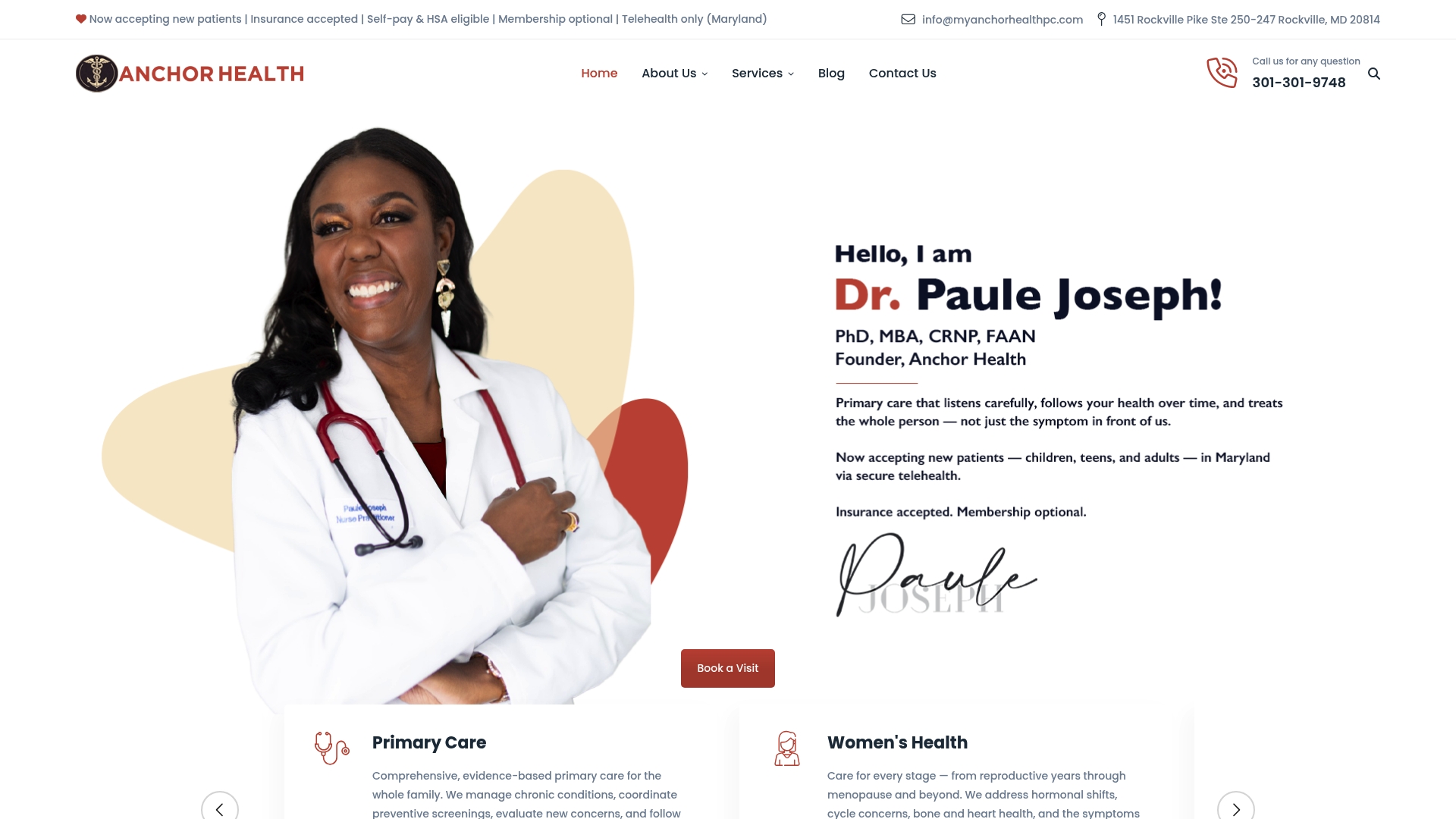
Myanchorhealthpc accepts insurance and offers membership options for patients who want enhanced access and more personalized care. Services span general primary care for all ages, women’s health, mental and emotional health support, and weight and metabolic health management. If you are ready to move beyond one-off virtual visits and toward care that stays with you, choosing the right telehealth primary care starts with understanding what consistent, relationship-based virtual care looks like. Visit Myanchorhealthpc to learn more and book your first visit.
Recommended
- Why Convenience Drives Telehealth Adoption for Families
- How Telehealth Works for College Students in 2026
- How to Communicate Care Needs to Your Telehealth Provider
Blog & Information Disclaimer
Last Updated: May 23, 2026
The information provided on the Anchor Health website (https://myanchorhealthpc.com/), including but not limited to blog posts, articles, newsletters, graphics, and other materials (collectively, the "Content"), is for general informational and educational purposes only.
By accessing and using this website, you acknowledge and agree to the following terms and conditions:
The Content on this website is not intended to be a substitute for professional medical advice, diagnosis, or treatment. Always seek the advice of your physician, nurse practitioner, or other qualified health provider with any questions you may have regarding a medical condition. Never disregard professional medical advice or delay in seeking it because of something you have read on this website.
Reading, interacting with, or sharing the Content on this website does not establish a patient-provider relationship between you and Anchor Health or any of its clinicians, including Paule Valery Joseph, PhD, MBA, CRNP, FAAN. A formal patient-provider relationship is only established after you have completed the formal intake process, signed our clinical consent forms, and participated in a secure clinical consultation.
If you are experiencing a medical emergency, call 911 or seek emergency medical services immediately.
Anchor Health is a primary care practice and does not provide emergency or crisis intervention services through its website or blog.
While Anchor Health strives to provide thoughtful, evidence-based information grounded in our Anchored Care℠ model, healthcare is a rapidly evolving field. We make no representations or warranties, express or implied, about the completeness, accuracy, reliability, or suitability of the information contained in the Content. Any reliance you place on such information is strictly at your own risk.
Anchor Health is a telehealth practice providing services to patients physically located within the state of Maryland. The information provided on this blog is intended for residents of Maryland and is governed by the laws and regulations of that state. Accessing this information from outside of Maryland does not imply that our clinicians are licensed to practice medicine or provide consultations in your jurisdiction.
Content related to Weight & Metabolic Health, including discussions of GLP-1 medications or other medical therapies, is provided for educational context regarding our clinical approach. Prescriptions and specific medical recommendations are only made following a comprehensive clinical evaluation, diagnostic testing, and shared decision-making within a formal patient-provider relationship.
This website may contain links to external websites that are not provided or maintained by or in any way affiliated with Anchor Health. Please note that Anchor Health does not guarantee the accuracy, relevance, timeliness, or completeness of any information on these external websites.
To the fullest extent permitted by law, Anchor Health, its owners, and its employees shall not be liable for any direct, indirect, incidental, consequential, or punitive damag
Related posts