Prepare So Your Virtual Annual Physical Delivers Usable Clinical Data

A virtual annual physical works well for preventive planning, medication review, and chronic condition monitoring, and most adults can complete one entirely by video. Some hands-on diagnostics still require an in-person visit, and any labs or imaging your clinician orders get completed at an outside facility. Preparation, your device, your paperwork, and your home vitals, makes the difference between a rushed call and a genuinely useful checkup.
TL;DR:
- Virtual physical exams are limited in assessing internal organs and detailed ENT assessments, requiring in-person visits for comprehensive evaluation.
- Preparing a quiet space, internet, medical history, current medications, and home vitals devices enhances the quality of a telehealth physical.
- Labs and imaging ordered during a virtual visit must be completed at external facilities, with results reviewed later by the clinician.
- Continuity of care, with the same provider over time, improves detection of subtle health trends compared to seeing different clinicians each visit.
- Billing and insurance coverage vary; understanding codes and verifying limits in advance prevents unexpected out-of-pocket costs.
Table of Contents
- What a Virtual Annual Physical Includes
- How Does a Virtual Physical Exam Actually Work?
- How to Prepare for Your Virtual Annual Physical
- What Telehealth Can’t Do, and When You Need an In-Person Exam
- Insurance, Billing, and Coverage for Telehealth Physicals
- What Happens After Your Virtual Visit
- How to Choose a Telehealth Provider for Your Annual Checkup
- Why Relationship-Based Telehealth Improves Preventive Care
- Get Your Virtual Annual Physical With Anchor Health
- Sources
What a Virtual Annual Physical Includes
A telehealth annual exam covers far more ground than most people expect. Your clinician will walk through your medical history, current medications, and any new symptoms since your last visit, then move into a structured conversation about preventive screenings you’re due for, whether that’s a mammogram, colonoscopy, or routine bloodwork based on your age and risk factors.
Mental health screening is typically built into this visit, too. We ask about mood, sleep, stress, and anything that’s shifted in your daily life, because those questions matter just as much as your cholesterol number. If you’re managing a chronic condition like hypertension, diabetes, or thyroid disease, this is where your clinician reviews trends in your readings and adjusts your care plan accordingly.
The exam itself relies on a combination of visual inspection and guided self-examination. Your clinician can observe your skin, posture, breathing pattern, and general appearance over video, and can walk you through simple maneuvers to check joint mobility or look more closely at a rash or lesion. Vital signs come from devices you use at home. A digital blood pressure cuff and a scale are the most clinically useful tools for this purpose, according to the Telehealth Ten framework, which many telehealth practices now build into their virtual physical protocols.
A typical virtual annual physical includes:
- A full review of your medical history and current medication list
- Discussion of preventive screenings appropriate for your age and sex
- Mental and emotional health check-in
- Chronic condition review, including trends from home monitoring
- Visual skin and posture assessment
- Guided range-of-motion or gait demonstration when relevant
- Orders for bloodwork or urine tests, completed at a local lab
That last point trips people up. Your clinician can order the same labs a traditional physical would call for, things like a complete blood count, lipid panel, or thyroid function test, but you’ll need to visit a lab or diagnostic center to have the sample drawn. The ordering happens virtually. The collection doesn’t.
How Does a Virtual Physical Exam Actually Work?
The core challenge of any telehealth annual exam is simple: your clinician can’t put a stethoscope on your chest or press on your abdomen through a screen. The solution that’s emerged is a structured approach called the Telehealth Ten, a patient-assisted framework that turns you into an active participant in your own exam rather than a passive observer.
Instead of the clinician doing everything, you do the physical maneuvers while they coach you through it and interpret what they see. Here’s how that typically plays out during a virtual visit:
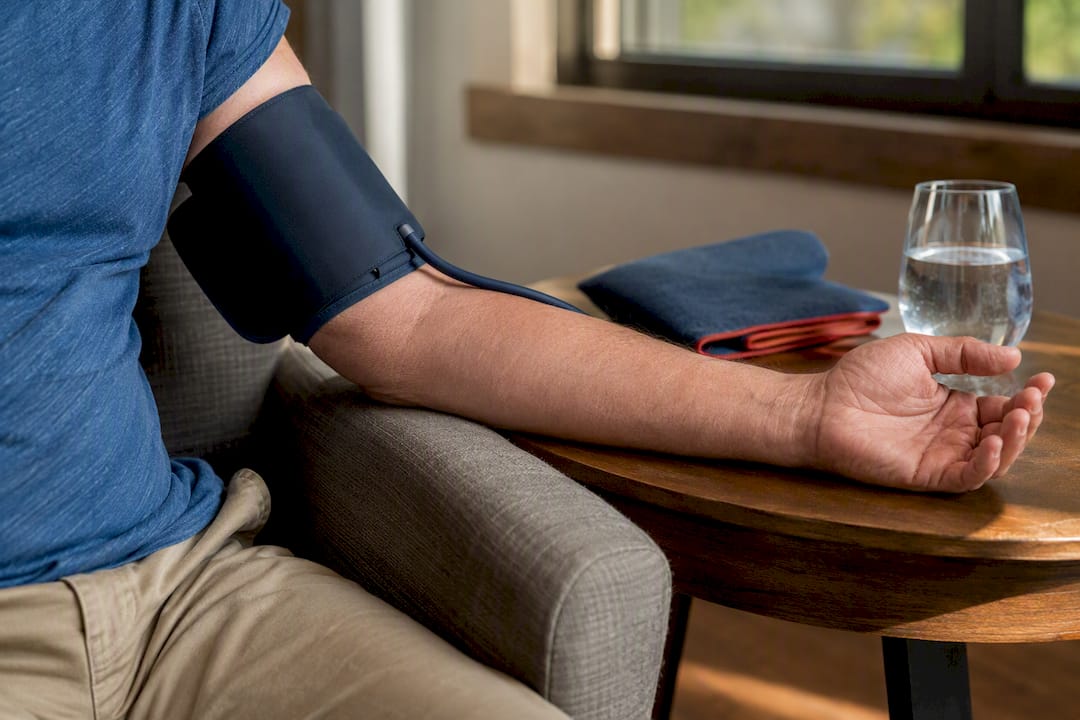
- Self-measured blood pressure. You take your own reading using a validated upper-arm cuff, following your clinician’s instructions on positioning and timing.
- Standing blood pressure sequence. For patients with dizziness or fall risk, you’re guided through a seated-to-standing check to screen for orthostatic drops.
- Gait and range-of-motion demonstration. You walk across the room or move a joint through its full range while your clinician observes for asymmetry or restriction.
- Targeted skin close-ups. You angle your camera or phone to show a mole, rash, or wound in better light and detail than a standard video frame allows.
- Weight and basic vitals reporting. You read off numbers from a home scale or pulse oximeter, which your clinician logs into your chart.
Clinicians document exactly what maneuver you performed, what values you reported, and any limitations encountered, whether that’s poor lighting or limited mobility, because this record supports both continuity of care and accurate billing. Wearable data, if you use a fitness tracker or continuous glucose monitor, often gets folded into this same conversation.
Pro Tip: For the most accurate blood pressure reading, sit quietly for five minutes before measuring, use a cuff sized correctly for your arm, and take two readings one minute apart. If you get dizzy when standing, mention it, your clinician may want both seated and standing numbers.
The limitation worth naming directly: certain organ systems simply resist remote evaluation. Auscultation of the heart and lungs, deep abdominal palpation, and detailed ENT exams (ears, throat, sinuses) still lean heavily on physical contact that a camera can’t replicate. A scoping review of virtual exam methods found that while video works well for dermatologic, neurologic, and many musculoskeletal assessments, it cannot fully substitute for hands-on diagnostics in every case.
How to Prepare for Your Virtual Annual Physical
The quality of your telehealth annual exam depends heavily on what you bring to it. HHS telehealth guidance is direct on this point: a quiet, well-lit space and a tested internet connection aren’t just nice to have, they’re what allows your clinician to actually see and hear what’s happening.
Start with your environment. Pick a room with strong overhead or natural lighting rather than a lamp behind you, which throws your face into shadow. Set your device at chest height on a stable surface so your clinician gets a steady, well-framed view rather than a shaky handheld angle. Test your Wi-Fi or cellular signal a few minutes before your appointment time, not during it.
Then gather your materials:
- A current list of every medication, supplement, and dose you take
- Recent lab results if you have them, even from another provider
- A written list of symptoms, concerns, or questions so you don’t forget them mid-visit
- A validated blood pressure cuff and a scale, if you’re managing a chronic condition
- A thermometer and pulse oximeter, if your clinician has asked for them
If you’re the one preparing this visit for a child or an aging parent, plan for a few extra minutes of setup. Kids do better with a familiar toy nearby and a parent in frame; older adults with limited mobility benefit from having someone else hold the camera steady during a gait check. Our guide on preparing for a chronic care video visit walks through this in more detail for patients managing ongoing conditions.
One overlooked detail: HHS guidance frames the screen not as a barrier but as an enabling tool, one that only works when you actively participate rather than sit passively. The more comfortable you are following your clinician’s instructions during the visit, the more clinically useful the exam becomes.
What Telehealth Can’t Do, and When You Need an In-Person Exam
A virtual annual physical has real limits, and pretending otherwise sets you up for a frustrating visit. Some assessments simply require a clinician’s hands, not just their eyes. Palpation of your abdomen to check for tenderness or masses, detailed ear and throat exams that need an otoscope, many musculoskeletal stability tests, and stethoscope-based auscultation without a connected digital device all fall into this category.
Beyond clinical limits, some exams are legally required to happen in person, regardless of how good the technology gets. These include:
- FAA medical certification exams for pilots
- USCIS civil surgeon exams for immigration medical requirements
- Many workers’ compensation and disability evaluations
- Certain employer-mandated physicals tied to safety-sensitive roles
A legal and diagnostic-limits analysis of telehealth physicals notes that regulated exams like these carry legal weight that a video visit can’t satisfy, no matter how thorough the clinician is. The same analysis points to malpractice data from 2014 through 2018 showing that an inability to perform a hands-on exam, along with communication breakdowns, were recurring factors in diagnostic malpractice claims tied to telehealth. That’s not a reason to avoid virtual care. It’s a reason to know its edges.
Certain symptoms should send you to an emergency room or urgent care clinic immediately, not to a video call: chest pain, difficulty breathing, sudden weakness or numbness on one side of the body, severe abdominal pain, or any injury involving significant bleeding. A responsible telehealth annual exam includes a clinician who recognizes these red flags fast and redirects you to in-person care without hesitation.
Insurance, Billing, and Coverage for Telehealth Physicals
The words used to describe your visit matter more than most patients realize, because billing codes, not casual terminology, determine what you pay. A traditional “physical” and a Medicare Annual Wellness Visit (AWV) are not the same thing, and confusing them can leave you with an unexpected bill.
An AWV is a preventive service focused on a health risk assessment and personalized prevention plan. It is not a comprehensive physical exam in the traditional sense, and Medicare’s own coverage rules reflect that distinction. Medicare Part B covers one Annual Wellness Visit every 12 months, typically with no out-of-pocket cost if your provider accepts assignment, but a separate diagnostic issue addressed during that same visit can trigger additional charges.
Before you book, take a few practical steps:
- Call your insurer and ask specifically whether telehealth annual wellness visits are covered at the same rate as in-person visits (telehealth parity varies by plan and state)
- Ask which billing code your provider intends to use, and whether that code is classified as preventive or diagnostic
- Confirm whether your HSA or FSA funds can be applied to the visit or to any resulting lab work
- Ask directly what your estimated out-of-pocket cost will be if you raise a new health concern during a preventive visit
For a deeper breakdown of what these coding distinctions mean for your bill, a resource like Mountain Top’s guide to Medicare wellness visit coverage walks through the cost mechanics in plain language, and telehealth coding compliance guidance explains how providers are expected to document these visits accurately. Knowing what a health maintenance visit typically includes also helps you spot when a preventive conversation has shifted into diagnostic territory.
What Happens After Your Virtual Visit
Your telehealth annual exam doesn’t end when the video call does. If your clinician ordered bloodwork, a urine test, or imaging, those orders get sent electronically to a lab or imaging center near you, and scheduling that appointment is on you.
- Lab orders typically arrive at your chosen facility within a day, and most labs accept walk-ins or same-week appointments
- Turnaround time for standard bloodwork usually runs two to five business days, though specialized tests can take longer
- Your provider should reach out through a patient portal, secure message, or a scheduled follow-up call to review results and adjust your care plan
- If results reveal something that needs closer evaluation, your clinician will arrange either a virtual follow-up or direct you to an in-person specialist
Referrals work the same way. If your annual visit surfaces something outside primary care’s scope, a suspicious skin lesion, a cardiac symptom worth a specialist’s opinion, your telehealth provider issues the referral electronically and you take it from there. The strength of this system depends on how well your provider closes the loop, which is exactly why continuity of care with the same clinician visit after visit tends to catch more than one-off appointments with a different provider each time.
How to Choose a Telehealth Provider for Your Annual Checkup
Not every telehealth service delivers the same quality of preventive care, and the differences show up fast once you’re mid-visit. A few criteria separate a genuinely useful provider from one that just checks a box.
- Board certification and scope of practice. Confirm your clinician is board-certified in primary care and licensed in your state, with the authority to order labs, imaging, and referrals directly.
- Continuity model. Ask whether you’ll see the same clinician at future visits or a different one each time. Relationship-based care catches subtle changes that episodic visits miss.
- Insurance acceptance and transparent billing. Confirm upfront whether the practice accepts your insurance and how it codes preventive versus diagnostic visits.
- Visit length. A rushed 10-minute call can’t cover a real annual exam. Ask how long a typical annual wellness visit runs.
- Availability for follow-up. Ask whether in-person options exist if your virtual visit surfaces something that needs hands-on evaluation.
For many adults, a hybrid rhythm works best: an in-person physical every one to two years, with virtual annual wellness visits filling the gaps in between. That balance keeps the convenience of telehealth without losing the diagnostic depth that a full hands-on exam occasionally requires, a point echoed by telehealth providers who outline this hybrid approach as a practical middle ground.
Why Relationship-Based Telehealth Improves Preventive Care
Most of the frustration people feel about virtual care doesn’t come from the technology. It comes from seeing a different clinician every time, repeating your history over and over, and never building the kind of relationship that catches a subtle trend before it becomes a crisis. That’s the gap Anchored Care℠ᴵᴾ is built to close.
Longer visits and a consistent clinician change what preventive care can actually accomplish. When the same provider reviews your blood pressure trends, your weight, and your mood check-ins visit after visit, patterns emerge that a rotating cast of clinicians would miss entirely. Patient-assisted data, the same home readings central to the Telehealth Ten approach, becomes far more valuable when someone familiar with your baseline is the one interpreting it.
We’d argue this continuity matters more for chronic disease management than almost any single diagnostic tool. A one-time snapshot tells you where you stand today. A trusted, ongoing relationship tells you where you’re heading, and gives you a real chance to change course before a small issue becomes an urgent one.
— Paule
Get Your Virtual Annual Physical With Anchor Health
Myanchorhealthpc is built around the exact model this article just described: fewer rushed, one-off visits, and more continuity with a clinician who actually knows your history. Anchored Care℠ᴵᴾ means longer appointments, a consistent provider, and follow-up that doesn’t fall through the cracks between visits.
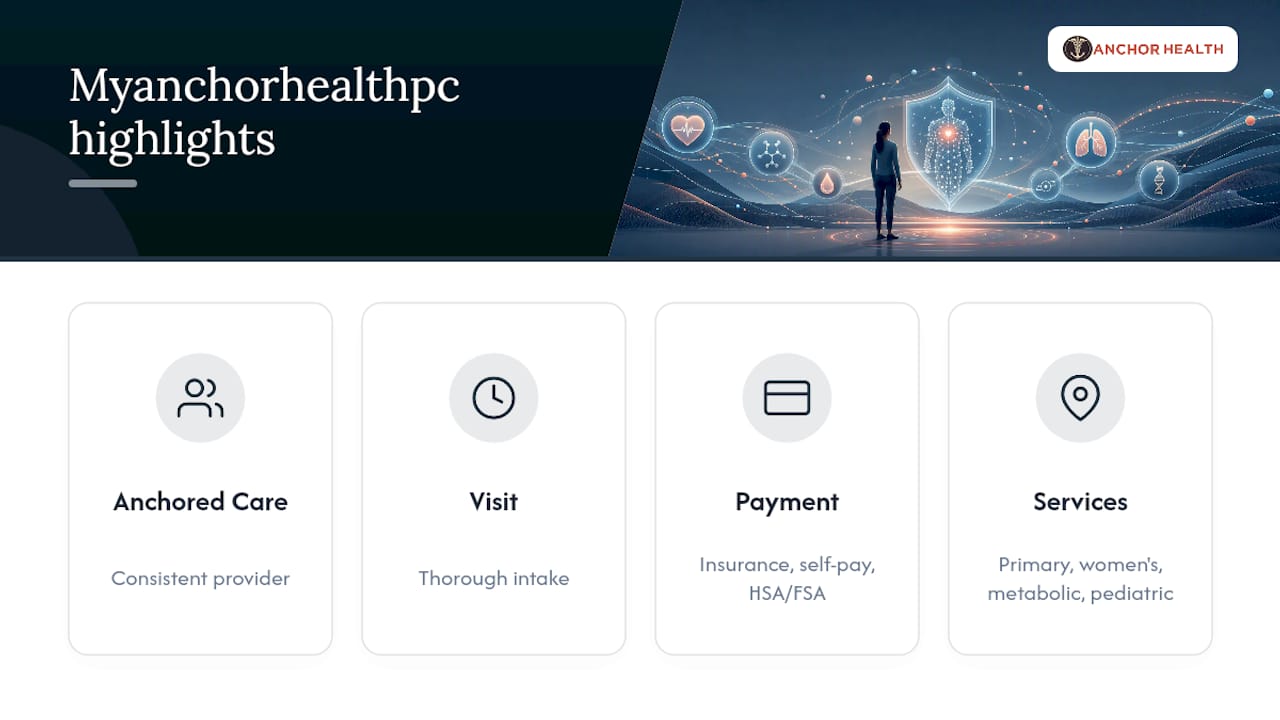
When you book a virtual annual physical with Myanchorhealthpc, expect a thorough intake process, a visit long enough to cover your full history, medications, and preventive screening needs, and a care plan with labs or referrals sent electronically the same day. The practice accepts insurance, self-pay, and HSA and FSA funds, and offers optional membership for patients who want extended access and closer follow-up. Services span general primary care for all ages, women’s health, weight and metabolic management, and pediatric care, all delivered by video within Maryland.
If you’re ready to move from occasional check-ins to a relationship-based approach, start with our guide on how to choose telehealth primary care for your family and book your first visit. If you’re unsure whether your plan covers a telehealth annual wellness visit, call your insurer directly before scheduling to confirm your expected cost.
This article is general information, not a substitute for advice from a qualified doctor. Consult a qualified healthcare professional about your own circumstances before acting on anything here.
Sources
- Scoping review: virtual physical exam diagnostic limits (Springer)
- Telehealth
- The Telehealth Ten: A Guide for a Patient-Assisted Virtual Physical Examination (PMC)
- Can You Get a Physical Online? Legal and diagnostic limits (LegalClarity)
- Medicare coverage: Yearly wellness visits
Recommended
- Senior Health Screening Checklist 2026: Essential Tests for 65+
- Women’s Annual Health Exam Checklist: 2026 Guide
- How to Communicate Care Needs to Your Telehealth Provider
- How to Share Blood Pressure Readings With Your Telehealth Doctor
Blog & Information Disclaimer
Last Updated: May 23, 2026
The information provided on the Anchor Health website (https://myanchorhealthpc.com/), including but not limited to blog posts, articles, newsletters, graphics, and other materials (collectively, the "Content"), is for general informational and educational purposes only.
By accessing and using this website, you acknowledge and agree to the following terms and conditions:
The Content on this website is not intended to be a substitute for professional medical advice, diagnosis, or treatment. Always seek the advice of your physician, nurse practitioner, or other qualified health provider with any questions you may have regarding a medical condition. Never disregard professional medical advice or delay in seeking it because of something you have read on this website.
Reading, interacting with, or sharing the Content on this website does not establish a patient-provider relationship between you and Anchor Health or any of its clinicians, including Paule Valery Joseph, PhD, MBA, CRNP, FAAN. A formal patient-provider relationship is only established after you have completed the formal intake process, signed our clinical consent forms, and participated in a secure clinical consultation.
If you are experiencing a medical emergency, call 911 or seek emergency medical services immediately.
Anchor Health is a primary care practice and does not provide emergency or crisis intervention services through its website or blog.
While Anchor Health strives to provide thoughtful, evidence-based information grounded in our Anchored Care℠ model, healthcare is a rapidly evolving field. We make no representations or warranties, express or implied, about the completeness, accuracy, reliability, or suitability of the information contained in the Content. Any reliance you place on such information is strictly at your own risk.
Anchor Health is a telehealth practice providing services to patients physically located within the state of Maryland. The information provided on this blog is intended for residents of Maryland and is governed by the laws and regulations of that state. Accessing this information from outside of Maryland does not imply that our clinicians are licensed to practice medicine or provide consultations in your jurisdiction.
Content related to Weight & Metabolic Health, including discussions of GLP-1 medications or other medical therapies, is provided for educational context regarding our clinical approach. Prescriptions and specific medical recommendations are only made following a comprehensive clinical evaluation, diagnostic testing, and shared decision-making within a formal patient-provider relationship.
This website may contain links to external websites that are not provided or maintained by or in any way affiliated with Anchor Health. Please note that Anchor Health does not guarantee the accuracy, relevance, timeliness, or completeness of any information on these external websites.
To the fullest extent permitted by law, Anchor Health, its owners, and its employees shall not be liable for any direct, indirect, incidental, consequential, or punitive damag

Related posts