How Telehealth Handles Sick Child Visits for Families
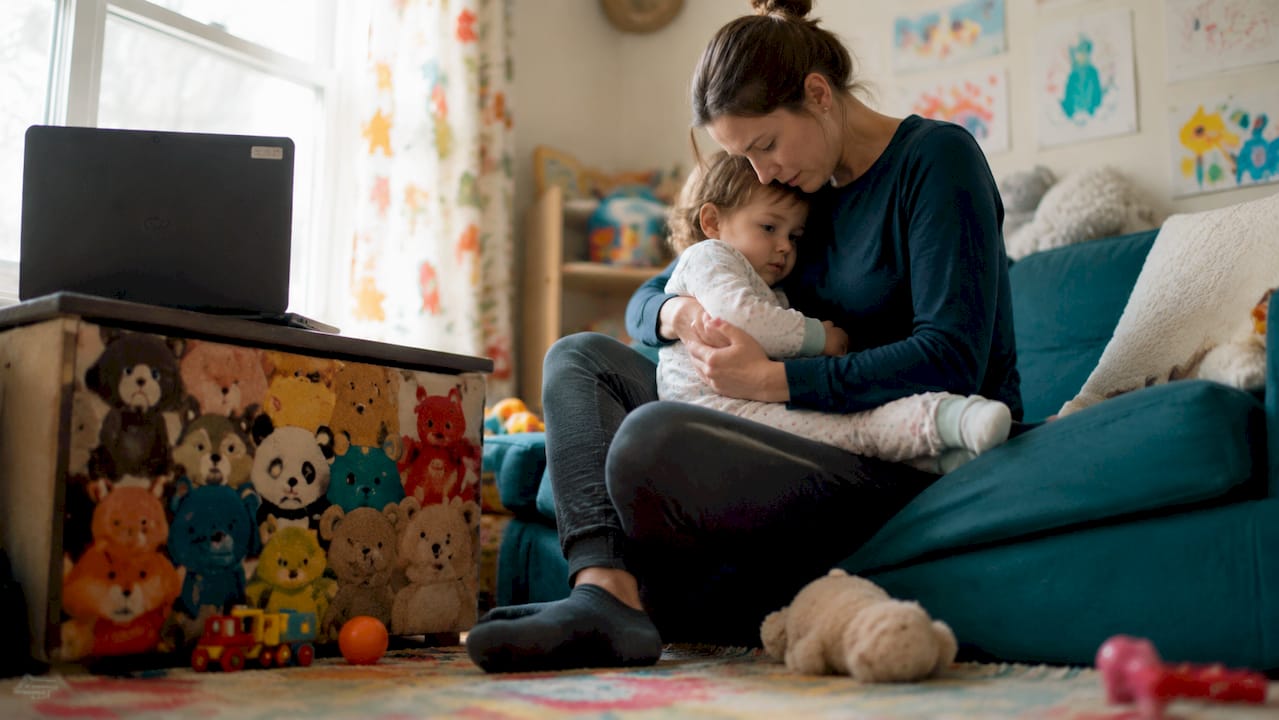
Telehealth for sick child visits is defined as a structured clinical encounter conducted via secure video, where a licensed clinician evaluates your child’s symptoms, reviews medical history, and delivers a diagnosis and treatment plan without requiring an in-person appointment. This model of pediatric care, formally called synchronous telemedicine, covers a wide range of common childhood illnesses and is increasingly the first point of contact for families across Maryland and beyond. Understanding how telehealth handles sick child visits gives you the confidence to use it well, know its limits, and get your child the right care faster. Myanchorhealthpc delivers this kind of relationship-based pediatric telehealth through its Anchored Care℠ᴵᴾ model, built specifically for families who need thorough, timely care without the waiting room.
How telehealth handles sick child visits: the visit structure
A telehealth sick visit follows a clear, repeatable framework that mirrors in-person care more closely than most parents expect. The process begins before the video call even starts, and each step is designed to give the clinician the information needed to make a safe, accurate clinical decision.
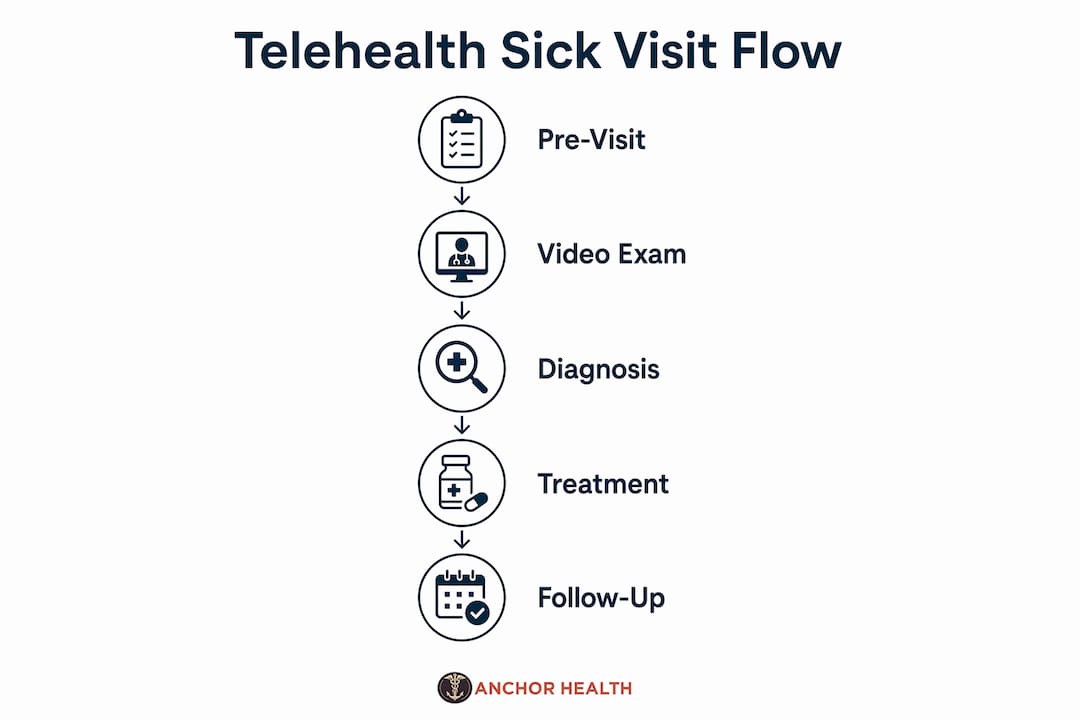
Here is what a typical visit looks like from start to finish:
-
Pre-visit intake. You complete a digital form covering your child’s current symptoms, duration, severity, known allergies, current medications, and relevant medical history. This intake gives the clinician context before the camera turns on, which is why structured symptom intake is a standard first step in pediatric telehealth visits.
-
Identity and consent verification. Because your child is a minor, the platform confirms your identity as the parent or legal guardian and documents consent for the visit. This step protects your child and satisfies clinical and legal requirements.
-
Live video encounter. The clinician opens the visit by reviewing the intake information with you, then guides a visual assessment in real time. They observe your child’s appearance, skin color, breathing pattern, posture, and level of alertness. They ask targeted follow-up questions to fill in clinical gaps.
-
Parent-assisted physical exam. This is where your participation becomes the exam. The clinician directs you to move the camera, adjust lighting, or use a household flashlight to illuminate your child’s throat, ears, or a rash. Providers visually assess symptoms and manage many illnesses without an in-person visit when the visual picture is clear enough.
-
Visit close with care plan. The clinician delivers a diagnosis or working assessment, explains the treatment plan, and sends any prescriptions electronically to your preferred pharmacy. If testing or in-person follow-up is needed, they communicate that clearly before the call ends.
Pro Tip: Have your child’s pharmacy name, address, and phone number ready before the visit starts. Telehealth visits typically last 5 to 15 minutes, so having this information on hand prevents delays at the most time-sensitive moment.
Which childhood illnesses are suitable for telehealth assessment
Not every sick child visit belongs on a video screen, and knowing the difference protects your child. The good news is that many of the most common childhood illnesses fall squarely within what telehealth can assess and treat effectively.
Conditions well-suited for telehealth:
- Rashes, hives, and mild skin reactions
- Pink eye (conjunctivitis)
- Sore throat and suspected strep (with follow-up swab if needed)
- Upper respiratory infections and colds
- Ear pain (with parent-assisted camera positioning)
- Urinary tract infections in older children
- Mild fever without alarming accompanying symptoms
- Allergic reactions that are not severe
- Behavioral or sleep concerns
Conditions that require in-person care:
- Infants under 3 months with any fever. Telehealth is generally inappropriate for this group because the clinical risk is too high for remote assessment alone.
- Severe respiratory distress, including labored breathing, flared nostrils, or retractions
- Suspected fractures, head injuries, or abdominal pain requiring palpation
- Any situation where a rapid strep swab, urinalysis, blood draw, or imaging is the only path to a diagnosis
One finding worth noting: a 2026 JAMA study showed that telemedicine visits had lower antibiotic prescription rates while maintaining guideline concordance for pediatric respiratory infections. This means telehealth is not a shortcut to unnecessary prescriptions. Clinicians practicing responsible telemedicine apply the same evidence-based standards they would in person.
| Condition | Telehealth appropriate? | Notes |
|---|---|---|
| Pink eye | Yes | Visual diagnosis with parent camera assistance |
| Rash or hives | Yes | Requires good lighting and close-up camera view |
| Sore throat | Usually yes | May need in-person swab to confirm strep |
| Fever in infant under 3 months | No | Requires immediate in-person or emergency evaluation |
| Severe breathing difficulty | No | Call 911 or go to the emergency room |
| Ear pain | Often yes | Parent uses flashlight and camera for clinician view |
How to prepare your child for a virtual sick visit
Preparation is the single biggest factor that separates a productive telehealth appointment from a frustrating one. A few minutes of setup before the visit starts makes the clinician’s job easier and gets your child a care plan faster.
Before the visit, gather the following:
- A written list of your child’s symptoms, when they started, and how they have changed
- All current medications, including over-the-counter drugs and supplements, with dosages
- Your child’s known allergies and any relevant medical history
- Your preferred pharmacy name and location
- A list of questions you want answered before the call ends
For the visit itself, set your child up in a well-lit room away from background noise. Natural light or a bright overhead light works better than a lamp behind your child, which creates shadows that obscure skin color and facial features. Parents assist with camera positioning and symptom demonstration throughout the visit, so position yourself close enough to move the device quickly when the clinician asks.
Have a flashlight nearby. Clinicians routinely ask parents to shine a light into a child’s throat or ear canal while holding the camera steady. This simple tool extends what a clinician can see significantly. If your video connection drops, most platforms allow the visit to continue by phone, so keep that option in mind as a backup.
Pro Tip: Take written notes during the visit, especially the escalation instructions. Ask the clinician directly: “At what point should I bring my child in?” Clear thresholds, such as a fever above a specific temperature or worsening breathing, give you a safety net after the call ends.
When does telehealth escalate to in-person care?
Telehealth functions as triage plus documentation, not as a replacement for in-person care when physical findings are necessary. Clinicians make escalation decisions based on specific clinical indicators, and they communicate those decisions clearly during the visit.
The following situations typically trigger a referral or escalation:
-
Testing requirements. If a strep swab, urinalysis, blood count, or imaging study is needed to confirm a diagnosis, the clinician will direct you to an appropriate testing site, often a same-day clinic or urgent care center with fast-track access.
-
Physical exam findings that cannot be assessed remotely. Abdominal tenderness, lymph node size, lung sounds, and joint swelling all require hands-on evaluation. When these findings are clinically relevant, the clinician will say so directly and explain why.
-
Worsening symptoms during the visit. If your child’s condition appears to deteriorate while you are on the call, the clinician will redirect you to emergency services immediately.
-
Inconclusive visual assessment. Sometimes the picture is simply not clear enough to make a safe diagnosis. Rather than guess, a responsible clinician will send you to an in-person provider with documented notes from the telehealth encounter to accelerate your care.
Clinicians refer patients to in-person care for testing or physical exams that cannot be done remotely, and they often facilitate fast-track clinic visits to reduce delays. Asking about expected testing during the telehealth visit helps you prepare for prompt in-person follow-up and reduces diagnostic delays. The telehealth record travels with your child, giving the next provider a head start.
| Escalation trigger | Typical next step |
|---|---|
| Positive strep suspected | In-person rapid swab at urgent care or clinic |
| Infant under 3 months with fever | Immediate in-person or emergency evaluation |
| Severe respiratory distress | Call 911 or go to emergency room |
| Inconclusive visual exam | Same-day in-person appointment with telehealth notes forwarded |
| Labs or imaging required | Fast-track referral to testing facility |
Key takeaways
Telehealth handles sick child visits through a structured framework of pre-visit intake, clinician-guided video assessment, parent-assisted physical observation, and a documented care plan that includes prescriptions, follow-up instructions, and clear escalation thresholds.
| Point | Details |
|---|---|
| Structured visit flow | Every telehealth sick visit follows intake, video exam, and documented care plan steps. |
| Parent participation is clinical | You are the clinician’s hands and eyes; camera positioning and lighting directly affect diagnosis quality. |
| Many conditions are treatable remotely | Rashes, pink eye, colds, ear pain, and sore throats are routinely managed via video visits. |
| Escalation is built into the process | Clinicians communicate clear thresholds for when in-person care is needed before the visit ends. |
| Antibiotic stewardship is maintained | Telehealth visits show lower antibiotic prescription rates while following clinical guidelines. |
What I have learned from watching telehealth pediatric care work
The parents who get the most out of telehealth sick visits are the ones who treat the encounter as a real clinical appointment, not a convenience shortcut. They show up prepared, they ask direct questions, and they understand that their role during the visit is active, not passive.
What surprises many families is how much a skilled clinician can assess through a well-positioned camera. I have seen clinicians detect signs of dehydration, identify characteristic rash patterns, and evaluate breathing effort through video with the same confidence they would bring to an exam room. Video visits are legitimate clinical encounters, not lower-quality substitutes. The technology does not diminish the clinical judgment. It changes the medium, not the standard.
That said, I want to be honest about the limits. Telehealth works best when parents learn how to show clinicians what they need to see, including skin details, breathing patterns, and symptom timelines. When parents are uncertain or the child cannot cooperate, the visit becomes harder for everyone. And when a clinician tells you your child needs to be seen in person, that is not a failure of telehealth. It is the system working exactly as it should.
My strongest advice: find a provider who knows your child. Continuity matters in pediatric care. A clinician who already has your child’s history on file can move faster, ask better questions, and make safer decisions during a sick visit than a stranger seeing your child for the first time. Telehealth is a powerful tool in your family’s healthcare toolkit, and it works best when it is part of an ongoing relationship, not a one-off transaction.
— Paule
Ready to set up telehealth care for your child?
If you want your child to have a trusted, consistent provider ready when illness strikes, the time to set that up is before the next sick day arrives.
Myanchorhealthpc offers pediatric and adolescent telehealth primary care through its Anchored Care℠ᴵᴾ model, built for Maryland families who want thorough, relationship-based care delivered via secure video. You can establish pediatric telehealth care for your family today and have a provider who already knows your child’s history when a sick visit comes up. We also offer detailed guidance on attending a telehealth visit as a caregiver so you feel confident and prepared every time.
FAQ
What conditions can telehealth treat in a sick child?
Telehealth effectively manages rashes, pink eye, sore throats, colds, ear pain, mild fevers, and urinary tract infections in older children. Conditions requiring physical palpation, lab testing, or imaging need in-person follow-up.
Can a telehealth doctor prescribe medication for my child?
Yes. Telehealth providers can prescribe medications during the visit when clinically appropriate and send prescriptions electronically to your pharmacy the same day.
How long does a telehealth sick visit for a child typically take?
Most visits last between 5 and 15 minutes. Having your child’s medication list, symptom history, and pharmacy information ready before the visit starts makes the most of that time.
Is telehealth safe for infants?
Telehealth is generally not appropriate for infants under 3 months with a fever, as this age group requires immediate in-person evaluation. For older infants with mild symptoms, a telehealth visit can be appropriate with clinician guidance.
What happens if the clinician cannot diagnose my child over video?
The clinician will communicate this clearly and refer you to an in-person provider, often with a fast-track appointment and documented telehealth notes forwarded to support continuity of care.
Recommended
- How to Establish Pediatric Care Telehealth for Your Family
- Telehealth for Kids Explained: What Parents Need to Know
- How to Choose Telehealth Primary Care for Your Family
- How to Attend a Telehealth Visit as a Caregiver
Blog & Information Disclaimer
Last Updated: May 23, 2026
The information provided on the Anchor Health website (https://myanchorhealthpc.com/), including but not limited to blog posts, articles, newsletters, graphics, and other materials (collectively, the "Content"), is for general informational and educational purposes only.
By accessing and using this website, you acknowledge and agree to the following terms and conditions:
The Content on this website is not intended to be a substitute for professional medical advice, diagnosis, or treatment. Always seek the advice of your physician, nurse practitioner, or other qualified health provider with any questions you may have regarding a medical condition. Never disregard professional medical advice or delay in seeking it because of something you have read on this website.
Reading, interacting with, or sharing the Content on this website does not establish a patient-provider relationship between you and Anchor Health or any of its clinicians, including Paule Valery Joseph, PhD, MBA, CRNP, FAAN. A formal patient-provider relationship is only established after you have completed the formal intake process, signed our clinical consent forms, and participated in a secure clinical consultation.
If you are experiencing a medical emergency, call 911 or seek emergency medical services immediately.
Anchor Health is a primary care practice and does not provide emergency or crisis intervention services through its website or blog.
While Anchor Health strives to provide thoughtful, evidence-based information grounded in our Anchored Care℠ model, healthcare is a rapidly evolving field. We make no representations or warranties, express or implied, about the completeness, accuracy, reliability, or suitability of the information contained in the Content. Any reliance you place on such information is strictly at your own risk.
Anchor Health is a telehealth practice providing services to patients physically located within the state of Maryland. The information provided on this blog is intended for residents of Maryland and is governed by the laws and regulations of that state. Accessing this information from outside of Maryland does not imply that our clinicians are licensed to practice medicine or provide consultations in your jurisdiction.
Content related to Weight & Metabolic Health, including discussions of GLP-1 medications or other medical therapies, is provided for educational context regarding our clinical approach. Prescriptions and specific medical recommendations are only made following a comprehensive clinical evaluation, diagnostic testing, and shared decision-making within a formal patient-provider relationship.
This website may contain links to external websites that are not provided or maintained by or in any way affiliated with Anchor Health. Please note that Anchor Health does not guarantee the accuracy, relevance, timeliness, or completeness of any information on these external websites.
To the fullest extent permitted by law, Anchor Health, its owners, and its employees shall not be liable for any direct, indirect, incidental, consequential, or punitive damag
Related posts