Diabetes Management Best Practices: Your 2026 Action Plan

The most effective approach to managing diabetes combines four core priorities you can act on now: consistent monitoring of your A1C and Time in Range (TIR), individualized medications aligned with the ADA Standards of Care, enrollment in Diabetes Self-Management Education and Support (DSMES), and daily lifestyle habits you can realistically sustain. These diabetes management best practices are not abstract goals — they are concrete steps backed by the 2026 ADA Standards and CDC patient guidance that you can bring to your next clinical visit.
Start here:
- Schedule a DSMES referral at your next appointment — all people with diabetes should participate, per ADA guidelines.
- Check your A1C date. If it has been more than three months since your last test and your levels are not at goal, request one now.
- Confirm access to monitoring supplies — either a continuous glucose monitor (CGM) or fingerstick meter and strips.
- Set one specific, measurable health goal to discuss with your clinician before your next visit.
Myanchorhealthpc supports each of these steps through telehealth primary care visits in Maryland, including medication management, DSMES facilitation, and remote monitoring review.
Pro Tip: Write your current A1C, blood pressure, and LDL numbers on a single index card before every visit. Clinicians who see your trend over time make better decisions than those who only see today’s snapshot.
Table of Contents
- 1. How are treatment goals set and personalized for you?
- 2. What should you measure and how often?
- 4. What daily habits move the needle most?
- 5. How does DSMES and team-based care change your outcomes?
- 6. What screenings and vaccines do you need and when?
- 7. How do you handle low blood sugar and sick days safely?
- 8. Which technologies actually help you manage diabetes day to day?
- 9. How often should you adjust your care plan?
- 10. How Myanchorhealthpc operationalizes these practices via telehealth
- Key Takeaways
- What actually changes outcomes in diabetes care
- Myanchorhealthpc: telehealth diabetes care built for Maryland adults
- Useful sources and guidelines to read next
1. How are treatment goals set and personalized for you?
The “ABCs” of diabetes care — A1C, Blood pressure, and Cholesterol — give you and your clinician a shared language for tracking risk. The 2026 ADA Standards set general population targets, but they also emphasize that these numbers should be individualized based on your specific situation.
Typical starting targets for most adults:
- A1C: a target individualized to the person, generally aiming for good glycemic control but adjusted for age and hypoglycemia risk.
- Blood pressure: a target level set by your clinician, commonly aiming for control to reduce cardiovascular risk.
- LDL cholesterol: a target level based on your cardiovascular risk profile, with lower targets for higher-risk individuals.
What shifts these targets? Several factors matter: your age and life expectancy, how long you have had diabetes, whether you have had hypoglycemia episodes, cognitive status, kidney function, and your own priorities. A healthy 42-year-old with no complications and strong self-management skills is a reasonable candidate for a tighter A1C goal of less than 6.5%. An 80-year-old managing multiple chronic conditions and at high risk for falls from low blood sugar may be better served by a goal closer to 8% — not because the standard is lower, but because the risk-benefit calculation is different.
Shared decision-making is how these conversations happen well. Before your next visit, consider noting:
- Which number concerns you most right now.
- Any recent hypoglycemia episodes (date, time, what you were doing).
- Life changes that affect your routine (new job, caregiver responsibilities, food access).
- Whether your current regimen feels manageable.
Bringing this information gives your clinician the context to set targets that are genuinely yours, not just population averages. Collaborative goal-setting with your telehealth provider is one of the most underused tools in chronic disease care.
2. What should you measure and how often?
Monitoring is the feedback loop that keeps your plan honest. Three layers of measurement work together: A1C, self-monitoring of blood glucose (SMBG), and CGM-derived metrics including Time in Range.
A1C frequency
For most people, A1C is tested every three months when levels are not at goal or when therapy has changed, and every six months once stable and at target. More frequent testing is warranted after any medication adjustment or during pregnancy.
SMBG vs. CGM
Fingerstick SMBG remains useful for people not using CGM, for calibrating certain devices, and for confirming a symptomatic low. CGM gives you a continuous picture — not just a single point in time — and that picture is where the most useful patterns live.
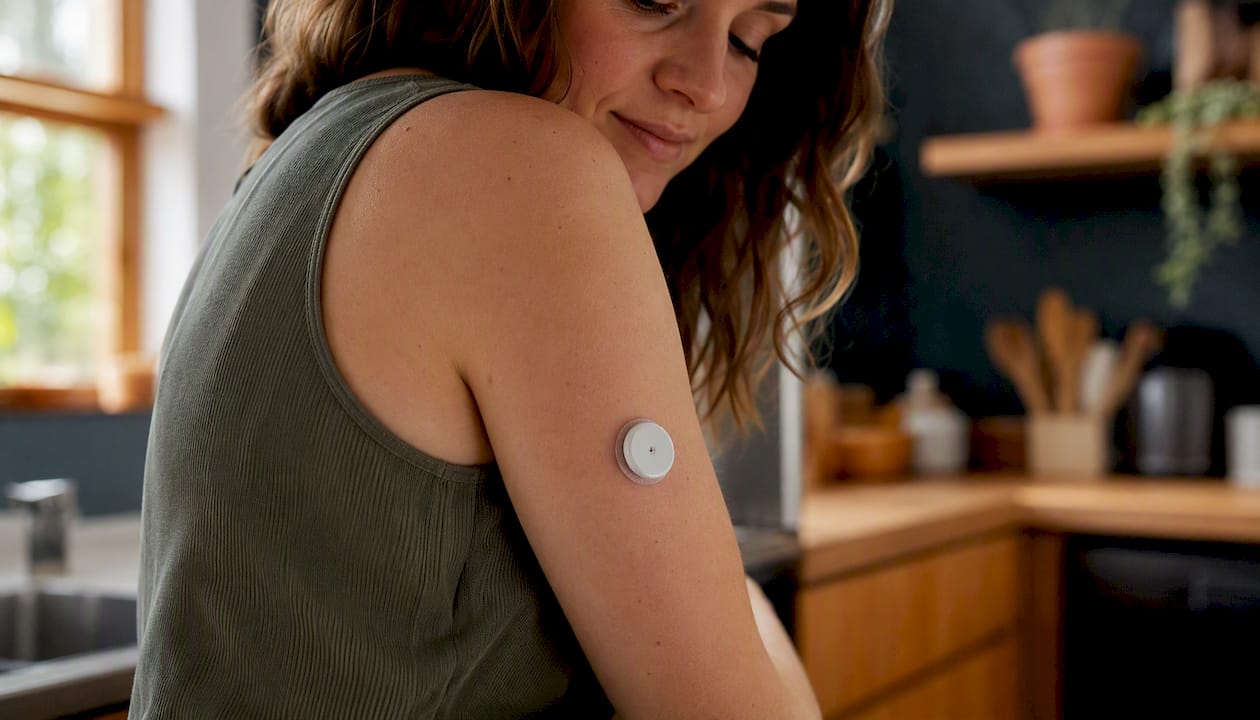
CGM metrics and Time in Range
The 2026 ADA glycemic goals guidance recommends a CGM assessment lasting about two weeks with sufficient wear time before drawing conclusions from the data. The key metrics:
| Metric | Definition | Commonly Recommended Target |
|---|---|---|
| A1C | 3-month average blood glucose estimate | Less than 7% for most adults |
| Time in Range (TIR) | % of readings in target range | Greater than 70% |
| Time Below Range (TBR) | % of readings below 70 mg/dL | Less than 4% for most adults, less than 1% for older adults |
| TBR (severe low) | % of readings below 54 mg/dL | Less than 1% |
| Time Above Range (TAR) | % of readings above target range | The proportion of time above range should be limited to support glycemic control |
| Blood pressure | Systolic/diastolic | Blood pressure target individualized by clinician |
| LDL cholesterol | Low-density lipoprotein | Less than 70 mg/dL (high CV risk) |
A TBR above 4% below 70 mg/dL for most adults, or above 1% for older adults, is a signal to review your regimen before addressing high readings. Treating hyperglycemia while ignoring hypoglycemia creates a cycle that is harder to break than either problem alone.
Bring a CGM report or a log of your fingerstick readings to every visit. Most clinicians can spot a pattern in two minutes when the data is organized — and that pattern often drives the next medication or lifestyle decision more than any single lab value.
4. What daily habits move the needle most?
Self-care practices — diet, activity, and adherence — materially affect blood glucose control and complication risk. The challenge is not knowing what to do; it is building habits that hold when life gets complicated.
Meal strategies that work
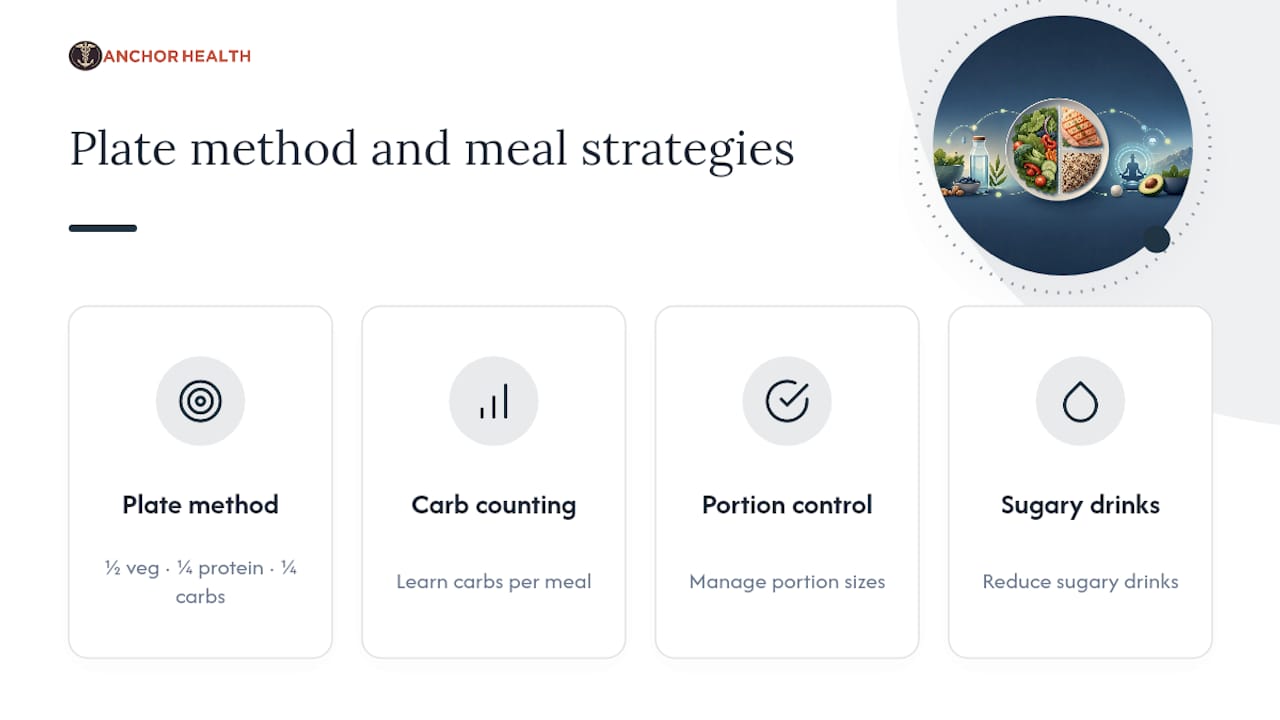
The plate method is the most accessible starting point: fill half your plate with non-starchy vegetables, one quarter with lean protein, and one quarter with a quality carbohydrate. For people using insulin, carb counting gives more precise dosing — aim to learn your typical carbohydrate intake per meal rather than eliminating carbs entirely. NIDDK guidance emphasizes planning meals, reducing sugary drinks, and managing portion sizes as the highest-yield daily habits.
Cultural food preferences matter here. A meal plan that ignores what you actually eat and enjoy will not last. Work with a registered dietitian nutritionist (RDN) who can adapt these frameworks to your household’s real foods.
Sleep, stress, alcohol, and smoking
Sleep deprivation raises cortisol and impairs insulin sensitivity. Even one or two nights of poor sleep can shift your glucose patterns noticeably. Practical steps: consistent bedtime, limiting screens an hour before sleep, and addressing sleep apnea if suspected.
Alcohol lowers blood sugar, particularly for people on insulin or sulfonylureas, and the effect can be delayed by several hours. If you drink, do so with food, in moderation, and never skip your glucose check before bed.
Smoking accelerates every diabetes complication — cardiovascular disease, kidney disease, neuropathy, and retinopathy. Cessation support through your primary care provider, including pharmacotherapy such as varenicline, is the most effective route.
SMART goal example for this week: Walk for 20 minutes after dinner on three evenings and replace one sugary drink per day with water. Small, specific, and measurable — that is what sticks. Building healthy habits with telehealth support can help you stay accountable between visits.
5. How does DSMES and team-based care change your outcomes?
Diabetes Self-Management Education and Support (DSMES) is not optional enrichment — the ADA Standards of Care recommend it for all people with diabetes. DSMES programs teach you how to monitor, eat, move, take medications safely, prevent complications, and cope with the emotional weight of a chronic condition. The difference between knowing your A1C and knowing what to do about it is often a structured DSMES program.
Core DSMES modules typically cover:
- Glucose monitoring and interpreting your numbers.
- Healthy eating and meal planning tailored to your preferences.
- Physical activity and how to adjust for glucose changes during exercise.
- Medication management and recognizing side effects.
- Hypoglycemia prevention and treatment.
- Sick-day management.
- Foot care and complication prevention.
- Psychosocial support and coping strategies.
Your care team should extend well beyond a single clinician. A well-coordinated team for diabetes typically includes:
- Primary care provider (PCP): Coordinates overall care, manages medications, and tracks screening schedules.
- Endocrinologist: Consulted for complex insulin regimens, type 1 diabetes, or when targets remain out of reach despite primary care management.
- Certified diabetes care and education specialist (CDCES): Leads DSMES and provides ongoing support.
- Registered dietitian nutritionist (RDN): Individualizes meal planning.
- Behavioral health provider: Addresses diabetes distress, depression, and anxiety — all common and all affecting outcomes. Integrated mental health in primary care is increasingly recognized as a standard component of diabetes care.
- Pharmacist: Reviews medications, manages interactions, and supports adherence.
- Podiatrist: Annual foot exams and management of foot complications.
- Dentist: Twice-yearly dental care, since gum disease and diabetes have a bidirectional relationship.
Telehealth can deliver DSMES effectively. When evaluating a program, ask whether it offers ongoing support (not just a one-time class), whether your educator is a CDCES, and whether the program connects back to your prescribing clinician. The 2026 ADA Standards recommend follow-up visits at least every three to six months, individualized to your situation, with at least an annual comprehensive review.
6. What screenings and vaccines do you need and when?
Complications develop silently. The goal of regular screening is to catch changes early — when treatment can still reverse or slow them — rather than after symptoms appear.
Screening schedule to track:
Vaccinations to prioritize:
- Pneumococcal vaccines: — Per current CDC schedule for adults with diabetes.
When screening results are abnormal, the response is usually tiered: repeat testing to confirm, medication adjustment, and specialist referral when the finding is outside primary care scope. Primary care’s role in preventing diabetes complications includes coordinating these referrals so nothing falls through the gaps.
Keep a personal screening log — date of last test, result, and next due date — and bring it to every visit.
7. How do you handle low blood sugar and sick days safely?
Hypoglycemia is the most immediate safety risk in diabetes management, and every person on insulin or a sulfonylurea needs a clear plan before they need it.
Hypoglycemia treatment steps:
- At a blood glucose of 70 mg/dL or below, consume 15–20 grams of fast-acting carbohydrates (glucose tablets, 4 oz of juice, or regular soda — not diet).
- Wait 15 minutes and recheck your glucose.
- If still at or below 70 mg/dL, repeat the 15 grams of carbohydrate.
- Once glucose is above 70 mg/dL and your next meal is more than an hour away, eat a small snack with protein and carbohydrate.
- If you lose consciousness or cannot swallow safely, a bystander should administer glucagon (nasal or injectable) and call 911 immediately.
The 2026 ADA glycemic goals guidance sets the hypoglycemia alert value at 70 mg/dL or less, with a TBR goal of less than 4% for most adults and less than 1% for older adults, and a TBR below 54 mg/dL goal of less than 1% when using CGM. Persistent TBR above these thresholds is a clear signal to discuss deintensifying therapy.
Sick-day rules:
- SGLT2 inhibitors: Hold when you are not eating or drinking normally, have significant vomiting or diarrhea, or are preparing for a procedure. These agents raise the risk of diabetic ketoacidosis (DKA) during illness even when glucose appears near-normal.
- Metformin: Hold if you are dehydrated, have significant vomiting, or are undergoing imaging with contrast dye.
- Insulin users: Check ketones when glucose is persistently above 240 mg/dL or when you feel ill. Do not stop basal insulin during illness without clinician guidance.
- Contact your care team if glucose stays above 240 mg/dL for more than two checks, if you cannot keep fluids down, or if ketones are moderate to large.
Red flags requiring urgent or emergency care: chest pain, difficulty breathing, altered consciousness, glucose above 400 mg/dL, or moderate-to-large ketones with vomiting.
8. Which technologies actually help you manage diabetes day to day?
Technology works best when it fits your life and connects to your care team. The options range from CGM to insulin pumps to apps, and each has a realistic use case.
CGM: The clearest benefit is real-time pattern data. TIR correlates with A1C and gives you actionable daily information that a quarterly lab draw cannot. CGM is particularly valuable for people on insulin, those with hypoglycemia unawareness, and anyone whose A1C does not reflect their actual glucose variability. Limitations include cost, sensor adhesion issues, and the learning curve of interpreting trend arrows rather than single numbers.
Insulin pumps and closed-loop systems: For people using insulin, pump therapy combined with CGM in a hybrid closed-loop system can automate basal insulin delivery in response to real-time glucose readings. These systems reduce the burden of manual dosing decisions and can meaningfully improve TIR. They require training and ongoing engagement to use well.

Apps and digital tools: Look for apps that export data in a format your clinician can review, protect your health data under HIPAA-compliant standards, and integrate with your CGM or meter. Food logging apps (such as those that scan barcodes for carbohydrate content) are most useful for people learning carb counting. Activity trackers add value when they sync with your glucose data so you can see how movement affects your readings.
Telehealth and remote monitoring: Your clinician can review a CGM report or glucose log before a video visit and arrive at the appointment already knowing your patterns. This shifts the conversation from data collection to decision-making. Managing diabetes through telehealth is a practical option for people who find frequent in-person visits difficult to schedule.
Key considerations when choosing technology:
- Does your insurance cover it? CGM requires prior authorization from most plans.
- Can your clinician receive and interpret the data you generate?
- Is the device compatible with your phone or preferred platform?
- Do you have a supply plan for sensors, transmitters, and batteries?
9. How often should you adjust your care plan?
Therapeutic inertia — the tendency to leave a plan unchanged even when it is not working — is one of the most common barriers to effective diabetes control. The 2026 ADA comprehensive evaluation standards recommend follow-up visits at least every three to six months, individualized to your situation, with a full annual review.
Suggested visit cadence:
- Every three months: when A1C is above goal, after a medication change, or during pregnancy.
- Every six months: when stable and at target.
- Annually: comprehensive review including all screening labs, foot exam, eye exam referral, and medication reconciliation.
Labs to check at each interval:
- A1C at every visit (or every six months if stable).
- Blood pressure at every visit.
- Lipid panel annually (or more often if adjusting therapy).
- uACR and eGFR annually.
- Liver function if on certain medications.
Patient-facing red flags that mean it is time to call sooner:
- TIR consistently below 70% or TAR consistently above 25% despite following your plan.
- More than two hypoglycemia episodes per week.
- New symptoms: swelling in the feet, vision changes, chest discomfort, or numbness.
- A major life change — new job, move, loss, or illness — that disrupts your routine.
- Feeling burned out or unable to keep up with your current regimen.
Overcoming therapeutic inertia starts with an agreed escalation plan: “If my A1C is still above X at the next visit, we will add Y.” Writing this down at the end of a visit creates accountability on both sides. Remote monitoring reports shared between visits give your clinician the data to act between appointments rather than waiting for the next scheduled lab. Chronic disease telehealth management works precisely because it shortens the feedback loop between a pattern and a response.
10. How Myanchorhealthpc operationalizes these practices via telehealth
Myanchorhealthpc delivers diabetes care through its Anchored Care℠ᴵᴾ model — a relationship-based approach that treats diabetes as an ongoing partnership rather than a series of isolated visits. For Maryland patients, this means secure video visits with a consistent primary care provider who knows your history, your goals, and your monitoring data before the appointment begins.
Specific services relevant to diabetes management:
- Medication management: Including initiation and titration of GLP-1 receptor agonists and SGLT2 inhibitors where clinically appropriate, aligned with 2026 ADA guidance.
- DSMES facilitation: Referrals to structured education programs and ongoing support between visits.
- Remote data review: CGM reports and glucose logs reviewed ahead of telehealth visits so the conversation focuses on decisions, not data entry.
- Integrated behavioral health: Diabetes distress, depression, and anxiety are addressed within the primary care relationship, not siloed to a separate system.
- Lab coordination: Orders sent to local labs in Maryland, with results reviewed and discussed at follow-up visits.
Pro Tip: Before your first visit with Myanchorhealthpc, gather your most recent A1C result, a list of all current medications and doses, your CGM or glucose log from the past two weeks, and any specialist notes. This lets the first visit focus on your plan, not your paperwork.
What to bring to your first telehealth visit:
- Current medication list with doses and any recent changes.
- Most recent lab results (A1C, lipid panel, kidney function).
- CGM report or glucose log (two to four weeks).
- List of any hypoglycemia episodes and how you treated them.
- Your top one or two questions or concerns.
The abridged ADA Standards for primary care exist precisely to help primary care providers translate guideline complexity into practical, visit-ready decisions — and that translation is the core of what Myanchorhealthpc does for patients managing diabetes in Maryland.
Key Takeaways
Consistent monitoring, individualized medications with cardiorenal benefit, structured DSMES, and sustainable daily habits form the foundation of effective diabetes management — and each one is actionable starting today.
| Point | Details |
|---|---|
| Monitor A1C and TIR together | A1C every 3–6 months; aim for TIR greater than 70%, TBR below 4% for most adults, and below 1% for older adults using CGM data. |
| Individualize medication choices | Prioritize GLP-1 RAs and SGLT2 inhibitors for cardiorenal protection where indicated per 2026 ADA guidance. |
| Enroll in DSMES | Structured education reduces complications and builds the self-care skills that sustain long-term control. |
| Screen on schedule | Annual eye, kidney, and foot exams catch complications early — track your dates and bring results to every visit. |
| Myanchorhealthpc for telehealth care | Maryland adults can access medication management, DSMES referrals, and remote monitoring review through Anchored Care℠ᴵᴾ telehealth visits. |
What actually changes outcomes in diabetes care
The conversation about diabetes management tends to center on numbers — A1C, TIR, blood pressure, LDL. Those numbers matter. But in practice, what separates people who manage their diabetes well from those who struggle is rarely a knowledge gap. It is almost always a systems gap: no consistent provider, no structured follow-up, no one reviewing the data between visits and adjusting the plan before a small drift becomes a serious problem.
The 2026 ADA Standards are thorough and evidence-based, but a guideline document does not call you when your CGM shows three consecutive nights of low blood sugar. A relationship does. The most underappreciated element of diabetes care is continuity — the same clinician who knows that your glucose always runs high in January because of holiday stress, or that your kidney function has been trending down for two years and needs a medication change now, not at the next annual visit.
Perfection is not the goal. Setbacks happen — a week of poor sleep, a stressful month, a medication that causes side effects you did not expect. What matters is having a care structure that catches those setbacks early and adjusts without judgment. Stepwise improvement, not flawless execution, is what the evidence actually supports.
Myanchorhealthpc: telehealth diabetes care built for Maryland adults
For adults in Maryland managing diabetes, Myanchorhealthpc offers something most healthcare systems do not: a primary care provider who has time to review your CGM data before your visit, discuss your medication options in depth, and coordinate the screenings and referrals your care plan requires — all through secure video visits that fit your schedule.
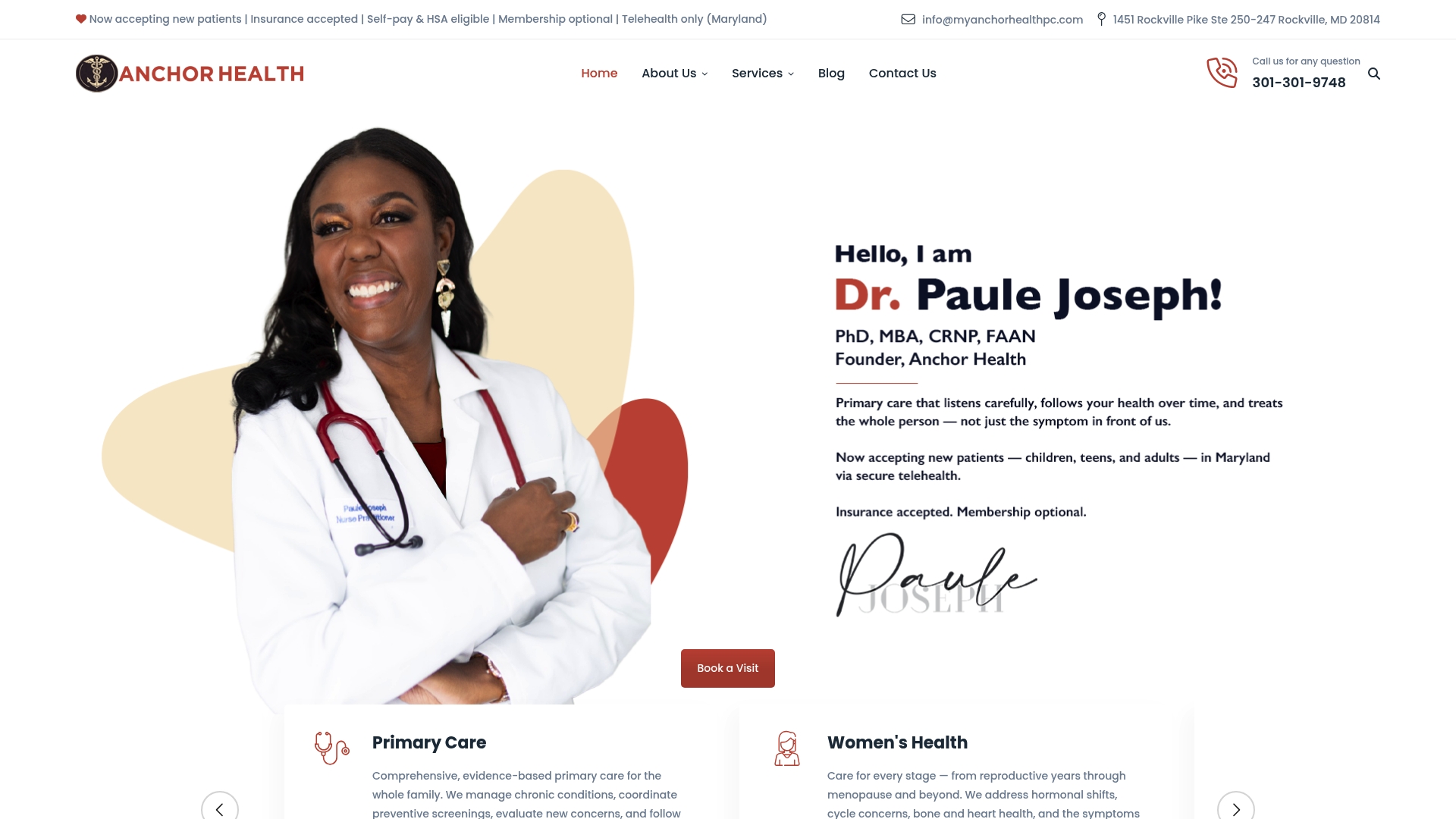
The Anchored Care℠ᴵᴾ model covers the full scope of diabetes management: GLP-1 and SGLT2 medication initiation and titration, DSMES referrals, integrated behavioral health support, and lab coordination with local Maryland facilities. Insurance, self-pay, HSA/FSA, and optional membership plans are all accepted, so access does not depend on a single payment model.
If you are ready to move from managing diabetes reactively to managing it with a consistent, guideline-aligned plan, choosing the right telehealth primary care provider is the first practical step. Book a visit at myanchorhealthpc.com and bring your monitoring data — your first appointment is where the plan gets built.
This article provides general health information and is not a substitute for professional medical advice. Please confirm current treatment recommendations and medication decisions with your qualified healthcare provider.
Useful sources and guidelines to read next
These are the primary sources behind this article. Each one is worth bookmarking and bringing up with your care team.
-
ADA Standards of Care in Diabetes: — The most comprehensive annual guideline update for diabetes management, covering individualized targets, medication selection, DSMES, and cardiorenal risk reduction. Updated annually; the 2026 edition is the current reference.
-
ADA/PMC: Comprehensive Medical Evaluation and Comorbidities (2026): — Covers team-based care, follow-up cadence, and the full scope of the annual diabetes review. Useful for understanding what a complete evaluation should include.
-
CDC: Living with Diabetes: — Patient-facing guidance on the ABCs, healthy eating, physical activity, and routine monitoring. A clear, accessible starting point for anyone newly diagnosed or revisiting the basics.
-
NIDDK: Managing Diabetes: — Practical self-care guidance from the National Institute of Diabetes and Digestive and Kidney Diseases, covering meal planning, glucose checking, activity, and when to call your care team.
-
Abridged ADA Standards for Primary Care (PMC): — A condensed version of the full ADA Standards designed for primary care settings. Share this with your PCP if you want to discuss how guideline recommendations apply to your specific situation.
-
Self-Care Practices and Diabetes Control (PMC): — A research review confirming that diet, exercise, and adherence practices materially affect glucose control and complication risk — useful background for understanding why lifestyle changes are not optional add-ons.
Recommended
- Senior Health Screening Checklist 2026: Essential Tests for 65+
- How to Manage Diabetes Care Through Telehealth
- How Primary Care Prevents Diabetes Complications
- Telehealth vs Endocrinologist for Chronic Care in Maryland
Blog & Information Disclaimer
Last Updated: May 23, 2026
The information provided on the Anchor Health website (https://myanchorhealthpc.com/), including but not limited to blog posts, articles, newsletters, graphics, and other materials (collectively, the "Content"), is for general informational and educational purposes only.
By accessing and using this website, you acknowledge and agree to the following terms and conditions:
The Content on this website is not intended to be a substitute for professional medical advice, diagnosis, or treatment. Always seek the advice of your physician, nurse practitioner, or other qualified health provider with any questions you may have regarding a medical condition. Never disregard professional medical advice or delay in seeking it because of something you have read on this website.
Reading, interacting with, or sharing the Content on this website does not establish a patient-provider relationship between you and Anchor Health or any of its clinicians, including Paule Valery Joseph, PhD, MBA, CRNP, FAAN. A formal patient-provider relationship is only established after you have completed the formal intake process, signed our clinical consent forms, and participated in a secure clinical consultation.
If you are experiencing a medical emergency, call 911 or seek emergency medical services immediately.
Anchor Health is a primary care practice and does not provide emergency or crisis intervention services through its website or blog.
While Anchor Health strives to provide thoughtful, evidence-based information grounded in our Anchored Care℠ model, healthcare is a rapidly evolving field. We make no representations or warranties, express or implied, about the completeness, accuracy, reliability, or suitability of the information contained in the Content. Any reliance you place on such information is strictly at your own risk.
Anchor Health is a telehealth practice providing services to patients physically located within the state of Maryland. The information provided on this blog is intended for residents of Maryland and is governed by the laws and regulations of that state. Accessing this information from outside of Maryland does not imply that our clinicians are licensed to practice medicine or provide consultations in your jurisdiction.
Content related to Weight & Metabolic Health, including discussions of GLP-1 medications or other medical therapies, is provided for educational context regarding our clinical approach. Prescriptions and specific medical recommendations are only made following a comprehensive clinical evaluation, diagnostic testing, and shared decision-making within a formal patient-provider relationship.
This website may contain links to external websites that are not provided or maintained by or in any way affiliated with Anchor Health. Please note that Anchor Health does not guarantee the accuracy, relevance, timeliness, or completeness of any information on these external websites.
To the fullest extent permitted by law, Anchor Health, its owners, and its employees shall not be liable for any direct, indirect, incidental, consequential, or punitive damag
Related posts