Pink Eye Telehealth: Get Treated Online in Maryland

Telehealth can evaluate and treat most routine cases of pink eye (conjunctivitis) without an in-person visit. If your symptoms are mild to moderate, a licensed clinician can review your symptom history and photos via secure video, determine the likely cause, and e-prescribe treatment to your local pharmacy the same day. If you have severe eye pain, sudden vision changes, or recent eye trauma, skip telehealth and go directly to urgent care or an emergency department.
Before your visit, take these three steps right now:
- Remove contact lenses and do not reinsert them until cleared by a clinician.
- Wash your hands thoroughly and avoid touching your eyes.
- Take clear, close-up photos of both eyes in natural daylight so you can upload them during intake.
Key Takeaways
Telehealth is appropriate for most routine pink eye cases, but clear photos and a precise symptom timeline are what make a remote diagnosis accurate and treatment fast.
| Point | Details |
|---|---|
| Telehealth suits most cases | Routine bacterial, viral, and allergic conjunctivitis can be safely evaluated and treated via secure video visit. |
| Photo quality determines accuracy | Clear, daylight close-up photos of both eyes are the most important thing you can prepare before the visit. |
| Treatment depends on cause | Antibiotics are prescribed only for likely bacterial cases; viral and allergic types receive supportive care. |
| Red flags require in-person care | Severe pain, vision changes, photophobia, or contact-lens-associated worsening need urgent in-person evaluation. |
| Myanchorhealthpc for Maryland patients | Myanchorhealthpc offers same-day telehealth pink eye visits with licensed clinicians, accepting insurance, self-pay, and HSA/FSA. |
Table of Contents
- How does a telehealth provider evaluate pink eye online?
- What causes pink eye, and how do symptoms differ by type?
- What treatments can telehealth prescribe for pink eye?
- When should you skip telehealth and seek in-person care?
- What happens during an online pink eye visit, step by step?
- How do you prevent spreading pink eye and when can you return to school or work?
- How Anchor Health handles pink eye via telehealth for Maryland patients
- What clinicians wish you knew before your telehealth pink eye visit
- Anchor Health offers same-day telehealth for pink eye in Maryland
- An editorial perspective on telehealth and pink eye
- Sources
How does a telehealth provider evaluate pink eye online?
Telehealth can reliably assess routine conjunctivitis when you share clear photos, a symptom timeline, and your medication and contact-lens history. That combination gives a clinician most of what they need to distinguish bacterial from viral or allergic causes and decide on treatment.
During a typical online pink eye consultation, the clinician gathers:
- Symptom timing: when redness began, whether it started in one eye and spread, and how quickly it progressed.
- Discharge type: watery and clear, thick and yellow-green, or absent.
- Associated symptoms: runny nose, sore throat, recent cold, or seasonal allergy history.
- Contact-lens use: whether you wear lenses and how recently you wore them.
- Medication history: current eye drops, allergy medications, or recent antibiotic use.
- Uploaded photos or live video: close-up images of the white of the eye, eyelid margins, and any crusting.
What telehealth cannot do in most visits is perform a slit-lamp exam or send eye discharge for laboratory culture. That matters for antibiotic decisions. As MSD Manuals explains, correctly identifying the cause is critical because antibiotics do not treat viral or allergic conjunctivitis, and misidentification leads to inappropriate prescribing. When the clinical picture is unclear from photos and history alone, a responsible clinician will triage you to in-person care rather than guess.
Pro Tip: Photograph your eyes in natural daylight near a window, not under yellow indoor lighting. Hold the camera about 8–10 inches from your face, remove glasses, and use your phone’s portrait or macro mode if available. Take one straight-on shot and one angled slightly upward to show the lower eyelid margin and any discharge.
Contact-lens wearers deserve a specific note. The CDC’s clinical guidance highlights that contact-lens wearers with conjunctivitis symptoms face a higher risk of corneal infection, and telehealth clinicians frequently triage these cases to in-person evaluation rather than managing them remotely.
What causes pink eye, and how do symptoms differ by type?
The cause of conjunctivitis changes the treatment entirely. CDC clinical guidance confirms that bacterial conjunctivitis may be treated with antibiotics, while viral and allergic types are managed with supportive care. Telehealth clinicians use symptom patterns and your photos to infer the most likely cause before recommending treatment.
The American Academy of Ophthalmology notes that most conjunctivitis is viral and self-limited, which means the majority of cases resolve without antibiotics. Here is how the three main types typically present, based on the symptom patterns Mayo Clinic describes:
- Bacterial conjunctivitis: thick, yellow-green or white discharge; crusting that seals the eye shut in the morning; usually starts in one eye; gritty or scratchy feeling; itching is mild or absent.
- Viral conjunctivitis: watery, clear discharge; redness that often starts in one eye and spreads to the other within days; frequently follows a cold or upper respiratory infection; swollen lymph nodes in front of the ear are common.
- Allergic conjunctivitis: intense itching in both eyes simultaneously; watery or stringy discharge; associated sneezing, nasal congestion, or known seasonal allergies; no fever or lymph node swelling.
For your telehealth visit, upload photos that show:
- A straight-on view of both eyes in daylight.
- A close-up of the white of the affected eye.
- The lower eyelid margin pulled gently down to reveal discharge or redness.
- Any crusting on the lashes, especially after waking.
Contact-lens wearers should stop wearing lenses immediately when symptoms appear. Because lens-associated infections can involve the cornea rather than just the conjunctiva, telehealth is often not the right setting for that evaluation.
What treatments can telehealth prescribe for pink eye?
Telehealth can prescribe topical antibiotic eye drops or ointment when bacterial conjunctivitis is the likely diagnosis, and can recommend supportive care for viral or allergic cases. The FDA’s labeling for commonly used topical ophthalmic antibiotics provides the dosing and safety framework clinicians follow when prescribing these medications.
Common treatment options a telehealth clinician may recommend or prescribe:
- Topical antibiotic drops or ointment (such as erythromycin or polymyxin B/trimethoprim): used when discharge pattern and symptom history suggest bacterial cause.
- Antihistamine or mast-cell stabilizer eye drops (such as olopatadine): used for allergic conjunctivitis to relieve itching and watering.
- Lubricating artificial tears: used for both viral and allergic cases to soothe irritation and flush the eye.
- Warm or cool compresses: recommended for comfort in viral and bacterial cases.
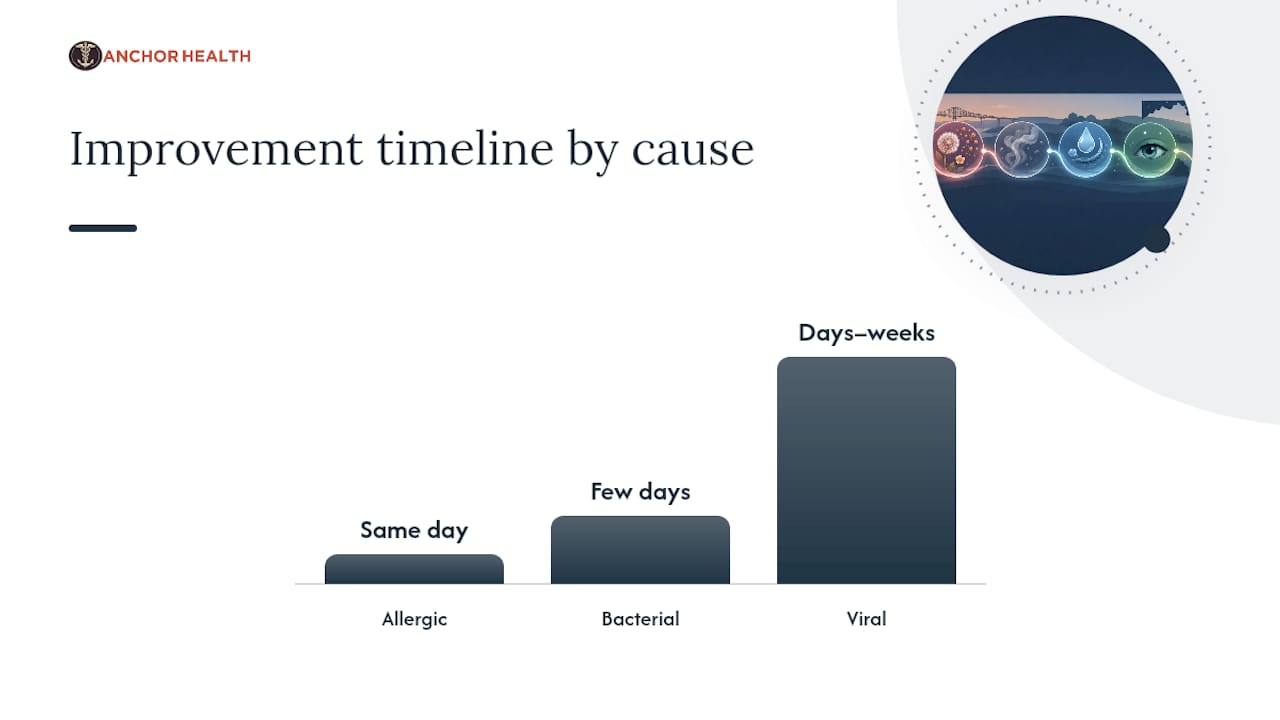
Expected improvement timelines vary by cause:
| Cause | Typical improvement timeline |
|---|---|
| Bacterial | Noticeable improvement typically occurs within a few days of starting antibiotic drops |
| Viral | Gradual improvement over several days to a couple of weeks; no antibiotic needed |
| Allergic | Rapid relief with antihistamine drops and allergen avoidance |
Pro Tip: Once your clinician sends an e-prescription, call your pharmacy to confirm it has been received before you drive over. Most pharmacies process electronic prescriptions within 30–60 minutes, but same-day availability depends on pharmacy hours and medication stock. Learn more about how the telehealth prescription process works before your visit.
A word on antibiotic stewardship: because most conjunctivitis is viral, clinicians often choose watchful waiting over prescribing antibiotics, particularly when discharge is watery and a recent cold preceded the eye symptoms. Prescribing antibiotics for a viral infection does not speed recovery and contributes to resistance. A good telehealth clinician will explain this reasoning rather than simply hand over a prescription to satisfy expectations.
When should you skip telehealth and seek in-person care?
If any of the following symptoms are present, seek in-person urgent care or emergency evaluation rather than a telehealth visit. These signs can indicate conditions that require a slit-lamp exam, corneal staining, or immediate intervention that no video visit can provide.
Go to urgent care or an emergency department if you have:
- Moderate to severe eye pain (not just mild irritation).
- Any change in vision, blurring, or sudden vision loss.
- Sensitivity to light (photophobia).
- Chemical or foreign-body exposure to the eye.
- Recent eye injury or trauma.
- Severe symptoms in a contact-lens wearer, including pain or worsening redness despite removing lenses.
- High fever or significant systemic illness alongside eye symptoms.
- A newborn or very young infant with eye discharge (neonatal conjunctivitis requires prompt in-person evaluation).
Call 911 or go directly to the emergency department for chemical burns, penetrating eye injury, or sudden complete vision loss.
Telehealth clinicians are trained to recognize these red flags during a video visit. If they see or hear anything concerning, they will advise you to seek in-person care immediately rather than continue the remote evaluation.
What happens during an online pink eye visit, step by step?
A telehealth pink eye visit is typically brief when you arrive prepared. Most platforms complete the intake-to-treatment-plan process in under an hour when clinicians are available.
Here is the typical flow:
- Complete the intake questionnaire. You will answer questions about symptom onset, discharge type, contact-lens use, allergies, and current medications.
- Upload photos. Attach your close-up eye photos taken in natural light before the visit begins.
- Join the video visit or await asynchronous clinician review. Some platforms use live video; others review your intake and photos asynchronously and send a treatment plan without a real-time call.
- Receive diagnosis and treatment plan. The clinician explains the likely cause, recommended treatment, and any red flags to watch for.
- E-prescription transmitted to your pharmacy. If antibiotics or prescription drops are appropriate, the clinician sends the prescription electronically to the pharmacy you choose.
- Follow-up instructions provided. You will receive guidance on when to expect improvement and when to seek in-person care if symptoms worsen.
Before your visit, have these ready:
- A list of current medications and known allergies.
- The date symptoms started and which eye was affected first.
- Your close-up photos (taken in daylight, both eyes).
- Your insurance card or payment method.
- Your preferred pharmacy name and location.
On cost: telehealth pink eye visits typically cost less than an urgent-care visit when billed through insurance, with copays varying by plan. Self-pay rates depend on the platform and visit type. Myanchorhealthpc accepts insurance, self-pay, HSA/FSA funds, and offers an optional membership for enhanced access and longer visits. For caregivers booking on behalf of a child, reviewing how to attend a telehealth visit as a caregiver ahead of time makes the process smoother.
How do you prevent spreading pink eye and when can you return to school or work?
Basic infection control reduces transmission significantly. CDC guidance and MedlinePlus both emphasize that infectious conjunctivitis spreads through direct contact with eye secretions, making hand hygiene the single most effective prevention step.
Prevention steps to follow while symptomatic:
- Wash hands frequently with soap and water, especially after touching your eyes.
- Use a separate towel and pillowcase; wash them daily.
- Avoid sharing eye makeup, contact-lens cases, or eye drops.
- Do not touch or rub your eyes.
- Clean frequently touched surfaces (doorknobs, phones, keyboards) with disinfectant.
- Discard eye makeup used during the infection period.
Return-to-school and return-to-work guidance:
- Bacterial conjunctivitis: many schools require children to stay home until they have completed at least 24 hours of antibiotic therapy and discharge has resolved. Some schools require written clinician approval before return.
- Viral conjunctivitis: no antibiotic shortens the course. Stay home while actively symptomatic if close contact with others cannot be avoided. Return when discharge has stopped or a clinician clears you.
- Allergic conjunctivitis: not contagious. No isolation required; return to normal activities once symptoms are managed.
For parents navigating school or daycare policies, a telehealth visit can generate the clinician note many schools require. Telehealth for kids explained covers what parents should prepare and expect when booking a child’s visit.
How Anchor Health handles pink eye via telehealth for Maryland patients
Myanchorhealthpc provides secure video visits for routine pink eye evaluation and, when clinically appropriate, e-prescribes treatment for Maryland patients. The practice operates under the Anchored Care℠ᴵᴾ model, which prioritizes continuity and an ongoing patient relationship rather than one-off episodic care.
Practical details for Maryland patients:
- State availability: Maryland only (telehealth licensing applies).
- Clinician qualifications: licensed primary care providers.
- Same-day visits: available depending on scheduling; same-day telehealth availability explains what to expect when booking on short notice.
- Payment options: insurance, self-pay, HSA/FSA funds, and optional membership plans.
- Pediatric care: Myanchorhealthpc sees patients of all ages; caregivers can book on behalf of children and join the video visit. More detail is available at how telehealth handles sick child visits.
What sets Myanchorhealthpc apart from a typical urgent-care telehealth encounter is the continuity built into every visit. When you see the same clinician over time, they already know your allergy history, your child’s tendency toward bacterial infections, and whether you are a contact-lens wearer. That context makes a pink eye evaluation faster and more accurate than starting from scratch with a stranger.
Safety note: if you or your child has any of the red-flag symptoms listed above (severe pain, vision changes, photophobia, or chemical exposure), please seek in-person emergency care rather than booking a telehealth visit.
What clinicians wish you knew before your telehealth pink eye visit
Preparation is the single biggest factor in diagnostic accuracy during a remote conjunctivitis evaluation. When a clinician can see a clear photo and hear a precise symptom timeline, the visit moves quickly and the treatment plan is more confident.
Three practical tips, from a clinician’s perspective:
- Take your photos before you log in. Blurry, dim, or distant images are the most common reason a clinician cannot assess discharge type or corneal clarity remotely. Good photos taken in advance, rather than scrambled together during the call, give the clinician what they need from the first minute.
- Write down your symptom timeline. Knowing whether redness appeared before or after a cold, whether it started in one eye or both, and exactly how many days ago it began helps a clinician distinguish viral from bacterial cause with much greater confidence than “it’s been a few days.”
- Be ready to remove contacts or bring a child to in-person care if asked. A clinician who sees something on video that concerns them will ask you to stop the telehealth visit and seek in-person evaluation. That is not a failure of the platform; it is the system working correctly.
Anchor Health offers same-day telehealth for pink eye in Maryland
Pink eye is uncomfortable and contagious, and waiting days for an appointment is not the right answer when you can be evaluated today. Myanchorhealthpc offers same-day secure video visits for Maryland patients dealing with conjunctivitis symptoms, with licensed clinicians who review your photos, assess your symptom history, and send a prescription to your pharmacy when one is warranted.

We accept most major insurance plans, and self-pay and HSA/FSA options are available for patients without coverage. An optional membership plan gives you faster scheduling and longer visits when you need more time with your clinician. The telehealth prescription process is fully electronic, so your medication can be ready at your pharmacy the same day.
Book your pink eye telehealth visit at Myanchorhealthpc. If you have severe eye pain, vision changes, or photophobia, please go to urgent care or an emergency department rather than booking online.
An editorial perspective on telehealth and pink eye
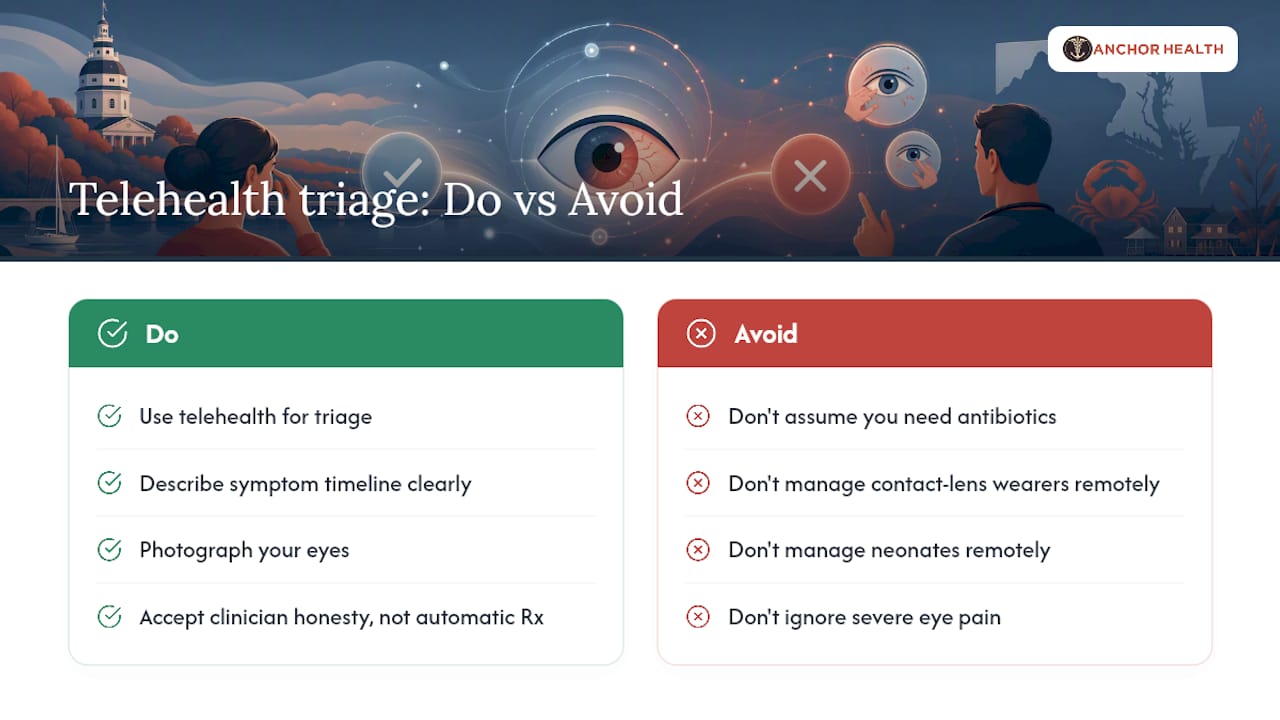
The most common mistake people make with pink eye is assuming they need an antibiotic. That assumption drives unnecessary urgent-care visits, antibiotic prescriptions that do nothing for a viral infection, and a lingering sense that the visit was not worth the copay. The American Academy of Ophthalmology is clear that most conjunctivitis is viral and resolves on its own. A good telehealth clinician’s job is not to hand you a prescription; it is to tell you honestly whether you need one.
What telehealth does particularly well for conjunctivitis is triage. The visit forces you to articulate your symptom timeline, photograph your eyes, and answer structured questions. That process alone surfaces the red flags that need in-person care and filters out the cases that just need time and lubricating drops. The clinician who tells you “this looks viral, here is what to do at home, and here is what would change my mind” is giving you more useful information than a rushed in-person visit that ends with a prescription written to satisfy your expectation.
The one thing I would push back on is the idea that any telehealth visit for pink eye is automatically appropriate. Contact-lens wearers, neonates, and anyone with pain beyond mild irritation should not be managed remotely. The platform is only as good as the clinician’s willingness to say “I cannot safely assess this by video; you need to be seen.” That clinical honesty is what separates a trustworthy telehealth provider from one that optimizes for visit volume.
This article is general information, not a substitute for advice from a qualified doctor. Consult a qualified healthcare professional about your own circumstances before acting on anything here.
Sources
The following sources informed the clinical guidance in this article:
- Clinical Overview of Pink Eye (Conjunctivitis) | Conjunctivitis (Pink Eye) | CDC
- Conjunctivitis: What Is Pink Eye? – American Academy of Ophthalmology
- Infectious Conjunctivitis – Eye Disorders – MSD Manual Consumer Version
- Medlineplus
Recommended
- Telehealth’s Role in Rural Maryland Healthcare Access
- Set Up Your First Telehealth Account: Maryland Guide
- How telehealth expands healthcare access for Maryland families
Blog & Information Disclaimer
Last Updated: May 23, 2026
The information provided on the Anchor Health website (https://myanchorhealthpc.com/), including but not limited to blog posts, articles, newsletters, graphics, and other materials (collectively, the "Content"), is for general informational and educational purposes only.
By accessing and using this website, you acknowledge and agree to the following terms and conditions:
The Content on this website is not intended to be a substitute for professional medical advice, diagnosis, or treatment. Always seek the advice of your physician, nurse practitioner, or other qualified health provider with any questions you may have regarding a medical condition. Never disregard professional medical advice or delay in seeking it because of something you have read on this website.
Reading, interacting with, or sharing the Content on this website does not establish a patient-provider relationship between you and Anchor Health or any of its clinicians, including Paule Valery Joseph, PhD, MBA, CRNP, FAAN. A formal patient-provider relationship is only established after you have completed the formal intake process, signed our clinical consent forms, and participated in a secure clinical consultation.
If you are experiencing a medical emergency, call 911 or seek emergency medical services immediately.
Anchor Health is a primary care practice and does not provide emergency or crisis intervention services through its website or blog.
While Anchor Health strives to provide thoughtful, evidence-based information grounded in our Anchored Care℠ model, healthcare is a rapidly evolving field. We make no representations or warranties, express or implied, about the completeness, accuracy, reliability, or suitability of the information contained in the Content. Any reliance you place on such information is strictly at your own risk.
Anchor Health is a telehealth practice providing services to patients physically located within the state of Maryland. The information provided on this blog is intended for residents of Maryland and is governed by the laws and regulations of that state. Accessing this information from outside of Maryland does not imply that our clinicians are licensed to practice medicine or provide consultations in your jurisdiction.
Content related to Weight & Metabolic Health, including discussions of GLP-1 medications or other medical therapies, is provided for educational context regarding our clinical approach. Prescriptions and specific medical recommendations are only made following a comprehensive clinical evaluation, diagnostic testing, and shared decision-making within a formal patient-provider relationship.
This website may contain links to external websites that are not provided or maintained by or in any way affiliated with Anchor Health. Please note that Anchor Health does not guarantee the accuracy, relevance, timeliness, or completeness of any information on these external websites.
To the fullest extent permitted by law, Anchor Health, its owners, and its employees shall not be liable for any direct, indirect, incidental, consequential, or punitive damag
Related posts